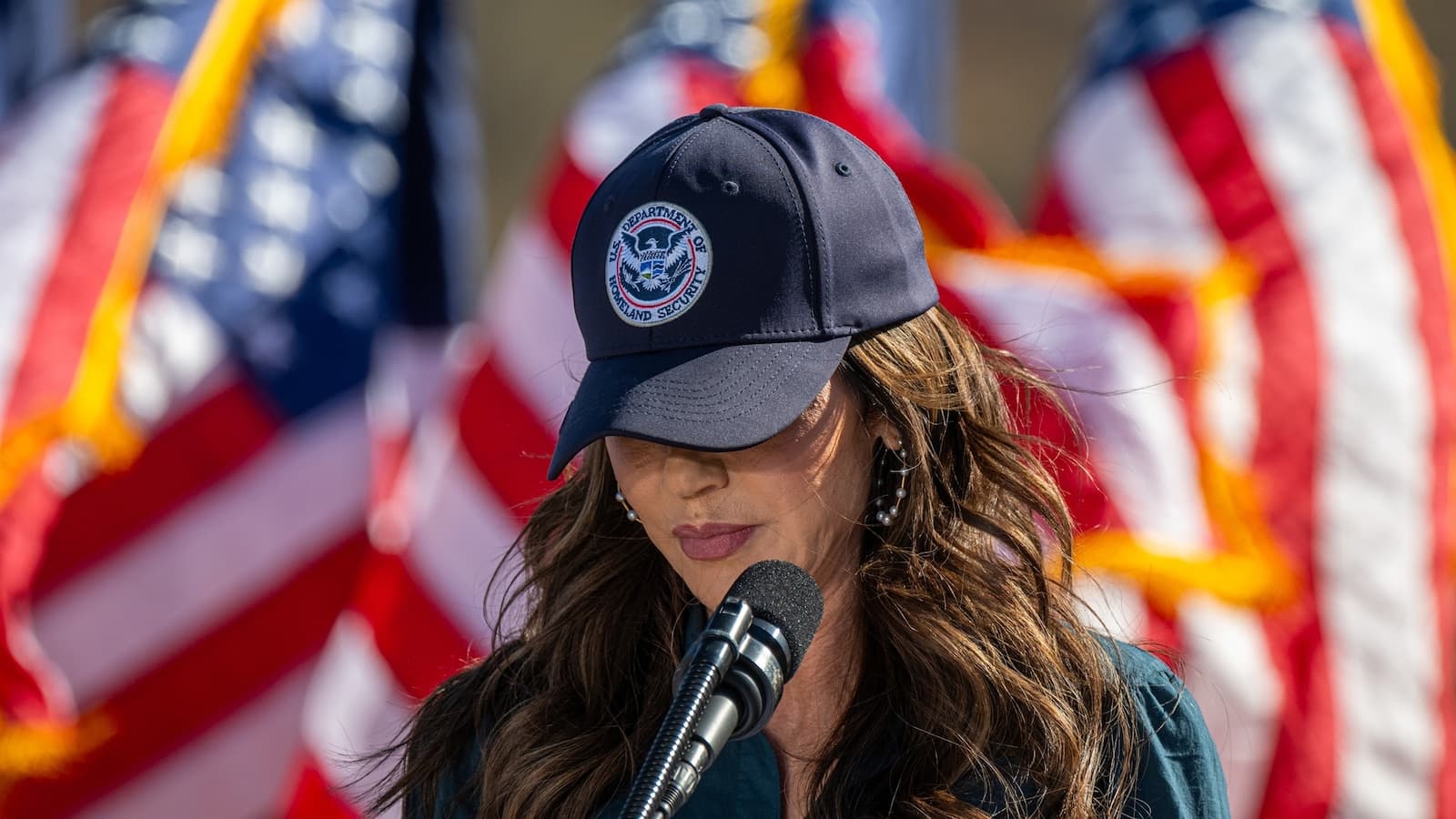
Noem Was Ousted. Let's Use the Right Word.
Kristi Noem didn't resign. She was removed. The word "ousted" in the headline is right, and it matters, because "resigned" implies a managed transition, an orderly handoff, a mutual agreement that the time had come. That's not what happened at the Department of Homeland Security in April 2026.
Under Noem's tenure, DHS oversaw a dramatic reversal at the southern border. Encounters between ports of entry dropped from a high of 302,034 in December 2023 to 11,017 in January 2026, a 24-year low for that month, according to Customs and Border Protection. That is not a marginal improvement. That is the result of sustained, consistent operational pressure maintained over more than a year, against significant resistance from both the legal system and career bureaucracy.
So when the Secretary who presided over those numbers gets removed abruptly, described by Fox News as happening "amid recent turmoil", language chosen specifically to obscure the details, the first honest question is: what was the turmoil, and for whom?
Washington Has a Thousand Ways to Eat People Who Actually Try to Change Things
I've watched Washington politics long enough, from the outside, as a parent and a citizen, which gives a clarity the insiders genuinely lack, to know there are two kinds of turmoil in government. The kind that means something genuinely went wrong. And the kind that means you made the right enemies.
Noem made enemies. She pushed policies that career DHS staff actively resisted. She clashed with legal teams who wanted to slow-walk deportations through procedural delay until the political will ran out. She was, by most accounts from people who worked near her, genuinely committed to the operational mission rather than managing its optics. That makes you dangerous in Washington. It means you're actually trying to change something permanent, and there are people whose power depends entirely on nothing ever changing.
Fox News reported tensions with career officials and disagreements over detainee processing. Sen. Tom Cotton of Arkansas, one of Noem's consistent allies on border policy, publicly signaled in March 2026 that the border mission was too important to be derailed by personnel conflicts, the kind of statement that sounds like support but reads, inside the Beltway, as a warning shot that the political ground was shifting under her feet.
What Changes at the Border When the Secretary Changes
Every time a cabinet secretary is replaced mid-operation, the people who lose aren't the senators gaming the transition or the lobbyists positioning for access to the incoming team. They're the Border Patrol agents in Del Rio who finally had a commander willing to back them publicly. They're the families in Eagle Pass and Yuma who had started to believe this time might actually stick.
CBP reported 11,017 migrant encounters in January 2026. That number was earned, not inherited. It reflected twelve months of sustained operational pressure: processing changes, return agreements renegotiated with partner governments, title authority enforcement, and a tempo that required constant political cover from the Secretary's office. Trump himself had called the border results historic in multiple public appearances, and for once, the numbers backed the claim.
When the Secretary changes, the political appointees below her start hedging. They don't know who's coming, what the new priorities will be, or whose confidence they need to earn. The career staff, who have outlasted fifteen cabinet secretaries and will outlast fifteen more, read the situation clearly. They wait. And while they wait, enforcement pace drops, the paperwork slows, and the numbers that took a year to build begin drifting in the wrong direction. Every time. Without exception.
The Party Elevates Women to Use Them, Then Shows Them the Door
There's something that needs to be said that Republican leadership won't say out loud. The party has a pattern with its high-profile female officeholders. It elevates them when they're useful, the tough-on-crime governor, the hardline immigration enforcer, the visible woman who answers the media criticism that the party is too male, too old, too disconnected from ordinary Americans. And then, when the politics get complicated, when the coverage turns brutal, when the internal tensions rise, they get managed out quietly while the men around them keep their jobs.
Noem's press run in 2024 was particularly revealing. The story about shooting her dog, drawn from her own memoir, received weeks of national saturation at a level no comparable story about a male politician in a similar role would have generated. It didn't end her career immediately, but it ended her VP consideration and established a narrative frame that never fully shifted. She arrived at DHS already damaged by coverage that, in another context, would have lasted two news cycles and been forgotten.
Was she a perfect cabinet secretary? No. Name one who is. The honest question, the one Washington will never ask, is whether the standard applied to her tenure was the same standard applied to the men around her. It wasn't. And everyone involved knows it.
The Voters Who Made This Possible Are Still Watching
The border was the issue that elected Donald Trump twice. In November 2024 exit polls, 57% of voters rated immigration as "extremely important" to their vote, the highest of any single issue category. That was the mandate. That was the specific promise on which the administration was given the authority to act.
Noem was the operational face of that mandate. Her removal, whatever the specific internal circumstances were, sends a signal. The administration either cannot or will not protect the people it puts in place to execute the things voters actually asked for. Whether that signal is accurate is almost beside the point. The signal is out, and adversaries of border enforcement, inside and outside the building, are reading it clearly.
The voters who changed their registration, who drove two hours to caucuses, who stood in line in Phoenix and Tucson and San Antonio holding signs about the border, they remember what was promised. They're watching what's happening. And they are not nearly as patient as the consultants in Washington believe them to be.