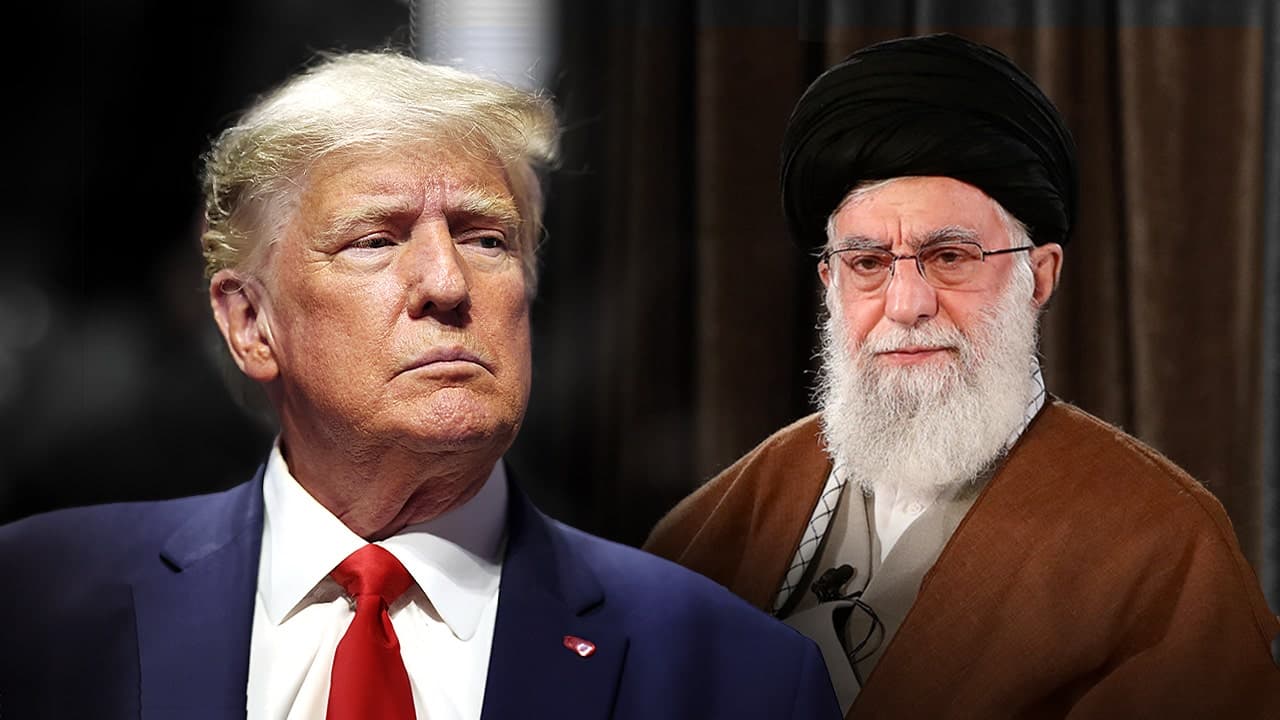
I've been writing about American foreign policy long enough to recognize when the press corps confuses clarity with aggression. It happens reliably, and it happened again with Trump's warning to Iranian President Masoud Pezeshkian, that he "won't last long" without American approval. The coverage called it a threat. Ominous. Reckless. Possibly destabilizing.
What it actually is: deterrence. Stated clearly. Without diplomatic varnish. And deterrence, practiced with clarity, works, which is more than you can say for the alternative America tried from 2021 to 2025.
What Trump Said and Who He Was Actually Talking To
Trump's statement that Pezeshkian "won't last long" without American approval is a direct communication of geopolitical leverage, not a personal threat to the Iranian president's safety or tenure. That distinction is fundamental to how great-power diplomacy operates, and press coverage that collapsed the two committed a serious analytical error.
Masoud Pezeshkian took office in July 2024 following the death of hardliner Ebrahim Raisi in a helicopter crash. He styled himself a reformist. He campaigned on diplomatic engagement and economic recovery. He won. And now he governs a country where the Iranian rial has lost roughly 90 percent of its value since the nuclear deal's collapse, youth unemployment exceeds 25 percent by the government's own published figures, and annual inflation has run above 40 percent for multiple consecutive years.
Pezeshkian needs a deal. He needs sanctions relief. He needs access to the international financial system that American policy controls. Trump knows this and said so publicly. That's not aggression. It's the opening position of a negotiation where America holds most of the cards, and stating it openly is a deliberate signal to Tehran and every adversary watching the exchange.
What Biden's Restraint Actually Bought Iran
From 2021 to 2025, the Biden administration pursued indirect negotiations aimed at reviving the 2015 Joint Comprehensive Plan of Action, the Iran nuclear deal Trump withdrew from in May 2018. Biden's team spent four years in careful quiet diplomacy while simultaneously relaxing enforcement of oil sanctions. The results are documented and unambiguous.
By early 2023, the International Atomic Energy Agency reported Iran had enriched uranium to 83.7 percent purity, within striking distance of weapons-grade material. The IAEA further confirmed in September 2023 that Tehran had accumulated enough enriched uranium to potentially produce "several nuclear weapons" if it chose to further process its stockpile. Simultaneously, Iranian oil exports hit multi-year highs. Estimates of Iranian oil revenue for 2023 ran into the tens of billions of dollars, money that funded the IRGC, Hezbollah, the Houthi campaign in Yemen, and Hamas operations in Gaza.
Four years of diplomatic restraint bought Iran a nuclear program materially closer to a weapon and billions to fund proxy wars across the Middle East. That is the track record of the approach the press coverage implicitly favors when it treats Trump's directness as the destabilizing variable.
Deterrence Has Its Own Track Record, and It's Better
During Trump's first term, Iran's nuclear program did not cross the red lines his administration established. Enrichment levels stayed well below what Iran subsequently reached under Biden. Large-scale proxy attacks of the kind that characterized 2023 and 2024 did not occur. And after the January 2020 killing of IRGC General Qasem Soleimani, an operation virtually every establishment analyst predicted would trigger regional war, Iran's retaliation was deliberately calibrated to avoid escalation. They warned Iraq's government before the strike. No Americans died.
That is a deterred adversary. Not because the regime respects American values. Because they calculated the cost of escalation exceeded the benefit. Former National Security Advisor Robert O'Brien, who served through Trump's first term, has articulated this point in multiple post-tenure interviews: Iran makes rational cost-benefit calculations, and those calculations change when America communicates consequences clearly and credibly.
But the record doesn't require an official's endorsement. Two administrations, two approaches, two outcomes. One produced a nuclear program approaching weapons-grade. The other kept enrichment in check. That's not a talking point. It's a scorecard.
Why the Press Got the Framing Backwards
The coverage of Trump's Iran warning reflected a consistent analytical failure in establishment foreign policy reporting: diplomatic clarity gets coded as aggression, and "diplomacy" gets defined as whatever sounds measured, regardless of what it produces. A threat coerces through fear of harm. Deterrence alters a rational actor's cost-benefit analysis across a range of behaviors. They are structurally different. Conflating them generates bad analysis and worse policy recommendations.
Trump's statement did not threaten Pezeshkian personally. It communicated that Iran's economic survival, oil exports, dollar-clearing access, foreign investment, depends on American policy choices Trump controls. Every serious diplomatic actor in the world reads this correctly. The confusion in American newsrooms doesn't reflect how diplomacy works. It reflects a preference for a particular kind of story.
What was the affirmative case for returning to the posture that produced 83.7 percent uranium enrichment and billions in IRGC oil revenue? That's the question the coverage should have been asking. The IAEA data is public. The oil revenue estimates are in the Energy Information Administration database. Coverage that buries those data points in favor of "alarming Trump rhetoric" narratives has a perspective. It just won't own it.
Iran's new president is under severe domestic pressure and needs results for the people who voted for him. Trump knows it and said so out loud. That's leverage, stated plainly, by a president who understands that the alternative has a documented track record of failure.
The adults are back at the table. Apparently that's the part we're supposed to find alarming.


