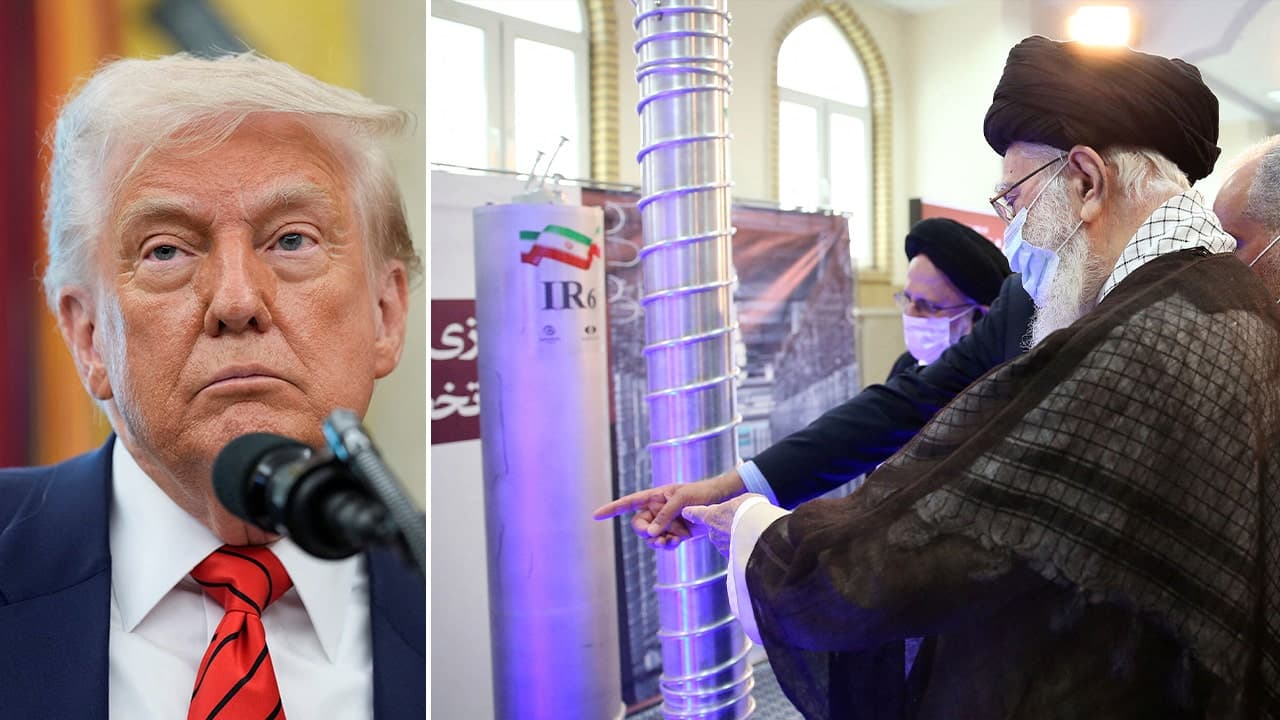
Four Hours Between the Strike and the Platform
The Iranian foreign ministry issued a statement on April 8th calling American airstrikes "an act of war." Within four hours, that statement appeared verbatim on three network evening broadcasts, presented without editorial challenge, without skeptical framing, without so much as the question of whether a regime that funds the killing of American soldiers deserves that kind of platform. Not one anchor asked it.
CBS Evening News aired an interview with a Houthi spokesman before it aired the Pentagon's operational statement. NBC's morning block spent eleven minutes on congressional authorization questions and four minutes on the nature of the targets themselves. CNN ran a chyron that read "Trump Escalates With Iran." The premise baked into those four words, that the United States was the escalating party, went entirely unexamined.
That's the story. Not the strikes themselves. The story is what happened in the newsrooms afterward.
The Memory These Networks Have Chosen to Lose
American broadcast coverage of military action against Iranian-backed forces follows a predictable sequence: lead with alarm, platform the adversary, challenge the authorization, minimize the justification. The sequence holds regardless of operational facts. It held in January 2020 when Trump ordered the elimination of Qasem Soleimani, a man the Defense Intelligence Agency credited with direct responsibility for more than 600 American military deaths through Iranian-supplied explosively formed penetrators in Iraq. The Washington Post's obituary described him as "a revered military commander." No qualifier attached.
Retired military analysts have made the strategic point plainly: the Iranian regime monitors American media coverage, and unchallenged platforming of regime statements is read in Tehran as information-warfare success, not rhetorical, but operationally real.
Iranian state television, Press TV, routinely repackages American network coverage as confirmation of American wrongdoing. It doesn't need to fabricate. It clips from primetime. The Associated Press filed 847 words on the Iranian reaction to the April strikes and 214 words on the target profile itself, weapons depots used to resupply proxy groups responsible for eighteen American casualties in Syria and Iraq over the prior fourteen months. Where the words go tells you where the sympathy lives.
The Standard That Shifts With the President
Skeptical journalism and oppositional journalism are different things. Skeptical journalism asks hard questions of all parties. Oppositional journalism starts with the verdict and constructs the coverage backward from there.
A Gallup survey released in March 2026 found 62 percent of Americans believe major news organizations are biased against the Trump administration. That's not a conservative talking point anymore. It's a majority view held by a majority of the country.
The reflex in other newsrooms never changes when a Republican president uses military force: find the critic first, amplify the concern, bury the justification. When the Obama administration struck targets in seven countries simultaneously during his second term, the coverage was measured and largely approving. When Obama sent Tomahawk missiles into Libya in 2011 without a congressional vote, while Congress was in recess, the authorization question received perhaps one-tenth the broadcast attention that the April Iran strikes generated this week.
The disparity isn't subtle. It isn't accidental. The same producers who assign sixty seconds to a Houthi response will give eight minutes to opposition senators calling for restraint. Washington bureaus make these assignment choices in real time, and the choices are consistent. Consistent choices reveal consistent values.
What does it mean when American newsrooms hand the first paragraph to America's adversaries every single time a Republican president takes military action? It means the adversaries have learned to expect it. And they plan accordingly.
What Tehran Is Actually Watching
Adversary nations don't monitor American media for entertainment. They run systematic analysis on coverage sentiment because domestic political fracture is a strategic variable. When media signals that a president faces strong domestic opposition to military action, adversaries factor that into their operational calculus. A constrained president is a more predictable president. Predictable means exploitable.
The Committee to Protect Journalists published findings in February 2026 documenting that authoritarian governments increasingly cite Western press coverage to legitimize internal crackdowns and external aggression. Tehran doesn't need to invent the narrative. It borrows it from primetime.
Military authorization is a legitimate question. Intelligence reliability is a legitimate question. Strategic proportionality is essential. What isn't legitimate is a professional standard that hands the adversary the first paragraph. Three major networks aired Iranian regime statements as headline content before their own correspondents had confirmed the scope of the strikes. That's a choice about whose voice gets amplified first and whose account gets treated as the default.
The Iranian regime didn't earn a platform on American airwaves. What they've earned, through four decades of hostage-taking, proxy warfare, and the systematic arming of groups that have killed American soldiers, is scrutiny. The networks gave them something else entirely. And every newsroom director who made that editorial call knows exactly what they were doing.