The Comment That Should Have Ended Something
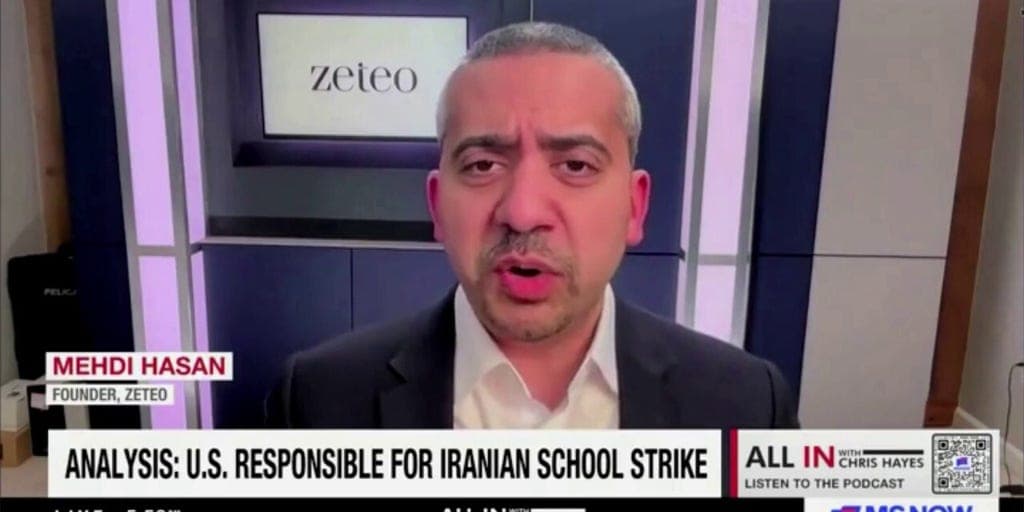
Mehdi Hasan said on MSNBC that "even the Nazis" behaved better than Trump's military. He said it to Chris Hayes, on camera, as a declarative statement, not a thought experiment, not a rhetorical flourish. The segment aired in April 2026. Within 24 hours it had accumulated 2.3 million views on X. Conservative commentators were outraged. MSNBC's response? Silence. No correction. No clarification. No on-air acknowledgment that a host had just compared the American armed forces to the Third Reich.
Run that experiment in reverse. A Fox News contributor says a Democratic administration's military conduct resembles Soviet-era purges. Every major newspaper has a story within the hour. Congressional Democrats call for hearings. Media watchdog groups file complaints. The contributor's career is finished. That's the asymmetry we live with, and the Hasan segment made it visible enough that people who normally don't pay attention noticed.
What Hasan Said, and Why the Distinction Matters
Hasan's specific claim was that Trump's immigration enforcement operations, particularly deportation flights using military aircraft, violated norms that "even the Nazis" respected. The comment arose during a broader segment about the Trump administration's use of military assets for domestic enforcement, a genuine flashpoint since January 2025 when the president invoked the Alien Enemies Act of 1798.
The Nazi comparison wasn't metaphor. Hasan didn't say "this echoes" or "this recalls." He said "even the Nazis behaved better." That distinction is everything. Rhetorical comparisons to historical atrocities are a legitimate tool, journalists use historical parallels constantly. But an absolute superiority claim, that the regime which industrially murdered six million Jews "behaved better" than the current American government, is factually wrong, morally offensive, and strategically reckless.
The Simon Wiesenthal Center has long argued that comparing anything to the Holocaust without factual basis dishonors the victims and trivializes what was genuinely unprecedented in human history.
Hasan crossed that line. Clearly. Publicly. On a professionally produced, corporate-funded news segment. And the network that produced it said nothing at all.
Why MSNBC's Silence Is the Actual Story
MSNBC's non-response isn't cowardice. It's product strategy. The network understands that its audience, which averaged 761,000 prime-time viewers in Q1 2026, down from a 2021 peak of 1.2 million, wants maximum contrast with the current administration. Outrage is the product. The more extreme the take, the more it circulates, the more the base engages. Hasan saying "even the Nazis" is a feature, not a malfunction.
This is the same dynamic that drives engagement-optimized social platforms. Which is exactly why legacy media's persistent complaints about algorithmic radicalization ring so hollow. The algorithm didn't produce Mehdi Hasan. MSNBC did. The network hired him, gave him airtime, promoted his content, and said nothing when he crossed a line that would get an ordinary employee fired from a normal job at a normal company.
What's the network's answer to the 1.3 million active-duty service members whose families watched that segment?
The Accountability Gap That Nobody in the Industry Will Close
I've spent three years writing about platform governance and content moderation, watching tech companies get hauled before Congress to answer for hosting user-generated content that crossed lines far less severe than what Hasan said on a professionally scripted news broadcast. The gap is staggering. A private user tweets "even the Nazis" about the U.S. military and risks an account suspension. A credentialed television journalist says it with a microphone and a set and a broadcast window and receives nothing.
Who holds cable news accountable? Not the FCC, cable isn't regulated like broadcast television. Not market pressure, MSNBC's parent company Comcast posted $121 billion in annual revenue in 2025 and can absorb the reputational cost of a bad segment indefinitely. Not advertisers, the progressive advertiser base that funds the network has proven remarkably tolerant of inflammatory content. So accountability is effectively voluntary. Which means it doesn't exist.
The honest version of press freedom includes professional standards. Not government censorship, that's a separate and worse problem. But editorial accountability. The expectation that inflammatory, factually wrong claims carry real consequences. The basic professional requirement that you answer for what you choose to broadcast.
Legacy media institutions spent years demanding exactly those standards from social media platforms. The argument was that powerful communications infrastructure comes with obligations. That reach creates responsibility. That allowing harmful speech without consequence corrodes public trust. Every word of that argument applies here. Mehdi Hasan said what he said on a platform with national reach, with a corporate editorial chain behind him, with no pushback from anyone in the room.
That didn't happen because MSNBC lost control. It happened because they decided it was acceptable. The consequences were manageable. Nobody important enough would push back hard enough to matter. They were right about all of it. That's the actual story here, not one bad take from one host, but a media structure that has quietly decided that some speech is only held accountable when it comes from the other side.