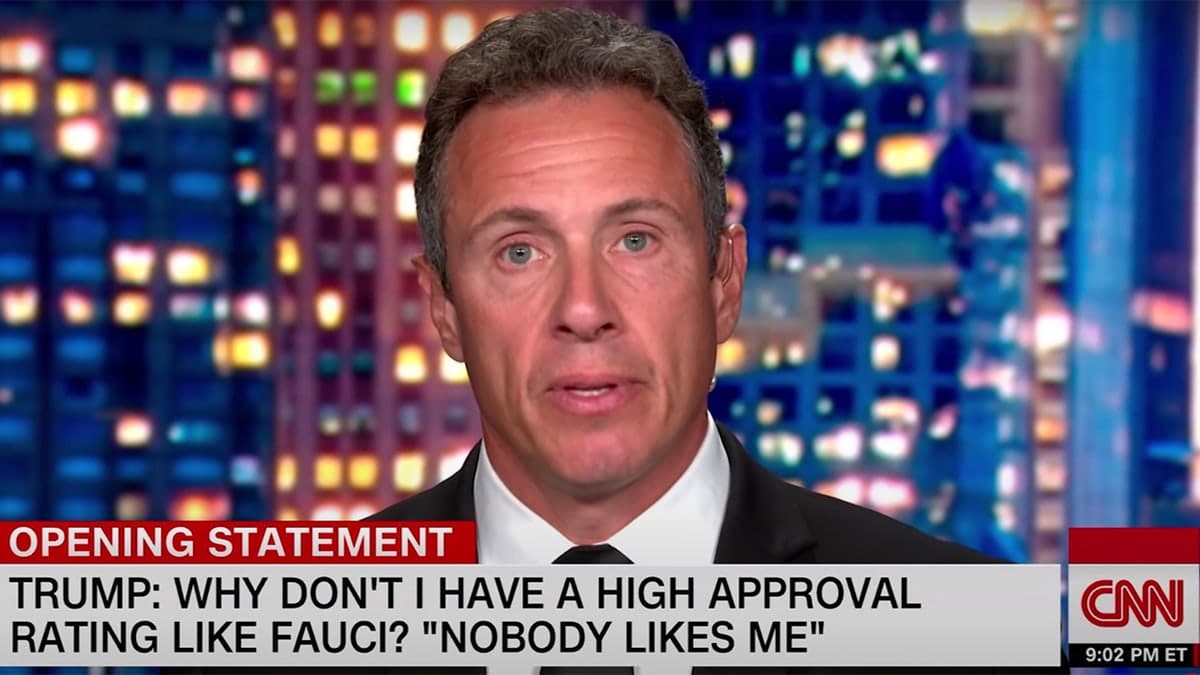
The Ratings Decline and Its Context
Nielsen reports that CNN's average domestic audience during the first quarter of 2026 was 756,000 viewers, down from 932,000 in Q1 2025. That 19 percent year-over-year decline accelerates a longer trend. In 2012, CNN averaged 1.4 million viewers during prime time. In 2020, the network had rebounded to 1.1 million viewers, driven by Trump presidency news coverage. By 2025, that number had fallen back to 932,000. By April 2026, it is 756,000. That is not a normal cyclical fluctuation. That is a network losing audience systematically and consistently.
The network's internal analysis, portions of which were described by CNN staffers to media observers, attributes the decline to political polarization and audience migration to alternative news sources. That attribution is partly correct but incomplete. Political polarization is real. Cable news viewership has declined overall as younger audiences move to digital platforms. But CNN's decline is steeper than its competitors. Fox News has held its audience relatively stable at 2.1 to 2.3 million viewers during the same period. MSNBC has declined from 1.3 million to 1.08 million viewers, a smaller decline than CNN's. If the decline were purely structural to cable television, the competitors should be declining at the same rate. They are not.
The differential decline suggests something specific to CNN's editorial and branding choices. The network made a conscious decision beginning in 2021 to emphasize anti-Trump reporting and to position itself as the mainstream media authority check on what it characterized as MAGA-affiliated political movements. That positioning was rational in 2021 and 2022, when Trump's political power seemed diminished. But Trump won the 2024 election. His position within the Republican Party strengthened. CNN's editorial positioning, which had built enormous investment in Trump-critical coverage, suddenly looked outdated and reactive rather than prescient.
The Trust Dimension and Editorial Credibility
Pew Research's biannual media trust survey, released in April 2026, found that 28 percent of Americans surveyed said they trust CNN to report the news fairly. That number is down from 38 percent in 2020. For comparison, 39 percent trust Fox News and 34 percent trust the Associated Press. CNN's trust deficit is both real and consequential. An audience of 756,000 does not sustain an international news operation with 42 news bureaus and a payroll exceeding 700 million dollars annually. The network is profitable because it is expensive cable real estate, not because it has a sustainable business model. That profitability exists on borrowed time.
The credibility problem originates in what media critics call selective emphasis. CNN reported on Trump news intensively but infrequently reported on criticism of Biden administration policies with the same emphasis. During 2021 and 2022, CNN's Afghanistan withdrawal coverage was perfunctory compared to Trump-era coverage of military decisions. Biden inflation coverage was less prominent than COVID-19 vaccine mandate coverage during the Trump years. That selectivity was not necessarily dishonest, but it was visible to the audience. The audience did not have to trust CNN's word. They could simply watch the channel and count minutes. Minutes are objective.
The internal culture at CNN has absorbed that credibility damage. Staffers told media observers that editorial meetings are now contentious about story selection and emphasis. Producers and reporters are pushing back more frequently against editorial directives that seem partisan. That internal tension is invisible to the audience but visible to the staff. When the staff loses confidence that the editorial choices are defensible on grounds of newsworthiness rather than partisan preference, the culture begins to fragment. Fragmented cultures do not produce good journalism.
The Structural Fix and Strategic Options
CNN leadership is considering significant editorial restructuring. That restructuring would likely mean reducing the opinion programming that made CNN distinctive and attempting to rebuild hard-news reporting capability. The network would return to something closer to its 1990s positioning as a 24-hour news organization focused on breaking news and event coverage rather than political analysis. That shift would be radical and expensive. It would also require admitting that the opinion-forward strategy of the last six years was a mistake. Corporate cultures are rarely good at admitting that level of strategic error.
The alternative path is slower decline. CNN maintains its current editorial positioning, accepts the audience loss, and becomes a smaller but ideologically consistent niche network. That path has the advantage of not requiring anyone to admit error. It has the disadvantage of ending with CNN as a political messaging platform rather than a news organization. At some point, the distinction stops mattering because the audience has already left.
What makes this moment consequential is that CNN still has institutional resources and brand recognition. If the network invests in hard-news capability and editorial rebalancing, it could rebuild audience. That rebuilding would require replacing significant portions of the on-air talent, retooling the production processes, and explicitly defending the shift to the audience it is trying to win back. None of that is easy. All of it requires acknowledging that the current path is unsustainable. CNN leadership seems to be approaching that acknowledgment. Whether they follow through is an open question.