The Rage Cycle Has a Shelf Life, Democrats Just Hit It
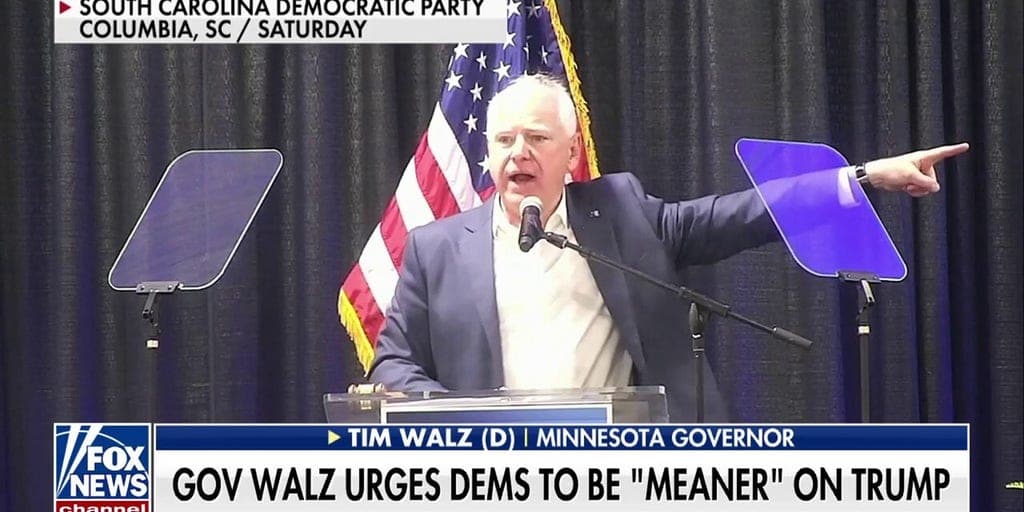
Democratic strategists are publicly admitting what polling showed throughout 2024: sustained political anger divorced from a governing vision doesn't translate into electoral success. It generates small-dollar fundraising spikes. It produces cable news ratings. It does not build a coalition capable of winning legislative majorities or national elections. The Hill's analysis of Democrats being "caught in an anger trap" understates the problem. They didn't stumble into a trap. They built one, furnished it, and climbed in voluntarily.
The data is unambiguous. In the 2024 election cycle, Pew Research Center surveys consistently showed over 70 percent of Democratic voters describing themselves as "angry" about the political direction of the country. That anger didn't produce a wave. It produced a loss, down the presidential ticket, across Senate races in states that should have been competitive, and in House districts that Democrats needed to hold. Because anger at the opposition is not the same thing as a case for governing.
I spent time embedded with foreign policy research teams in the early 2010s, in environments where political strategy was analyzed with the same rigor applied to geopolitical risk. What those environments understood, and what American political operatives ignored, is that sustained outrage has a structural limit. Populations can maintain heightened political emotion for 18 to 24 months. After that, it requires constant novelty to produce the same intensity. Eventually, even the most motivated base needs something to vote for, not just against.
What Democrats Sacrificed for the Anger Economy
The pursuit of a permanent outrage cycle has real, specific costs. Democrats spent three consecutive years, 2021 through 2024, building their messaging infrastructure around opposition to Trump rather than around affirmative governance proposals. The result was a party with sharp attack capacity and nearly nonexistent persuasion capacity.
In the 2022 midterms, Democrats limited their losses partly by keeping the anger alive through the January 6 hearings and the Dobbs decision. Both were genuine galvanizing events with real policy stakes. The problem is that you cannot govern on those events indefinitely. At some point, voters who care about housing costs, border security, and grocery prices want to know what you'll actually do, not just what you oppose.
Analysts at Third Way, a center-left think tank, argued in their post-2024 election assessment that the Democratic Party's communication strategy had become entirely reactive, always responding to Trump, never initiating on its own terms. That's not a partisan observation. It's a structural diagnosis of what happens when a party surrenders agenda control to the opposition and then wonders why the opposition controls the agenda.
The Pew post-election survey found that among voters who switched from Biden in 2020 to Trump or third-party in 2024, the top concerns were inflation, crime, and immigration, not January 6, not democracy concerns, not Trump's character. These were voters who took what Democrats offered them and said: that's not what I need.
Anger as Foreign Policy, The Geopolitical Cost Nobody Tracked
The anger-first strategy produced international consequences that the domestic political press almost entirely ignored. When a major party organizes itself primarily around opposition to one person, declaring their governance illegitimate at every turn, it sends specific signals to foreign adversaries who are watching.
Four years of American political elites publicly questioning the legitimacy of their own government's authority did not strengthen deterrence. Beijing, Moscow, and Tehran were observing American institutional dysfunction and drawing conclusions about American resolve and institutional durability. Chinese state media covered the January 6 hearings not as a democratic accountability exercise, as American outlets framed them, but as evidence of political fragility. That framing wasn't entirely wrong, and adversaries acted on it.
A strong opposition party would have contested Trump's foreign policy on the merits: pressing him on NATO burden-sharing specifics, on China trade enforcement, on the Iran nuclear timeline. Instead, Democrats frequently made their opposition personal rather than substantive. Personal opposition is easier to broadcast. It's harder to build policy on. And it gives adversaries nothing constructive to respond to, just noise from a party that opposes everything and proposes nothing.
The Path Out Requires Honesty Democrats Aren't Comfortable With
Getting out of the anger trap requires Democrats to articulate what they actually believe about the economy, security, and national identity, not just what they believe about Trump. That's a harder political lift. It requires defending actual positions, accepting that voters will disagree on substance rather than on temperament, and acknowledging that some of their losses were earned.
The last Democratic president effective at this was Bill Clinton, who positioned himself explicitly against the drift of his own base when the political moment demanded it. That kind of discipline is rare. It requires acknowledging uncomfortable truths about why you lost: not "we lost because they were mean" or "we lost because of disinformation", but "we lost because we didn't give enough people a reason to choose us."
The anger trap is, ultimately, a comfort trap. It explains failure without requiring self-examination. It attributes defeat to the opponent's bad faith rather than to strategic errors. Democrats have been sitting in that trap for two consecutive election cycles. Exiting it requires a level of institutional honesty that doesn't come naturally to any political party under pressure. But the alternative is continued irrelevance dressed up as righteous resistance.
The voters moved on. The party hasn't followed yet.