What the Lee Bill Does, and Who It Actually Protects
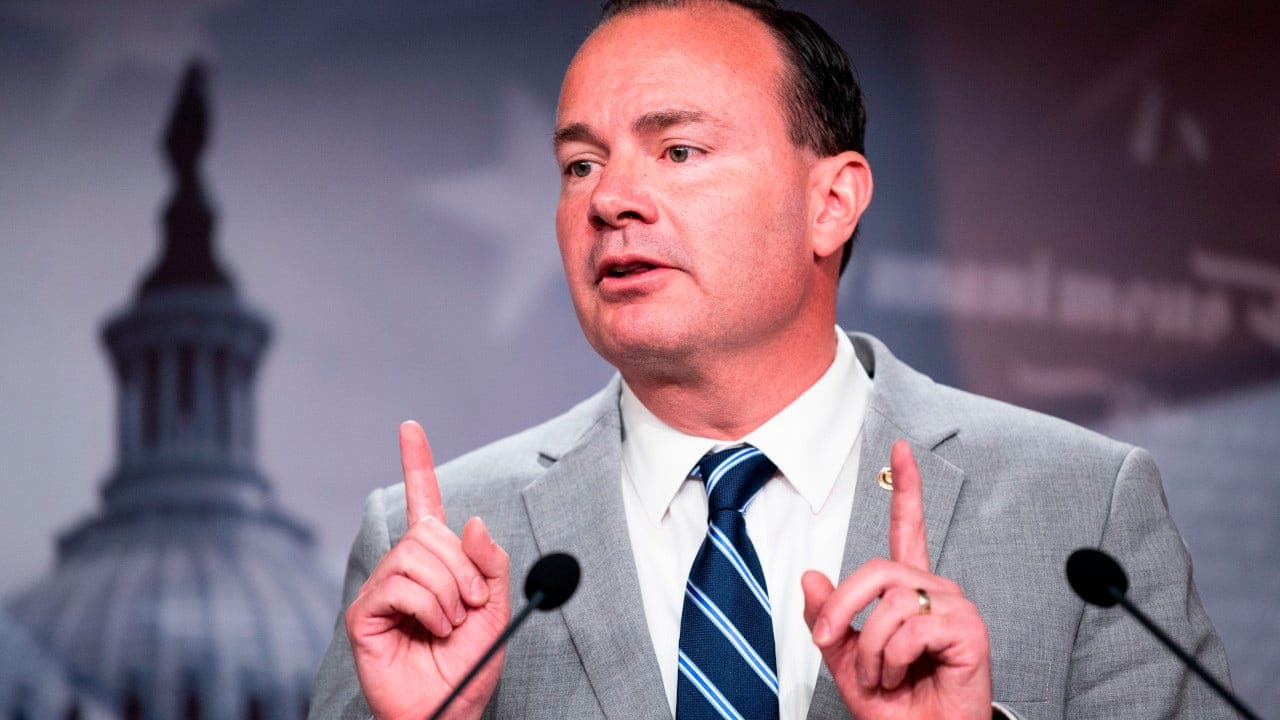
Senator Mike Lee's Constitutional Carry Reciprocity Act would allow any law-abiding American who may legally possess a firearm in their home state to carry it concealed across state lines, no permit required, no paperwork, no asking permission from a state government that has decided not to trust its own citizens with their constitutional rights. Twenty-seven states already recognize constitutional carry within their own borders. Lee's bill forces the remaining holdouts to recognize it too.
I spent eight years working border patrol in the Rio Grande Valley out of McAllen, Texas. I know exactly what it looks like when law-abiding people are unarmed and criminals aren't. I've responded to scenes where ranchers were found days after being robbed at gunpoint, people who didn't carry because they didn't want the hassle, the permit renewal cycle, the paperwork, the judgmental looks at the county office. The permit system doesn't disarm criminals. Criminals don't apply for permits. The permit system disarms the people who bother following the rules in the first place.
Lee introduced the bill with Senator Tommy Tuberville of Alabama as a co-sponsor. He described existing state restrictions as "hostile", his word, and the right one. A New York carry restriction isn't a public safety measure. It's a political statement about which Americans deserve their enumerated rights.
The Constitutional Argument Is Not Complicated
The Second Amendment states that the right to keep and bear arms shall not be infringed. The Supreme Court in Bruen (2022) held that New York's proper-cause licensing requirement for concealed carry was unconstitutional, with Justice Clarence Thomas writing for the 6-3 majority that firearm regulations without a founding-era historical analogue cannot survive constitutional scrutiny.
State permit requirements for concealed carry, particularly the "may issue" discretionary regimes that survived in California, New Jersey, and Hawaii before Bruen, have no founding-era analogue. The founding generation understood the right to bear arms as an individual and portable right. They did not envision county sheriffs discretionarily deciding which citizens were trustworthy enough to walk armed through their own communities.
The Fourteenth Amendment's Privileges or Immunities Clause adds further constitutional weight. Rights travel with citizens. Your First Amendment protections don't evaporate when you cross into Connecticut. Your Fourth Amendment rights don't disappear in California. The argument that the Second Amendment uniquely stops at state lines is not a constitutional argument. It's a political position wearing a legal costume, and courts are becoming less willing to let it stand.
Who "Hostile" State Laws Actually Hurt
Shaneen Allen was a Philadelphia nurse and single mother of two children. In October 2013, she was pulled over in Atlantic City, New Jersey. She held a valid Pennsylvania carry permit. She disclosed her legally owned handgun immediately to the officer, voluntarily, honestly, the way a law-abiding person does. New Jersey charged her with unlawful possession of a weapon, a second-degree felony carrying a mandatory minimum of three and a half years in state prison. The Atlantic County prosecutor initially refused to offer her access to a diversionary program. She faced years behind bars for complying with Pennsylvania law, crossing a state line, and telling the truth to a police officer.
She eventually gained entry to a pre-trial intervention program after the case attracted national attention. Her legal fees exceeded $10,000. She lost months of work. And she is not an edge case, she is the predictable outcome of a system designed to trap honest people. States like New Jersey, Maryland, and Illinois have deliberately built carry laws that criminalize the honest mistake of crossing their borders while armed.
In 2023, the Crime Prevention Research Center documented approximately 22.1 million Americans with valid concealed carry permits, a number that has grown more than 30 percent since 2020. These are people who have been fingerprinted, background-checked, trained, and licensed. By every available statistical measure, they are among the most law-abiding demographics in the United States. Permit holders in Texas are convicted of crimes at a rate of roughly one-tenth of one percent. The permit didn't make them safe. They were already safe. The permit just tells the government they exist.
The Federalism Objection Doesn't Survive Contact With History
Critics will argue that Lee's bill tramples state sovereignty. That's the wrong frame. State sovereignty protects state regulation of genuinely local matters, zoning, professional licensing, school curriculum. It does not protect state power to nullify federal constitutional rights at the state line.
When Congress passed the Civil Rights Act of 1964, it overrode state laws permitting racial discrimination in public accommodations. Nobody today argues Congress should have deferred to Mississippi's right to run its own lunch counters. The constitutional right was real. The state obstruction was unconstitutional. The federal correction was legitimate and necessary.
Identical logic applies here. States do not have the authority to strip Americans of Second Amendment protections at their borders. Lee's bill is not a federal power grab. It's a federal correction to state overreach, the same structural correction the Civil Rights Act represented sixty years ago.
Twenty-seven states already trust their citizens with constitutional carry. They moved to it because the evidence supports it and the Constitution demands it. The states maintaining permit systems aren't protecting public safety, the data doesn't support that conclusion. They're protecting a bureaucratic apparatus that burdens honest people and stops nobody who is already carrying illegally and doesn't care about the permit requirement.
Lee's bill has a long road through a Senate that includes many members from those hostile states. But it is the right bill, at the right constitutional moment, on the right legal foundation. Pass it. Let Americans carry. Let states get out of the way of rights they were never authorized to restrict in the first place.