What the Fox News Poll Actually Reveals About American Drift
A new Fox News poll released this month shows 44 percent of American voters now view socialism favorably, up from 36 percent in 2019. That's a seven-point climb in seven years. It didn't happen because socialism delivered results anywhere on earth. It happened because an entire generation was never honestly taught what it costs.
I grew up in Lagos, Nigeria, where my father ran a small electronics repair shop. The government's idea of economic management was to nationalize industries, control prices, and flood the market with regulations designed to protect state enterprises from competition. In practice, that meant a shop owner paying bribes to inspectors, watching customers disappear when imports were banned, and praying the next military government would be slightly less predatory than the current one. My father worked six days a week for thirty years. He never once saw a government program that helped him. He helped himself.
I came to the United States with a specific, lived understanding of what state control produces. What I found in American universities, where I've now taught political theory for seventeen years, was a generation being taught the exact opposite. That the state is the solution. That markets are exploitation. That Venezuela's problem wasn't socialism, it was the wrong kind of socialism.
Why Favorable Views of Socialism Are a Curriculum Problem, Not a Political One
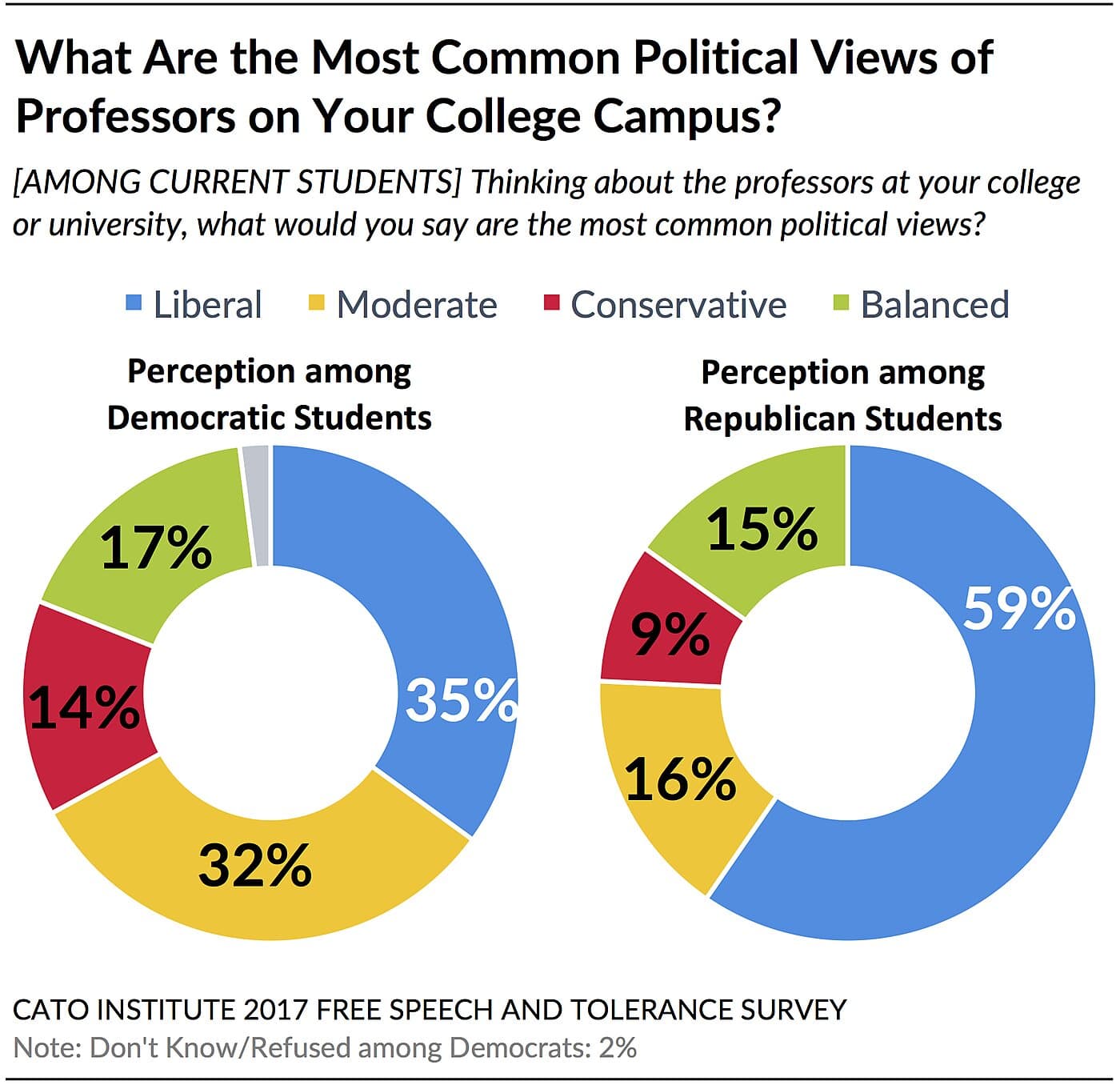
The favorability surge for socialism is the direct downstream effect of what American students have been taught for two decades, not a spontaneous ideological evolution or a rational response to economic conditions. The K-12 pipeline feeds students into universities where, according to a 2022 National Association of Scholars survey, 78 percent of social science and humanities faculty identify as liberal or far-left, compared to 6 percent conservative. Students spend four years inside an ideological monoculture and emerge believing this is simply how educated people think.
The Fox News poll found that 18-to-34-year-olds view socialism favorably at a rate of 57 percent. That's not coincidence. That's a cohort that spent its most formative years in post-2008 academia, instructed by professors who blamed capitalism for the financial crisis without ever honestly examining the role of government-mandated lending standards, Federal Reserve interest rate manipulation, or the moral hazard built into Fannie Mae and Freddie Mac.
They were not taught about the Soviet famine of 1932, which killed an estimated 5 to 7 million people. They were not assigned Solzhenitsyn. They were assigned Howard Zinn. The results are now visible in polling data.
The Definition Problem Pollsters Won't Solve
Here's what most commentary on this poll quietly skips: nobody defines the term before measuring its approval. When a survey asks whether you view socialism favorably, it might be measuring support for Nordic-style social democracy, sympathy for Medicare expansion, or genuine belief in state ownership of the means of production. The instrument conflates all three, and the conflation is convenient for everyone promoting the favorable number.
Bernie Sanders, who honeymooned in the Soviet Union in 1988 and praised bread lines in a 1985 video, calls himself a democratic socialist while pointing to Denmark as the model. Denmark's prime minister, Lars Løkke Rasmussen, responded directly to that comparison in 2015, telling an audience at Harvard's Kennedy School: "Denmark is far from a socialist planned economy. Denmark is a market economy." That distinction matters enormously.
When 44 percent of Americans say they view socialism favorably, a large fraction believe they're endorsing Danish-style social programs. They're not being offered a real definition. They're being offered a brand, polished over decades by media figures, professors, and politicians who all profit from the confusion.
What an Honest Reckoning Would Actually Look Like
The answer to creeping socialist favorability is not louder Republican messaging. It's not a better ad campaign. It's an honest educational reckoning with what socialism has actually produced wherever it's been tried at scale, Cuba, Venezuela, North Korea, the entire Soviet bloc. Mao's collectivization killed an estimated 30 to 55 million people between 1958 and 1962. That number is not a policy failure. That's a body count with a specific ideological cause.
The same Fox News poll found that only 36 percent of voters view capitalism unfavorably. Which means even among those who favor socialism, many don't actually dislike capitalism. They want both, markets that generate unlimited wealth and governments that redistribute it infinitely without diminishing the source. That's not a coherent economic position. It's a vibe. And vibes are precisely what you produce when you strip economic history from the curriculum, replace it with grievance frameworks, and call the result critical thinking.
My father repaired televisions in Lagos until he was sixty-two. He never complained that the market was rigged against him. He adapted, learned, and survived. When he finally visited me in the United States, he walked through a Walmart in Columbus, Ohio, and stood in the produce aisle for ten minutes without saying anything. Then he said, "This is what freedom looks like."
He was right. And American institutions are spending enormous energy teaching young people to see that produce aisle as evidence of injustice rather than as the single greatest material achievement in the history of civilization.
The poll numbers are not surprising. They are the invoice for thirty years of educational negligence. Someone is going to have to pay it.