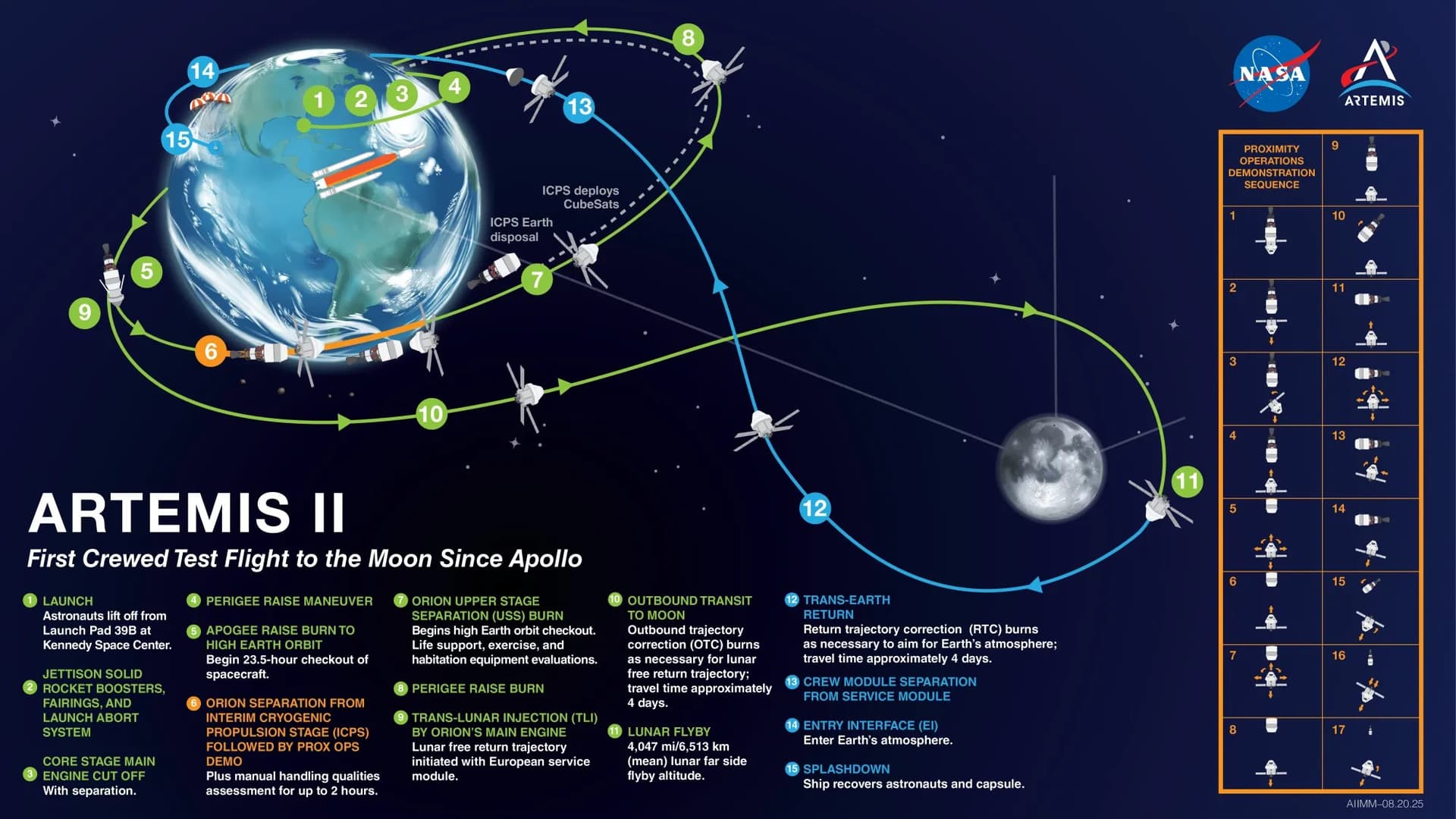
The rocket cleared the tower at 1:37 a.m. Eastern on February 9, 2026. Four astronauts, Reid Wiseman, Christina Koch, Victor Glover, and Canadian Jeremy Hansen, punched out of Earth's gravity well for the first time since Gene Cernan walked on the Moon in December 1972. Fifty-three years. America watched, collectively exhaled, and called it a triumph.
I don't want to take that away from them. The crew risked their lives. The engineers worked decades to make this happen. The mission succeeded.
But the price tag deserves the same attention the launch footage gets.
A $93 Billion Program That Built One Working Rocket
NASA's Artemis program has cost American taxpayers approximately $93 billion since its inception, a number that keeps climbing. The Space Launch System, the rocket that carried Wiseman's crew toward the Moon, costs roughly $4.1 billion per launch. Per launch. One rocket. It flies once and gets discarded in the ocean.
SpaceX's Falcon Heavy, a private launch vehicle that has successfully carried classified government satellites, commercial payloads, and once a Tesla Roadster into heliocentric orbit, costs around $150 million per flight. That's not a rounding error. The government's rocket costs twenty-seven times more than the private alternative. And it cannot be reused.
Boeing built the SLS core stage. Boeing's track record on this program is a masterclass in cost-plus contracting dysfunction. The Government Accountability Office flagged Artemis cost growth in four separate reports between 2021 and 2025. Senator Tom Coburn used to call this kind of thing "government gold plating." He was right then, and the habit hasn't changed.
The astronauts flew. The mission worked. None of that changes the math.
The Private Sector Built a Cheaper Rocket. Congress Funded the Old One Anyway.
SpaceX's Starship, a fully reusable super-heavy launch vehicle with more payload capacity than SLS, began flight testing in 2023 and by early 2026 had completed multiple successful integrated flights. Elon Musk's team built the most powerful rocket in human history at a fraction of government cost, without a cost-plus contract protecting them from their own failures.
Congress kept writing checks to the legacy contractors anyway. Because senators have aerospace plants in their districts. Because the defense contractor lobbying ecosystem doesn't change based on mission performance. Because in Washington, sunk costs aren't a fallacy, they're a business model.
This isn't an argument against space exploration. It's an argument against the political economy that makes government the only entity allowed to spend real money on it.
Growing up near Huntsville, Alabama, where my father assembled rocket components for a government contractor, I watched what cost-plus contracting does to engineers who actually care about the mission. They move slower than they should. Their best ideas get buried in approval chains. The people who want to make the schedule get promoted over the people who want to make the rocket better. It's a system optimized for contract extension, not breakthrough.
Who Gets the Credit When Government Writes the Check?
NASA coordinated the Artemis II mission. The Orion capsule Wiseman's crew rode was built by Lockheed Martin under a contract worth over $20 billion since 2006. The service module was built by the European Space Agency. The launch pad infrastructure dates to the Apollo era. Multiple private firms did the actual fabrication.
Is that enough to call it a government triumph?
That question rarely gets asked at the victory parade. When Boeing's 737 MAX crashed, we held Boeing accountable. When a NASA mission succeeds, the agency takes the credit that contractors earned. That asymmetry tells you exactly how power works in Washington. The accountability flows down; the credit flows up.
NASA Administrator Bill Nelson told Congress in 2022, "We are building the most powerful rocket in history." He was right. He didn't mention the cost per flight. Both sentences were true. Only one got delivered at the podium.
Space Belongs to Whoever Gets There, Not Whoever Controls the Budget Line
I want America in deep space. Permanently. On the Moon, on Mars, beyond. Space is the ultimate expression of human freedom, limitless territory where no government claims sovereignty, where the laws of physics are the only authority that matters.
The Commercial Crew program showed the right model: NASA as customer, private industry as provider, competition driving cost down and capability up. That program cost roughly $8 billion total and produced two operational crew vehicles. SLS has consumed $93 billion and counting for one rocket that burns up on reentry.
The Artemis II crew made it to lunar orbit and back. That deserves real respect. But somewhere between the launch pad and the Moon, Americans need to ask whether $4.1 billion per flight is an acceptable price, or whether we're subsidizing the aerospace industry's comfortable relationship with the federal treasury while calling it national achievement.
The stars don't care who funds the rocket. The taxpayers should.