The Risk Factor the Drug Industry Doesn't Want to Talk About
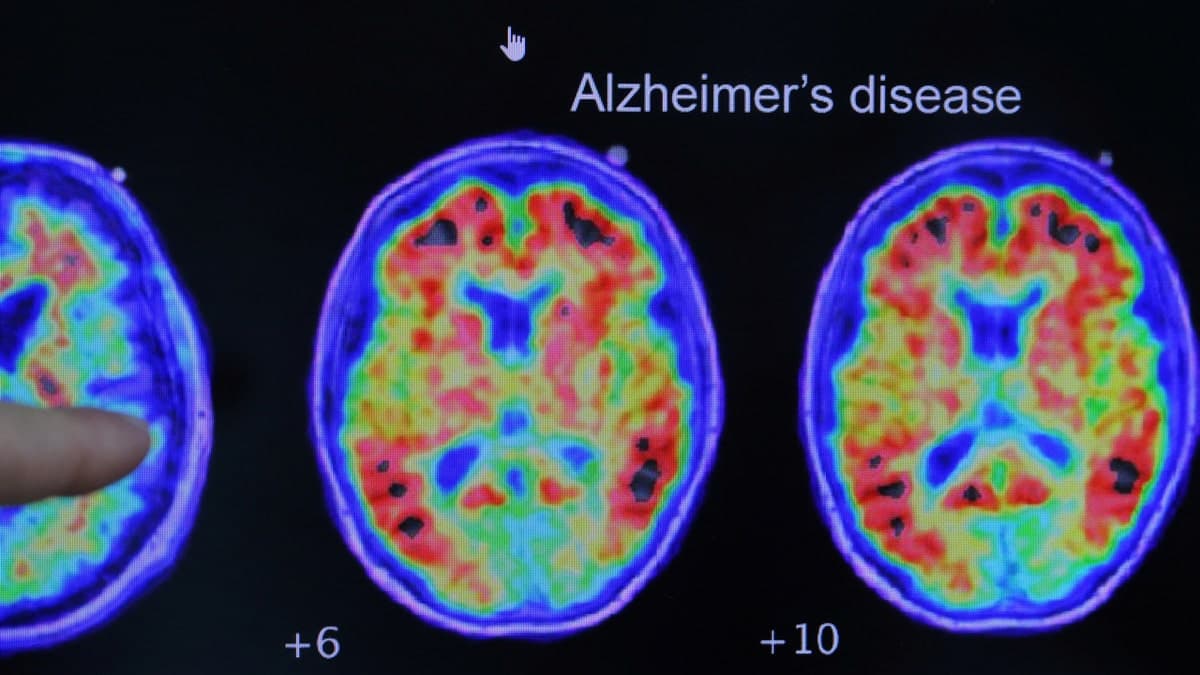
A newly published study suggests that chronic loneliness significantly accelerates Alzheimer's disease progression in adults over 65, confirming what researchers have suspected for years while the pharmaceutical industry spent billions chasing chemical solutions to what is partly a social problem. Social isolation doesn't just affect mood. It reshapes brain architecture, accelerates amyloid plaque buildup, and strips years from cognitive health. That's the data.
My grandmother never once sat alone at a table. Sunday dinners at her house in San Antonio meant twenty people minimum, three generations arguing about soccer and politics, kids underfoot, the smell of tamales and coffee filling a house where she raised six children. She died at 83 with her memories intact. I don't know if that was the food, the chaos, or the faith. But I've thought about it every time I read one of these studies.
The Alzheimer's Association reports that 6.9 million Americans aged 65 and older are currently living with Alzheimer's disease. By 2050, that number climbs to 13 million if trends hold. Staggering figures. Abstract until they're not, until you're the one doing the driving, the pill-sorting, the middle-of-the-night check-ins.
The Invisible Economy of Family Caregiving
The annual economic burden of Alzheimer's care in America reached $360 billion in 2024, according to the Alzheimer's Association, and that number dramatically undercounts the real damage because it can't fully price what families silently absorb. Approximately 11 million Americans provide unpaid care for a person with Alzheimer's or dementia. They logged 18.4 billion hours of unpaid labor in a single year. At federal minimum wage, that's $133 billion in invisible labor the economy extracts and never compensates.
Who are these caregivers? Mostly women. Mostly over 50. Disproportionately Hispanic and Black. Disproportionately working-class. The woman who quit her job as a medical assistant to care for her father doesn't show up in the unemployment statistics. She shows up in the poverty statistics. Later.
"Family caregivers are the true backbone of Alzheimer's care in America," Dr. Maria Carrillo, Chief Science Officer of the Alzheimer's Association, has said.
She's right. They're also the most systematically ignored constituency in every piece of healthcare legislation Washington has produced in a generation. The average lifetime cost of caring for a person with Alzheimer's runs approximately $390,000 per patient. That's not a medical bill. That's a family bankruptcy with a slow fuse.
Washington Funds the Drugs, Not the Families
The federal government's approach to Alzheimer's has been almost exclusively pharmaceutical, Congress approved $3.7 billion for Alzheimer's research at the National Institute on Aging in fiscal year 2024, while the 11 million family caregivers providing 18.4 billion hours of unpaid annual labor receive no direct federal compensation, no meaningful tax relief, and no guaranteed respite care. One real drug in twenty years. A caregiving workforce running on fumes.
Leqembi, manufactured by Eisai and Biogen, received FDA approval in July 2023. It slows early-stage cognitive decline by roughly 27% in clinical trials. Annual price: $26,500. Medicare initially limited coverage to patients enrolled in clinical trials. The drug requires monthly IV infusions and quarterly MRIs to monitor for brain bleeding. None of this reaches the family in Laredo or the widow in rural Nebraska.
The pharmaceutical industry donated $374 million to congressional campaigns in the 2022 election cycle, per OpenSecrets. Research funding flows. Approvals accelerate. Prices stay out of reach. And the daughter who cut her work hours to drive Mom to three appointments a week gets a pamphlet from a social worker and a referral to a waiting list.
What would actually help? A refundable caregiver tax credit. Direct respite care funding to families, not institutions. Medicaid expansion covering home-based care without demanding financial ruin first. Zoning reforms enabling multigenerational housing. None of this requires a new federal agency. All of it requires political will that evaporates whenever the lobbyist calendar fills.
What Latino Families Know That Policy Wonks Don't
Hispanic Americans place their elders in nursing homes at significantly lower rates than white Americans at comparable income levels, research consistently confirms this gap holds after controlling for income, and the explanation isn't poverty: it's a cultural commitment to family care that policy makers have never taken seriously as a health intervention worth protecting and supporting.
Is Washington going to recommend that Americans eat dinner together more? No. But the new research on hidden risk factors is pointing directly at what modern American life has done to its elderly: isolated them, institutionalized them, stripped away the daily human contact that turns out to be neurologically vital. No drug fixes that. None is being developed to fix that.
The solution starts with taking the unpaid caregiver seriously, not as a footnote in a healthcare bill, but as the actual backbone of a system that would collapse in months without her. She deserves more than a November awareness campaign. She deserves a tax credit, direct support, and a government that counts her labor before it writes a budget.
There's a word for a society that extracts billions of hours of labor from its most dedicated citizens, compensates them nothing, offers no safety net when they burn out, and calls the whole arrangement family values. That word is exploitation. Conservatives should be first to name it, and first to fix it. The government finds money for everything else. It can find money for the people actually holding American families together.