What Trump Is Actually Proposing
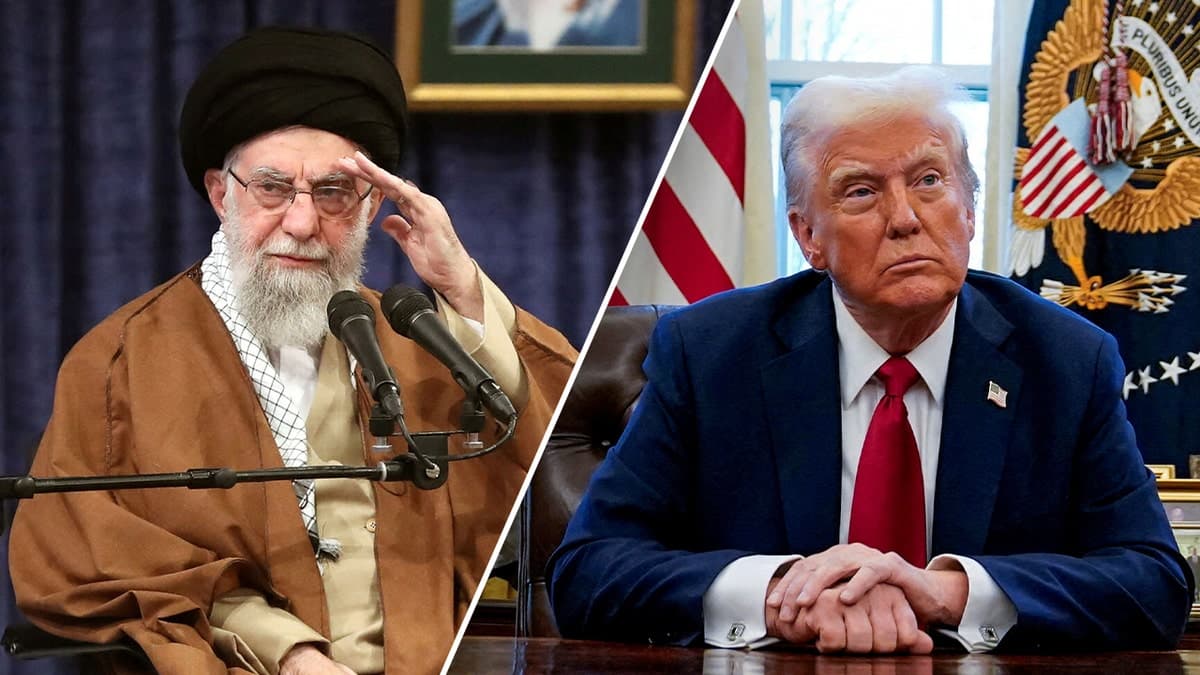
President Trump told reporters on April 15, 2026, that he is "considering" a limited military strike on Iranian nuclear facilities as leverage in ongoing negotiations over Tehran's enrichment program. This is not a declaration of war. It is a signal, the kind that only works if the other side believes it is real, and the kind Trump has deployed before with measurable effect.
The word "considering" is doing significant work in that sentence. Trump used a similar architecture in January 2020 when he authorized the strike on Qasem Soleimani. He had been considering it. He did it. Iran made the calculation that they shouldn't push further and largely avoided direct strikes on U.S. forces in the Gulf for the remainder of that term. Deterrence isn't a declaration. It's a demonstrated willingness to act.
Tehran's current negotiating position is that enrichment continues at 60% purity, three-quarters of the way to weapons-grade, while diplomats talk. The International Atomic Energy Agency's March 2026 report stated that Iran holds sufficient enriched uranium to produce a nuclear weapon within 12 days if it chose to enrich further. The talks are happening while the clock runs.
Iran's Nuclear Program Is Not a Hypothesis
Iran's nuclear capability has passed a threshold that cannot be managed through patience and incremental pressure. The IAEA's March 2026 report documented 8,294 kilograms of enriched uranium across Iran's declared facilities, a 300-kilogram increase from the previous quarter. At 60% enrichment, the technical step to 90% weapons-grade takes weeks, not months. This is not a country warming up. It's a country in the final approach.
Iran has also installed advanced IR-6 centrifuges at its Fordow facility, which is buried under a mountain and largely immune to conventional air strikes. This is not a country bluffing about nuclear ambitions. It's a country building toward them with patience and precision, while Western diplomats who don't want to look hawkish say "give it time."
National Security Advisor Mike Waltz said in a February 2026 briefing that "Iran is closer to a nuclear device than at any point in the Islamic Republic's history." The IAEA's language in its March report confirmed the same assessment in different terms. The consensus isn't that Iran might develop a weapon. The consensus is that Iran is developing one. The only open question is the timeline.
Israeli Prime Minister Benjamin Netanyahu has been saying this for fifteen years. He's been mocked for it in editorial pages on both sides of the Atlantic. But every IAEA report since 2019 has moved in the direction he described. Being early on a correct prediction isn't being wrong.
The Obama-Biden Record Is the Cautionary Tale
The 2015 Joint Comprehensive Plan of Action, the Iran nuclear deal, was built on the theory that engagement and relief would moderate Tehran's behavior. It didn't. Iran received approximately $150 billion in sanctions relief, used significant portions to fund Hezbollah, the Houthi insurgency, Hamas, and militia networks across Iraq and Syria, and never stopped enrichment activities. It slowed them, strategically, until the deal collapsed and Iran could resume without consequence.
Biden re-entered nuclear negotiations in 2021 and continued through 2023. By 2024, Iran had accelerated enrichment past 60% and was caught operating a previously undeclared centrifuge facility near Isfahan. The engagement strategy produced more centrifuges, not fewer.
I've watched three administrations try to talk Iran out of its nuclear program. Every single one made the same error: treating this as a policy disagreement that could be resolved by finding the right incentive structure. Iran's nuclear program isn't a policy preference. It's a strategic pillar of the regime's survival calculus. The ayatollahs believe nuclear capability is what keeps them in power. No sanctions package changes that belief. Only the credible prospect of military action does.
What Deterrence Actually Requires
Deterrence works through demonstrated willingness to act. Not through threats alone, not through diplomatic frameworks, and not through sanctions packages that can be renegotiated at the next administration's convenience. It works when the other side has seen you follow through and believes you will again. Trump's track record on credibility is stronger than his critics acknowledge.
The Soleimani strike in January 2020 changed Iranian behavior more durably than six years of Obama-era engagement. After that strike, Iran pulled back from direct military action against U.S. positions in Iraq for the remainder of Trump's first term. They resumed proxy strikes after Biden took office and signaled that comparable action was off the table. The lesson was simple: deterrence worked when the administration meant it.
A limited military strike on Iranian nuclear infrastructure, not regime change, not a ground campaign, would set back the program by an estimated two to four years, according to former Pentagon officials who briefed Congress in 2024. Two to four years buys time for negotiations to produce something real, rather than the strategic delay Iran has used previous diplomacy to purchase.
Is this a gamble? Yes. Iran's proxies could respond. The Strait of Hormuz could face disruption. Oil prices would spike. These are real costs. But a nuclear-armed Iran, or a preemptive Israeli strike that the U.S. had no hand in shaping, carries higher costs than a calculated, limited strike with clear objectives. Trump is doing the right math. He should trust the answer it produces.


