The Bombers Don't Lie
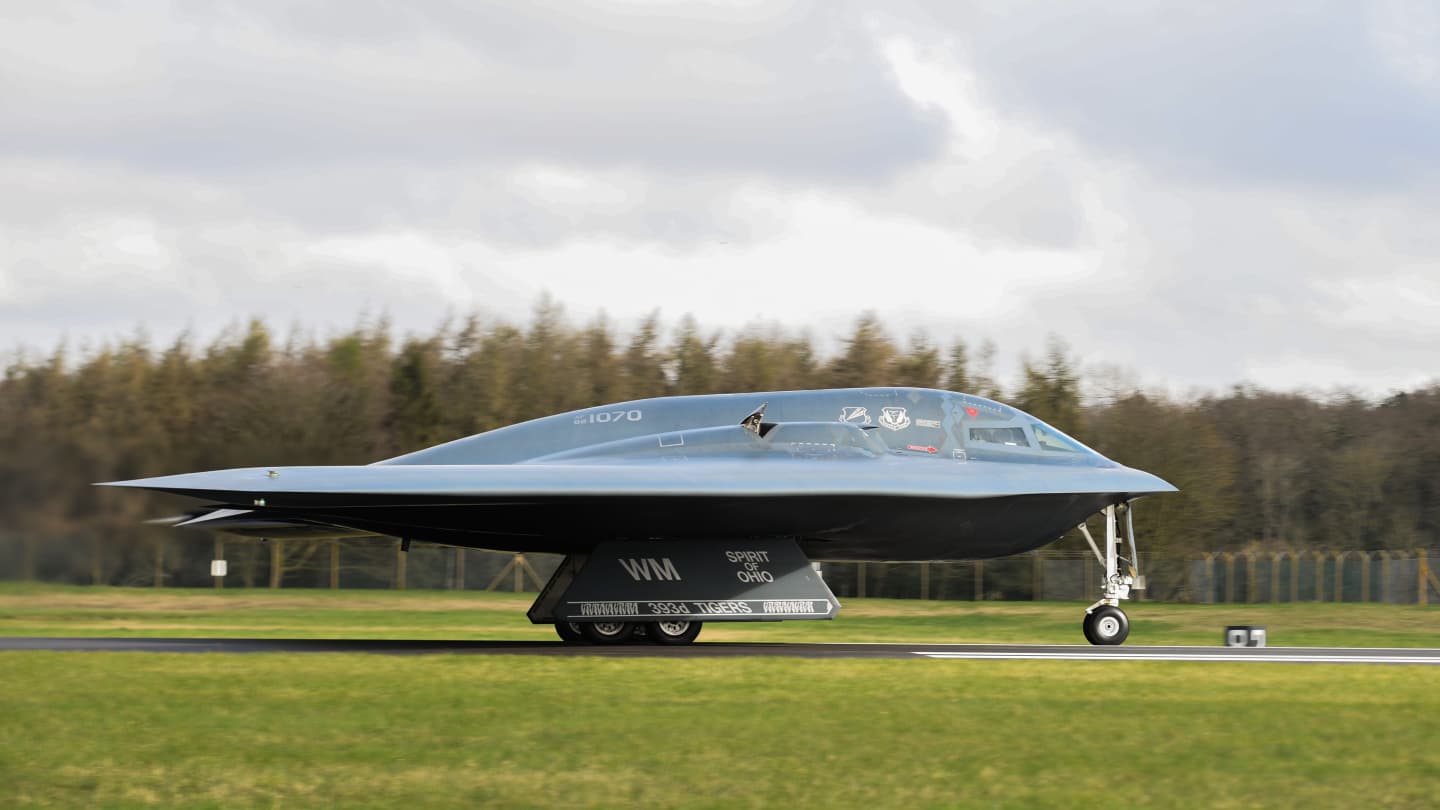
B-2 Spirit stealth bombers will be touching down at RAF Fairford in Gloucestershire within days. Not next month. Not after another NATO summit communiqué. Days. That fact cuts through a year's worth of foreign policy commentary about how Trump's pressure campaigns are supposedly damaging Western alliances.
For the better part of 2025, Keir Starmer's Labour government had been doing what European governments do best: pledging. Promising defense reviews. Nodding at NATO targets. Issuing solidarity statements. Britain's defense budget hovered at 2.32% of GDP in 2024, above the 2% floor but well short of the 2.5% elevated target that allied governments had been publicly backing since 2023. Commitments were made. Timelines were vague. The Americans waited.
Then they stopped waiting.
What a B-2 Deployment Actually Signals
The B-2 Spirit is not a patrol aircraft. It's a nuclear-capable strategic bomber with an unrefueled combat radius of roughly 6,000 miles, a stealth profile that makes it nearly invisible to radar, and a payload capacity of 40,000 pounds. When you station B-2s in Europe, you're not sending a diplomatic note, you're parking a first-strike capability within range of Russian strategic assets.
RAF Fairford in Gloucestershire has hosted American heavy bombers before, during NATO's air campaign over Kosovo in 1999, and again during operations over Libya in 2011. The base knows what this kind of mission looks like. So does Moscow.
Russian military doctrine has long wagered that Europe lacks both the political spine and the hardware to threaten Russian strategic assets. B-2s operating from British soil challenge that assumption in a way that no press release can. This is deterrence with teeth. Steel in the air over the English countryside, not another framework agreement.
Why Trump Had to Apply Pressure
I've watched enough NATO discussions to recognize the pattern: America asks, Europe nods, deadlines slide, America asks again. The alliance has never actually enforced its spending guidelines against a member in 75 years of existence. Every government in Europe has internalized that fact.
Trump broke the pattern. "Britain needs to step up," he said during a press exchange earlier this year. "Our allies need to carry their weight. We're not going to be taken advantage of." Blunt. Unconventional by the standards of alliance diplomacy. And it worked. Starmer's government announced an accelerated defense spending roadmap. Within weeks, reports of imminent B-2 deployments emerged. The sequencing is not coincidental.
When an American president makes clear that the relationship has real conditions attached to it, European leaders discover political will they didn't know they had. This has been the consistent result of Trump's pressure across NATO. The establishment finds it reckless. The outcomes keep contradicting them.
The Commentariat's Consistent Wrong Bet
The bipartisan foreign policy consensus holds that allies must be reassured, never pressured. That the way to get Europe to spend more on defense is through patient multilateral encouragement and solidarity messaging. Publicly criticizing allies, in this view, damages trust and hollows out the architecture of Western security.
Ten years of gentle encouragement produced a Europe importing Russian gas through February 2022, right up until tanks crossed into Ukrainian territory. Germany's Bundeswehr was so underfunded that its army couldn't field a combat-ready brigade. Italy spent 1.46% of GDP on defense as recently as 2022. Poland and the Baltic states were the exceptions, and they were exceptions precisely because they felt the threat directly, not because of diplomatic suasion from Brussels.
But the consensus kept the faith in soft power. Don't pressure allies. Trust the institutions. And here we are.
Trump names the problem publicly, attaches consequences, and makes clear that American security guarantees are not unconditional. Left-leaning governments like Starmer's respond by actually moving. Is that reckless alliance management, or the most honest thing an American president has said to a European partner in thirty years? The B-2s landing at Fairford answer the question.
What Britain Still Needs to Reckon With
The deployment at RAF Fairford is temporary. B-2s rotate through European bases for deterrence missions and then return to Whiteman Air Force Base in Missouri. But the pattern matters beyond any single visit.
Britain currently operates 149 combat aircraft. Its Royal Navy surface fleet is a fraction of its Cold War-era size. The country has been drawing down military capability for three decades on the assumption that the post-Cold War peace dividend was real and permanent. It wasn't. And every government, Conservative and Labour alike, that made that bet owes the public an honest accounting.
The B-2 deployment is which shows that the Special Relationship is not a birthright. It's conditional on Britain behaving like a serious military power. Starmer has begun to internalize that. His government's revised defense commitments reflect a new political reality: the Americans mean it this time.
Some will call this alliance strain. Some will say Trump's methods are corrosive to Western unity. These are the same people who said the same things in 2017, and 2018, and 2019, and 2020. The alliance outlasted their predictions each time. It may outlast them again, stronger for having had the honest conversation that polite alliance management kept deferring.
American stealth bombers. British runway. European governments quietly moving to meet their obligations. The president's critics calling it reckless.
I call it working.


