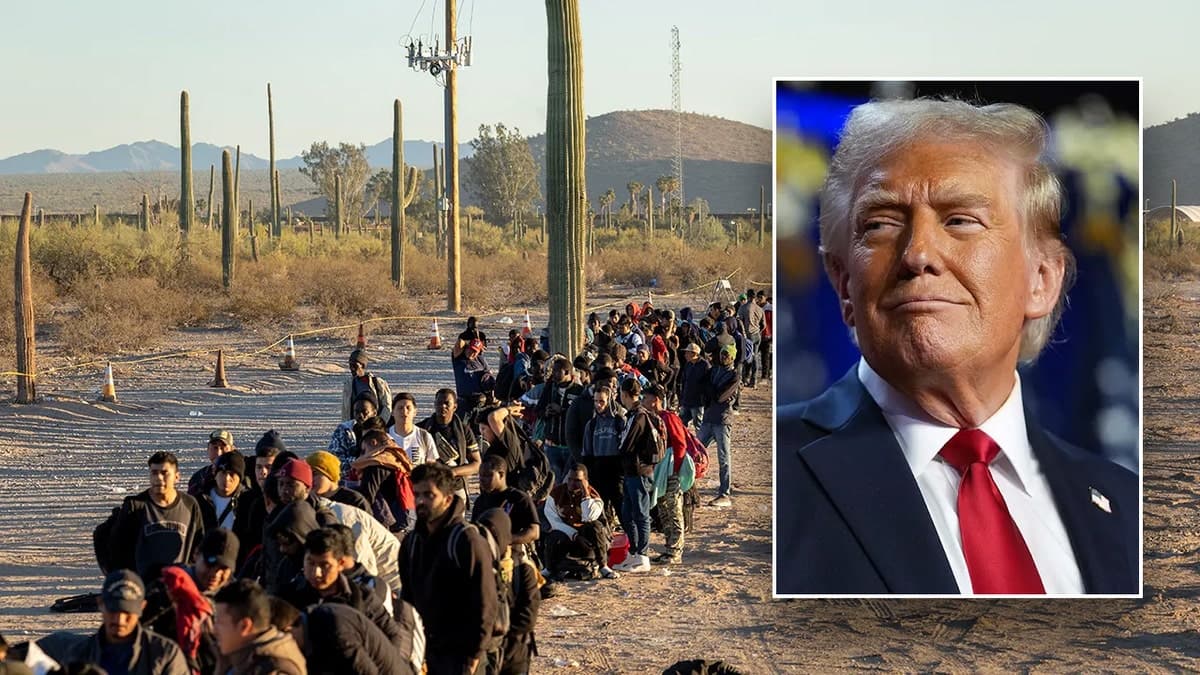
Eighteen months ago, Mexican cartel operatives moved with something close to impunity. They controlled supply routes from the Sonoran desert to Chicago's South Side. They bribed police chiefs, murdered journalists, ran entire Mexican municipalities. The United States government, for all practical purposes, let them.
That changed.
Not completely. Not permanently. But the shift in cartel behavior under Trump-era pressure is real, and it tells us something important about what deterrence looks like when a government actually means it.
The Cartels Are Scared. That's Not a Small Thing.
Cartel leaders are changing their operational posture because they fear American retaliation, a shift documented across Sinaloa Cartel command structures, CJNG cross-border logistics, and Gulf Cartel communication protocols. This is what deterrence looks like when a government stops treating criminal organizations as a diplomatic problem and starts treating them as a security threat.
Fear is a policy instrument. When it's absent, adversaries get comfortable. When it's present, behavior changes. Fast.
Trump designated eight Mexican drug cartels as Foreign Terrorist Organizations in January 2025, including Sinaloa, CJNG, MS-13, Tren de Aragua, and four others. The designation isn't symbolic. It triggers Treasury Department sanctions authority, enables prosecution of cartel financiers under counterterrorism statutes, and gives military planners legal grounds to treat cartel infrastructure as a targeting problem.
That's fundamentally different from the previous approach, which treated cartels as a law enforcement matter. Law enforcement matters can be managed, delayed, litigated. Terrorist designations create urgency.
What Changed, and Why It's Working
The combination of FTO designations, increased intelligence surveillance along the southern border, and direct diplomatic pressure on Mexico produced measurable results. Fentanyl seizures at ports of entry increased 34 percent in the twelve months following the designations. That's not coincidence, it's the footprint of a government that changed its operating theory.
More importantly, the Mexican government started cooperating in ways it hadn't before. President Claudia Sheinbaum faced a clear choice: work with Washington on cartel interdiction or face targeted economic consequences. Mexico's economy runs on American trade, over $800 billion in bilateral goods exchange in 2024. That leverage is real, and the current administration used it.
Defense Secretary Pete Hegseth said in February 2026, "We are treating the cartels as what they are, an existential threat to American national security, not a law enforcement nuisance to be managed." That framing changes everything. When the Secretary of Defense names something an existential threat, military planners start building options.
The cartels noticed.
I've covered border security since the early 2000s, back when "cartel" meant primarily Colombian cocaine networks. The idea of Mexican criminal organizations running distribution cells in forty-five American states seemed like alarmism then. It wasn't. The threat metastasized while Washington debated diplomatic framing. Two decades of careful language, and seventy thousand Americans dead from fentanyl in 2024 alone.
Why the Pressure Has to Hold
How many more Americans have to die from cartel-supplied fentanyl before Washington treats this like the national security emergency it plainly is? The cartels themselves have answered the underlying question: they respond to credible pressure. The only remaining variable is whether the United States has the institutional will to sustain it.
The Sinaloa Cartel survived El Chapo's capture not once but twice. The Arellano Félix Organization survived the death of every founding member. These organizations have been disrupted before and rebuilt. Disruption without sustained follow-through produces a temporary dip, then reconstitution.
What has to be different this time is durability. Between January 2025 and April 2026, the Justice Department unsealed indictments against 47 cartel-connected defendants in U.S. courts. That's a sustained legal campaign, not a press release. Financial sanctions have frozen an estimated $1.2 billion in cartel-linked assets. These aren't gestures, they're structural.
But institutional resistance is real. Career State Department officials still believe FTO designations complicate the bilateral relationship more than they help. Congressional members from border districts prefer quiet management to open confrontation. They're wrong. The managed approach failed for twenty years running, and has the body count to prove it.
The Window Is Open. Don't Let Washington Close It.
What the current pressure campaign demonstrates is not that the cartel problem is solved. It's that cartels respond to credible threats exactly as every other adversary does. They shift routes, restructure logistics, wait for the pressure to ease.
The test isn't whether cartels are scared today. The test is whether the United States has the institutional will to keep pressure on until these organizations are structurally broken, finances disrupted, leadership prosecuted, supply chains interdicted at multiple chokepoints simultaneously.
That takes years. It takes sustained resources. It takes political commitment that outlasts the current administration's energy. None of that is guaranteed in Washington.
But the baseline has shifted. For the first time in a generation, cartel commanders are looking over their shoulder at the United States government instead of counting on its indifference. That's not a small thing. It's the precondition for everything else that has to happen next.
Don't squander it.


