The Speech Europe Didn't Want to Hear
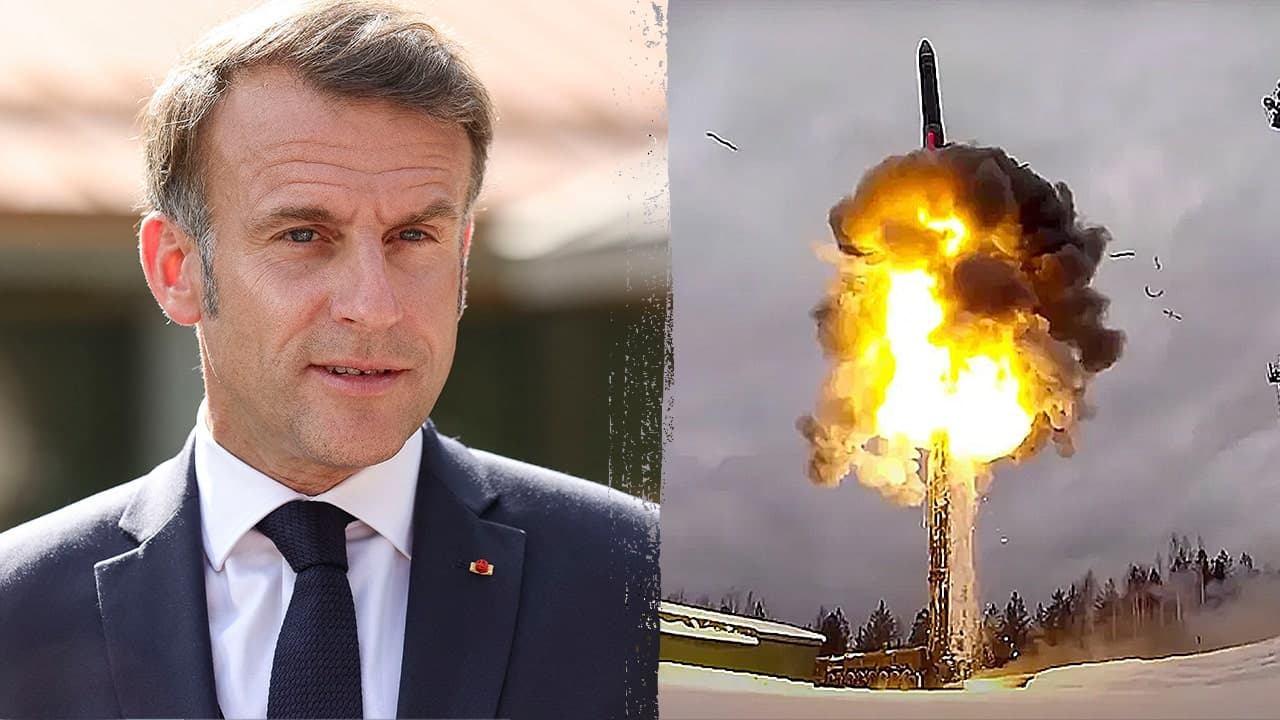
France's Emmanuel Macron formally proposed extending French nuclear deterrence across Europe in early 2025, the most serious attempt yet to fill the strategic gap created by uncertain American commitment to NATO. This is the speech European leaders spent thirty years carefully avoiding, and its arrival tells you more about the current strategic moment than any policy paper or alliance communiqué.
The proposal came before the French parliament and was directed at European partners with a proposition that would have been dismissed as Gaullist theater in 2018: that France's arsenal of approximately 290 nuclear warheads could credibly serve as a deterrent for a broader European security architecture. The room went quiet. Not from shock, the idea has circulated in think tanks for years, but because someone with actual authority finally said it publicly and meant it.
The strategic backdrop is not subtle. Russia maintains an estimated 5,889 nuclear warheads. The United States holds 3,708. France stands alone among NATO's European members with a genuinely independent nuclear deterrent, Britain's Trident program is so deeply integrated with American infrastructure that its independence is largely notional. For decades, everyone agreed that America's nuclear umbrella made the French arsenal a redundancy. That assumption is now the thing under review.
Thirty Years of Free Riding Come Due
European security since 1991 was built on the premise that American commitment was unlimited, unconditional, and insulated from domestic political pressure. Only 23 of NATO's 32 members met the 2% GDP defense spending target in 2024, after years of treating it as an aspirational suggestion rather than a hard floor. That premise failed in plain sight, and everyone pretended not to notice until they couldn't anymore.
Russia's defense budget reached approximately $109 billion in 2024, roughly 6% of GDP, the highest sustained level since the Cold War. China is expanding its nuclear arsenal at a pace the Pentagon projects could reach 1,000 warheads by 2030. These are not distant forecasts. They are the actual environment inside which European capitals have been operating while debating carbon tax structures and refugee processing quotas.
I spent time in Brussels in 2023 talking to defense analysts who openly laughed at the idea that Europe would meaningfully rearm. "The politics are impossible," one senior fellow told me, at a think tank that has since revised its projections dramatically upward. The politics changed because reality changed. That's how it usually works when you wait long enough for reality to insist on being taken seriously.
The asymmetry between European defense spending and what the security environment demands has been visible for years. What changed in 2024 and 2025 wasn't the threat, it was the willingness of the American political class to keep absorbing that asymmetry without complaint. When that willingness evaporated, the math became impossible to ignore across every European capital simultaneously.
What France Is Actually Proposing
The French deterrent proposal is a strategic dialogue, not a power grab dressed up as European solidarity. Macron is not offering to place French weapons under NATO command or European Union authority. He's proposing a conversation: can France's arsenal credibly extend deterrence to allies who face a nuclear-armed adversary with no independent nuclear cover of their own? The deliberate ambiguity in the proposal isn't evasion. Nuclear deterrence operates through ambiguity. Clarity undermines the mechanism itself.
France's modernization program gives the rhetoric industrial credibility. The ASMP-A air-launched cruise missiles are being upgraded to the ASN4G variant, extending range and survivability well into mid-century. The SNLE-3G program, fourth-generation ballistic missile submarines, is designed to maintain credible second-strike capability through 2060. When a government makes procurement commitments of that duration and cost, the accompanying strategic rhetoric deserves to be taken at face value.
Britain's Foreign Secretary David Lammy described the moment as "a fundamental shift in European strategic thinking" in February 2025. That's diplomatic understatement. What's actually happening is more uncomfortable: Europe is being asked to pay for something it has received free for a generation. The question isn't whether European nations should bear more responsibility for their defense, that debate is over. The question is whether they can build the institutional and industrial capacity to do it before the strategic window closes.
The Conservative Case for Getting This Right
There's a temptation on the American right to dismiss European nuclear ambitions as Gaullist vanity or as the strategic naivety of a continent that hasn't fought a serious war on its own soil since 1945. Both charges have historical purchase. But there is something strategically incoherent about simultaneously demanding that Europe spend more on defense and sneering when a European leader makes the most substantive proposal for European defense independence in a generation. You don't get to have it both ways.
Macron is right about this, not about his domestic economic management, which has produced the kind of political wreckage that fills entire French news cycles, but about the core strategic diagnosis. European security cannot be structurally dependent on American political will that is subject to election cycles and domestic coalitions that shift every four years. That's not an argument against NATO. It's an argument for NATO having a European pillar that bears actual weight rather than symbolic weight.
Who, exactly, is supposed to maintain nuclear deterrence in Europe if France doesn't step up? The question answers itself. Republicans who want America disengaged from European entanglements should welcome a more capable European deterrent. Republicans who want NATO effective should want European members capable of genuine contribution to collective defense. The positions differ; the conclusion is identical.
The reckoning Macron is naming is not a crisis of his making. It is the accumulated consequence of three decades of comfortable assumptions colliding with an uncomfortable strategic reality. France has made its choice. It has committed resources, made investments, and put its doctrine on the table. The rest of the continent is running out of time, and excuses.


