What the Leak Was Really Designed to Do
Leaking that the Chairman of the Joint Chiefs opposes military action against Iran, directly to reporters, before any presidential decision is announced, is not whistleblowing. It is a pressure campaign. It tells foreign adversaries about fractures at the highest level of American command at exactly the moment such information is most operationally valuable to them.
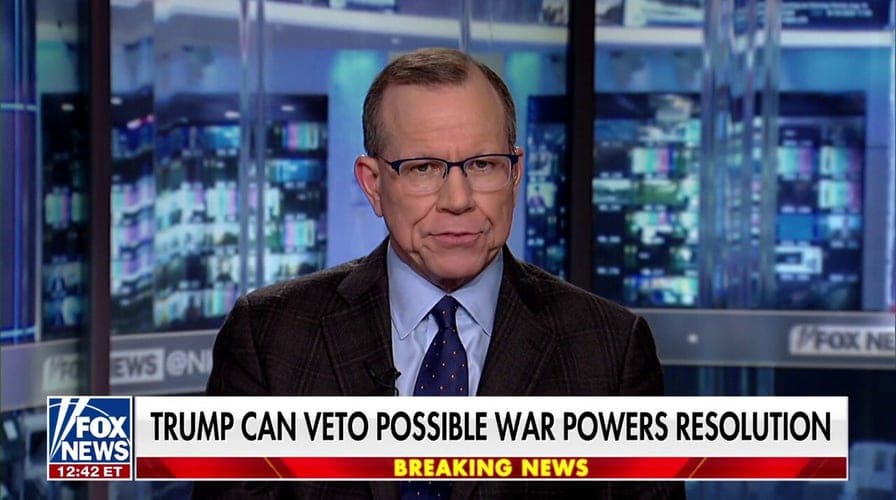
The reports surfaced in late February 2026, citing anonymous sources close to the National Security Council. General Dan Caine, confirmed as Chairman fewer than three months prior, was described as having internally opposed striking Iranian targets. Trump responded on Truth Social: "FAKE NEWS!" Whether the specific reporting was accurate matters less than what the leak itself represents, someone decided the correct response to a presidential policy direction they opposed was to call a reporter. Not civil courage. Sabotage with a press credential.
Civilian Control of the Military Is Not Optional
Civilian control of the military is the constitutional bedrock of American government, established not by ideology but by the hard lessons of what happens when armies make their own foreign policy. Article II, Section 2 of the Constitution designates the President as Commander in Chief. That's not ceremonial language. It is the supreme authority over the use of military force, and it is not contingent on the Chairman agreeing with the direction.
Every military officer takes an oath to the Constitution, not to their own strategic judgment. General Caine is entitled to policy disagreements, expressed in classified settings, through proper channels, to the President and National Security Council directly. The moment those private deliberations become newspaper headlines, someone has broken the compact. Either the general leaked, or someone in his orbit did. Either way, a foreign adversary now knows the American military establishment is not unified behind the Commander in Chief. That is not a neutral fact. It is an intelligence product delivered free of charge.
I've watched national security bureaucracies operate long enough to know the Pentagon has always had methods for shaping, slowing, and sometimes burying presidential directives it dislikes. That's not new. What's new is the brazenness, the willingness to use the press not as a last resort of genuine conscience, but as a first-strike weapon in a policy fight.
The Media Served as the Weapon, Not the Watchdog
Reporters didn't stumble onto this story. Someone handed it to them. Who benefits from America's adversaries knowing the Chairman of the Joint Chiefs opposed a strike on Iran?
Iran's Supreme Leader Khamenei benefits. His negotiators benefit. The Islamic Revolutionary Guard Corps benefits. Iran's Supreme Leader has publicly stated he will not negotiate under military pressure, a position he reiterated in January 2026 statements, and leaks like this confirm to him that waiting has value. When internal military dissent becomes public knowledge, it signals to Tehran that the threat isn't unified, that delay pays off, that the American President is operating against his own generals. These aren't neutral data points. These are gifts delivered at no cost to the recipient.
The outlets that ran the story did so without examining what service they were rendering to whom. The sourcing, anonymous, clearly motivated, precisely timed, should have triggered harder scrutiny. Instead it became confirmation that military resistance to presidential authority exists and is significant. Mission accomplished for whoever made the call to leak.
Why Trump Calling It Fake News Has Substance This Time
Trump's "Fake News" label gets applied so broadly, to accurate reporting, unflattering profiles, routine journalism, that it's lost much of its discriminating force. In this specific case, the critique has real substance behind it.
The reporting conflated two distinct things: internal policy deliberation, which every Chairman engages in and which is healthy, with organized opposition to presidential authority, which is neither. A general who says he has concerns about operational timelines is doing his job. A general whose concerns appear in national outlets under anonymous sourcing two days later is part of a leak operation, whether he authorized it or not.
The framing transformed professional military counsel into political rebellion. That transformation serves specific purposes: it pressures the President publicly, signals to Congress that internal resistance exists, and hands Iran's government an intelligence product. If that wasn't the intent, the sources should choose their reporters more carefully. If it was the intent, they should understand exactly what they've done to American credibility in that negotiating theater.
If This Goes Unchecked, the Next Chairman Knows the Rules
In 2021, then-Chairman Mark Milley reportedly called Chinese General Li Zuocheng without notifying Congress or informing the President, to assure Beijing that the U.S. would not launch a surprise attack. Milley confirmed the calls occurred. He served out his full term. He retired with honors and wrote a bestselling book.
The lesson the permanent military-bureaucratic establishment absorbed from that episode: there are no meaningful consequences for circumventing presidential authority. None at all. Five years later, a sitting Chairman's internal policy deliberations appear in the press within days. Coincidence is not a plausible explanation for any of this.
If this administration doesn't respond with specific, named accountability, not just a Truth Social post, the next Chairman will operate under the same understanding: strategic judgment supersedes civilian authority when the disagreement is strong enough. That is not a constitutional military. That is a praetorian establishment that tolerates presidents when it chooses to. Calling it "Fake News" doesn't change the structural problem one bit.


