Camp Bondsteel Is Still There, Most Americans Forgot
Camp Bondsteel has sat in the Kosovo hills since 1999. That's 27 years of American boots on Balkan ground, roughly 600 U.S. troops right now, part of NATO's Kosovo Force, which numbers around 4,500 soldiers from 28 contributing nations. The men and women stationed there didn't get a parade. They didn't get a news cycle. They got a rotation and a mission most of their neighbors back home couldn't find on a map.
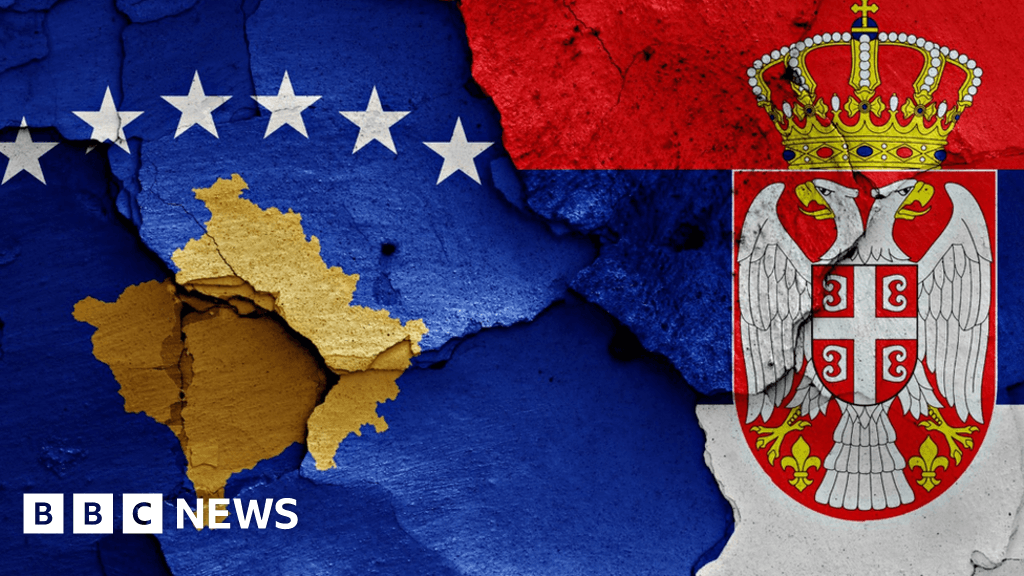
Kosovo is back in the news this week, and not for good reasons. The country's political crisis, disputed election results, a government that couldn't form, Serbian pressure mounting from the north, EU patience running thin, is the kind of slow-motion instability that turns into fast-moving catastrophe when Washington isn't paying attention. We've seen this movie in this region before. We should know how it ends.
What's Actually Happening in Pristina
Kosovo's parliamentary elections in early 2025 produced a contested result, and the process of forming a government collapsed into constitutional court battles that stretched for weeks. Opposition parties and Serbia-aligned factions blocked coalition formation. The country went without a functioning government while ethnic Serb communities in the north, roughly 50,000 people concentrated near the city of Mitrovica, took it as a signal to push harder against Pristina's authority.
This is the Balkans. Nothing here is just domestic politics. Every local fight has a regional sponsor.
Serbia has never accepted the outcome. President Aleksandar Vučić has called Kosovo's independence, declared February 17, 2008, now recognized by 117 countries including the United States, illegitimate from day one. His government uses every political crisis to apply pressure through the Serb List party in northern Kosovo, which functions less like a political party and more like Belgrade's regional enforcement arm.
Russia watches all of this and smiles. They've been blocking Kosovo's UN membership since 2008. A destabilized Balkans divides NATO attention, gives Serbian nationalists a grievance to exploit, and keeps the EU scrambling. The timing, as Washington pivots attention toward the Pacific, is not an accident.
Why the United States Cannot Walk Away From This
The Clinton administration made a decision in 1999 that committed American prestige to Kosovo's future. We flew 38,000 sorties in Operation Allied Force. We helped end a campaign of ethnic cleansing that had already displaced nearly a million people. And then we stayed, because leaving meant handing the outcome back to the forces that caused the problem in the first place.
That decision created an obligation. You don't get to be the guarantor of a country's security for 27 years and then announce you've lost interest when the political temperature rises.
The State Department's documented position is that Washington remains committed to Kosovo's sovereignty and territorial integrity. Good words. Words aren't enough when a government can't form and armed incidents keep occurring in the north. The U.S. needs diplomats in Pristina right now brokering coalition talks, not watching from Washington and issuing statements.
If Kosovo collapses, the sequence is predictable: Serbia tests the border, KFOR gets stretched thin, Montenegro and Bosnia watch to see who blinks, and the entire post-Cold War Balkan settlement starts to unravel. I've talked to guys who did rotations at Bondsteel. They say the same thing every time: the mission works because nobody has to fire. The presence is the deterrent. The moment Washington signals ambivalence, the deterrent degrades, fast.
The American Instinct to Declare Victory and Leave
Americans consistently assume Kosovo is a solved problem. It isn't. It's a managed one, and managed problems collapse the moment maintenance stops. There's a difference between solved and managed that Washington keeps refusing to learn.
Managed problems require sustained presence, attention, and the willingness to apply diplomatic pressure before crises become kinetic. What they don't survive is a superpower deciding it has more important things to do.
Forty-three nations recognized Kosovo's independence in the first months after the 2008 declaration. The International Court of Justice ruled in 2010 that Kosovo's declaration of independence did not violate international law. The legal and moral case is settled. What's not settled is the political reality on the ground, where Serbia has never accepted the verdict and Russia continues to hand Belgrade a veto on UN membership.
Kosovo has 1.8 million people surrounded by neighbors who would prefer they didn't exist as an independent state. The only thing that changed their odds was American commitment. Withdraw that commitment and you don't get a peaceful resolution, you get a vacuum that someone else fills.
What a Serious Conservative Foreign Policy Requires Here
Kosovo is a test case for whether "America First" means abandoning American commitments. A conservative foreign policy grounded in credible alliances and kept promises cannot walk away from 27 years of American military presence and expect the credibility to still be there when it's needed in the Pacific.
Walking away doesn't save money, it defers the cost. An unstable Balkans draws U.S. attention back under worse conditions, with less leverage, after European confidence in American reliability has taken another hit. The allies we need in Asia are watching what we do in Europe. They're taking notes on everything.
Former national security officials across administrations have made this point consistently: the Balkans is the place where American credibility either holds or frays, because everyone in the world is watching whether we keep the commitments we've already made.
Kosovo isn't a liberal project to abandon because Democrats supported intervention in the 1990s. It's an American commitment, made with American military force, that still has American lives attached to it. The men and women at Camp Bondsteel deserve a government in Washington that remembers they're there.


