Macron made the announcement the way European leaders always make defense announcements, with urgency, soaring rhetoric, and an unspoken assumption that the Americans will cover whatever gaps remain. The French president vowed to expand France's nuclear arsenal in response to what he called rising global threats. He's right about the threats. He's right about the remedy too. But let's be honest about what this moment actually represents.
Europe is scared. And when Europe gets scared, it finally remembers that hard power still matters.
France's Nuclear Posture Is Shifting, Not Just Modernizing
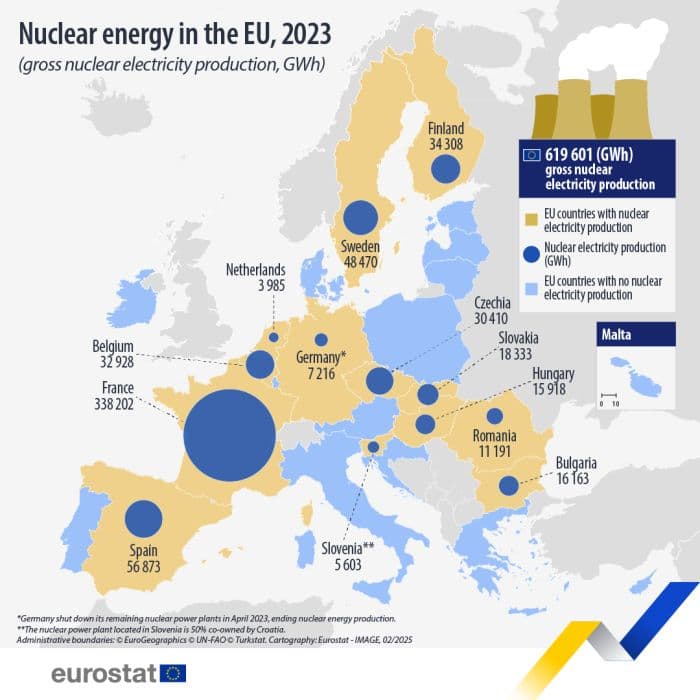
France currently holds roughly 290 nuclear warheads, according to the Stockholm International Peace Research Institute, the smallest arsenal among the five permanent UN Security Council members, and about one-quarter of Russia's estimated operational force. Macron isn't talking about updating aging delivery systems. He's talking about expanding capacity, which marks a meaningful shift in doctrine. It signals that Paris has stopped pretending the post-Cold War security order is still intact.
The trigger isn't hard to find. Russia's full-scale invasion of Ukraine in February 2022 was one accelerant. But the more destabilizing factor has been the quiet erosion of confidence in American security guarantees, sharpened by two years of pointed questions about what Article 5 actually commits, and who decides. European leaders are rattled. Macron is simply the first to respond with something other than a strongly worded communiqué.
"Our credibility depends on our capability," Macron told French lawmakers. "Europe cannot rely on others to guarantee its survival."
I covered a veterans' roundtable outside Fort Worth last year where European defense spending came up. Every veteran in that room, Army, Marines, Air Force, Navy, said the same thing: they were tired of America subsidizing the defense of nations that wouldn't fund their own. One retired Army colonel put it plainly: "We can't keep deploying our sons to protect people who won't deploy theirs."
NATO's Free Rider Math Has Never Been Honestly Reckoned With
NATO's spending commitment is straightforward: member nations are supposed to contribute at least 2 percent of GDP to defense. This target was reaffirmed at the 2014 Wales Summit. As of 2024, only 8 of NATO's 32 members had met that threshold. The United States spends approximately 3.4 percent of GDP on defense. Germany, Europe's largest economy, only recently crossed the 2 percent mark, under intense political pressure, after Russia made the threat impossible to continue ignoring.
American taxpayers fund roughly 70 percent of total NATO defense expenditures, by some estimates. The U.S. defense budget in fiscal year 2025 reached $886 billion. Europe, collectively, spends less than half that to protect a larger population across a larger territory. That imbalance isn't an abstraction. It shows up in American debt totals, American deployment orders, and in American families whose sons and daughters are stationed abroad defending the sovereignty of governments that couldn't be bothered to fund their own militaries at the agreed rate.
This wasn't a secret. Robert Gates called it out bluntly in his farewell NATO address in 2011, warned the alliance faced a "dim if not dismal future" if members refused to invest in their own defense. The lecture didn't move the needle. What finally moved the needle was an actual land war in Europe and the credible prospect that Washington might stop showing up.
What does it say about the health of an alliance when members only start paying up once they think the protection might disappear?
America Should Welcome This, With Conditions Attached
America should welcome France's nuclear expansion, and pair that welcome immediately with a hard renegotiation of burden-sharing terms. If Europe is developing meaningful independent deterrence, the terms of American forward deployment need to be revised accordingly. American troops in Germany cost money. American logistics in Poland cost money. American carrier groups in the Mediterranean cost money. If Paris is getting serious about its own nuclear posture, the financial arrangement needs to reflect that change in the relationship.
There's a reflexive hawkish instinct to treat any European nuclear development with suspicion, proliferation risks, strategic ambiguity, NATO cohesion. Those concerns aren't baseless. But the alternative, a Europe permanently dependent on American deterrence while spending its own money on social programs and high-speed rail, is worse. Conservatives understand this principle at the household level. Countries that won't pay for their own defense don't have a moral claim on the defense budgets of those who do.
The right response to Macron isn't suspicion. It's: good. Now what does this cost, and who's picking up the rest of it?
The Larger Lesson About Dependency and National Will
The nuclear debate in Europe is really a debate about national will, whether sovereign states are prepared to accept responsibility for their own survival rather than delegating it to a partner whose commitments depend on its domestic politics. France is now saying it's prepared. Germany is still equivocating, caught between historical guilt and fiscal convenience. Other NATO members haven't even entered the conversation.
This is what comfortable dependency produces. When you've outsourced your security for two generations, rebuilding the institutional and political muscle to sustain independent deterrence takes more than a speech. Macron can make the announcement. Whether France, and whether the broader European project, has the political will to fund that expansion across election cycles, through budget pressures, past the next round of domestic politics, is a question only time answers. Countries that discovered the importance of defense only when forced to are not the most reliable long-term partners.
The United States spent the Cold War building NATO into the most effective defensive alliance in history. That achievement deserves protecting. But its terms were built for 1949. A Europe capable of fielding serious nuclear deterrence doesn't need America the same way it did when West Germany was occupied territory. The relationship should evolve to match the capability, and the bill should evolve with it.
Macron heard the alarm. Give him credit for that. Now make him pay for the wakeup call.


