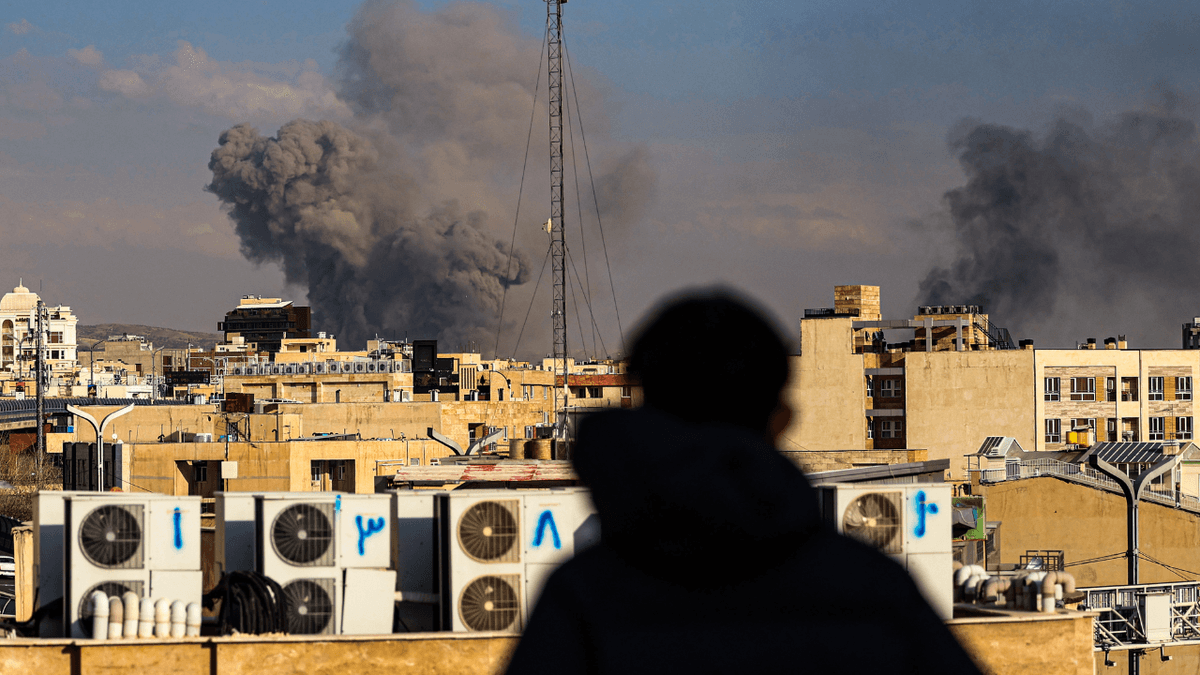
The text that CENTCOM pushed out in early April was blunt in a way that American military communications rarely are. U.S. Central Command addressed Iranian civilians directly, not their government, not regional media, not allied diplomats, and told them plainly that the Islamic Revolutionary Guard Corps was firing missiles from densely populated civilian areas, specifically to make American and Israeli strikes more difficult. "We urge Iranian citizens to stay away from these areas," the statement read.
That kind of warning doesn't happen in a vacuum. It signals something. And what it signals should concern every serious analyst watching this theater.
The Warning That Exposed Tehran's Playbook
CENTCOM's public safety notice to Iranian civilians constitutes a formal military acknowledgment that the IRGC is deliberately using human population centers as a buffer against retaliation. Satellite imagery analyzed by the Institute for Science and International Security confirmed in March 2026 that at least six IRGC launch sites were positioned within two kilometers of residential areas in Khuzestan and Tehran provinces. The regime isn't hiding this. It's counting on it.
The strategic logic is ugly but coherent. If the United States or Israel strikes a missile battery in a civilian neighborhood and civilians die, Tehran blames Washington. If we hold back to avoid civilian casualties, the batteries fire with impunity. It's a hostage strategy applied at national scale. The IRGC has been refining it for years, in Lebanon via Hezbollah, in Gaza via Hamas, and now domestically, turning its own citizens into involuntary shields.
General Michael Kurilla, CENTCOM commander, left no ambiguity in his accompanying statement. "The IRGC continues to put the Iranian people at risk," Kurilla said. "They do not represent the Iranian people. They hide behind them." These are not the words of a general hedging for political cover. These are words written for the record.
Human Shields Are a War Crime, Not a Tactic
Article 28 of the Fourth Geneva Convention prohibits any party from using civilian presence to render military objectives immune from attack. Article 58 of Additional Protocol I requires parties to avoid locating military objectives within or near densely populated areas. Iran has signed both documents. Tehran is in explicit, documented violation of both.
But the Western press coverage of CENTCOM's warning was thin. Reuters ran a 200-word brief. CNN gave it four paragraphs. The BBC's international desk noted it happened and moved on. Compare that to the wall-to-wall coverage that follows any Israeli military advisory to Palestinian civilians, coverage that runs for days, with legal commentary, satellite imagery, and expert panels. The double standard isn't subtle anymore. It isn't even dressed up.
Iran launched 31 ballistic missiles toward U.S.-allied positions in the Gulf region in the first quarter of 2026 alone, according to CENTCOM's own public tracking figures. Seventeen of those originated from locations the April warning specifically flagged as civilian areas. Is there a point at which the international community holds Tehran to the same legal standard it applies to everyone else, or will that threshold simply never arrive? Tehran is betting it won't.
What CENTCOM's Warning Signals About What Comes Next
Public military warnings to a foreign civilian population serve one of two purposes: genuine humanitarian gestures before a strike, or information operations designed to delegitimize a regime in the eyes of its own people. Usually both. CENTCOM's April warning follows a pattern established before the October 2023 Israeli campaign in Gaza and before earlier U.S. operations in Mosul. Pre-operation advisories create a legal and moral paper trail. Under the laws of armed conflict, proportionality assessments are partly informed by whether warnings were issued. Lawyers inside the Pentagon don't file these advisories casually.
I spent three weeks embedded with a NATO intelligence unit at Ramstein Air Base in 2019, watching analysts track Iranian proxy movements across four countries simultaneously. What struck me then, and strikes me harder now, is how deliberately the IRGC has developed doctrine around Western legal and moral constraints. They study us. They read our rules of engagement, our congressional oversight testimony, our court precedents. They build operations around what they know we won't do.
The Strategic Calculation Washington Cannot Keep Avoiding
There is a serious policy question embedded in all of this that the administration needs to answer openly rather than managing through background briefings. If Iran fires from civilian areas and we don't respond, the behavior gets reinforced. Every unanswered launch is a demonstration that the tactic works. Every accommodation of human-shield positioning is an incentive to expand it.
If we do respond and civilians die, Tehran controls the narrative. They've positioned their own citizens as martyrs for a nuclear and ballistic missile program those citizens never voted for. The clerical regime has spent forty-five years building a state where the people have no meaningful say over whether missiles are parked next to their apartments. That's not a side effect of the policy. It's the point.
CENTCOM's warning was a signal to Iranian civilians. It was also a signal to Tehran that the United States has documented the positioning, published the evidence, and built the paper trail. What follows the paper trail is the question the next few months will answer. The regime is betting we blink. History is watching to see if they're right.


