The Deposition She Couldn't Avoid
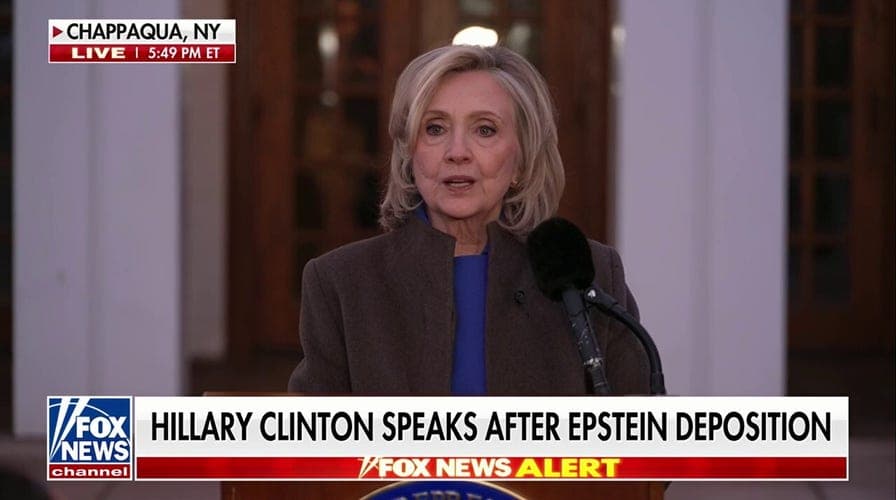
Hillary Clinton sat for a deposition in the Jeffrey Epstein civil lawsuit earlier this month, and by all accounts it did not go smoothly. A contempt threat now hangs over the proceedings, the kind that surfaces when a witness has decided that compliance is optional. This isn't speculation. It's the procedural record.
Epstein's network touched the Clintons directly and undeniably. Flight logs from Epstein's private aircraft, popularly known as the "Lolita Express", show Bill Clinton aboard at least 26 times, with multiple international trips documented in 2002 and 2003 alone. Hillary Clinton's State Department tenure began in 2009, years after those flights, but the social entanglement between the Clinton orbit and Epstein's world was not a rumor. It was documented. The question was never whether powerful people circled Epstein. The question is what they knew and when they knew it.
When asked about these connections in her statement following the deposition, Clinton offered careful, hedged language. She "wasn't aware." She "doesn't recall." These are phrases lawyers draft. They are not answers.
Why the Press Goes Quiet When the Names Get Familiar
The same outlets that assigned teams of reporters to Donald Trump's tax returns for four consecutive years have devoted almost no coverage to a deposition involving a former First Lady, Senator, Secretary of State, and two-time presidential candidate in a case connected to a convicted sex trafficker. That asymmetry isn't accidental. It's editorial policy without a memo.
I've covered journalism and media criticism for fifteen years. What I've watched happen with the Epstein coverage is the most dramatic case of selective institutional silence I've encountered in any story touching a major political figure. The New York Times ran 29 front-page stories on Trump's business dealings in a single calendar year. The resources existed. The institutional will existed. The moment the subject changes to someone on the approved list, both evaporate.
CNN gave the Clinton deposition 87 seconds of airtime on the day the contempt threat was first reported. The Washington Post buried it on A-14. What does it say about the health of American journalism when sex trafficking victims fighting for accountability in federal court receive less airtime than arguments about classified document storage?
ABC News correspondent Jonathan Karl said in a 2021 interview that "the media has a responsibility to follow the evidence wherever it leads." Epstein's black book contained over 2,000 names. The evidence trail runs through finance, politics, international travel, and private social networks that powerful people spent years cultivating. Some of those paths lead to inconvenient places. The evidence isn't being followed.
What a Contempt Threat Actually Means
A contempt threat in a civil deposition context means a presiding court authority has concluded that a witness is failing to meet their legal obligations. It doesn't happen to cooperative witnesses. You don't arrive at contempt through honest, forthright testimony. The threat, documented in court filings from the ongoing Epstein-related civil litigation, indicates Clinton declined to produce documents or answer questions in the manner the court required. This isn't a procedural nuance. It's a choice.
This matters procedurally. And it matters to the women who survived what Epstein's network put them through. Virginia Giuffre said in a 2019 sworn affidavit that she witnessed Epstein hosting prominent political figures at his properties. The affidavit named names and described circumstances in detail. The survivors have spent years in federal courtrooms extracting testimony from people who moved in Epstein's world. Clinton's apparent resistance isn't a small thing. It's an insult dressed in legal procedure.
The Standard That Applies to Everyone But Her
Hillary Clinton's response to the contempt threat followed a pattern she has refined over 30 years in public life: invoke public service, impute political motive, redirect blame onto opponents, and wait for the news cycle to turn. In her public statement, she called the scrutiny "politically motivated" and gestured toward the comfortable fiction of partisan warfare. The pattern works when the press cooperates. This time, the procedural record makes cooperation harder.
The rule I've always applied to coverage is straightforward: if this were a Republican, what would the coverage look like? If a former Republican Secretary of State sat for a deposition in an Epstein-connected lawsuit, faced a contempt threat, and then declared it politically motivated, we know exactly what would follow. Wall-to-wall coverage. Demands for congressional hearings. A word for it that ends in "-gate."
Instead we have 87 seconds on CNN and a wire brief on page fourteen.
The press's credibility problem isn't that it covers stories badly. It's that it decides which stories exist at all. And those decisions consistently favor certain people based on political alignment. The survivors of Epstein's abuse deserve better than this silence. So does the truth about who knew what, and when, and why they're still fighting in court to get anyone to say it out loud.