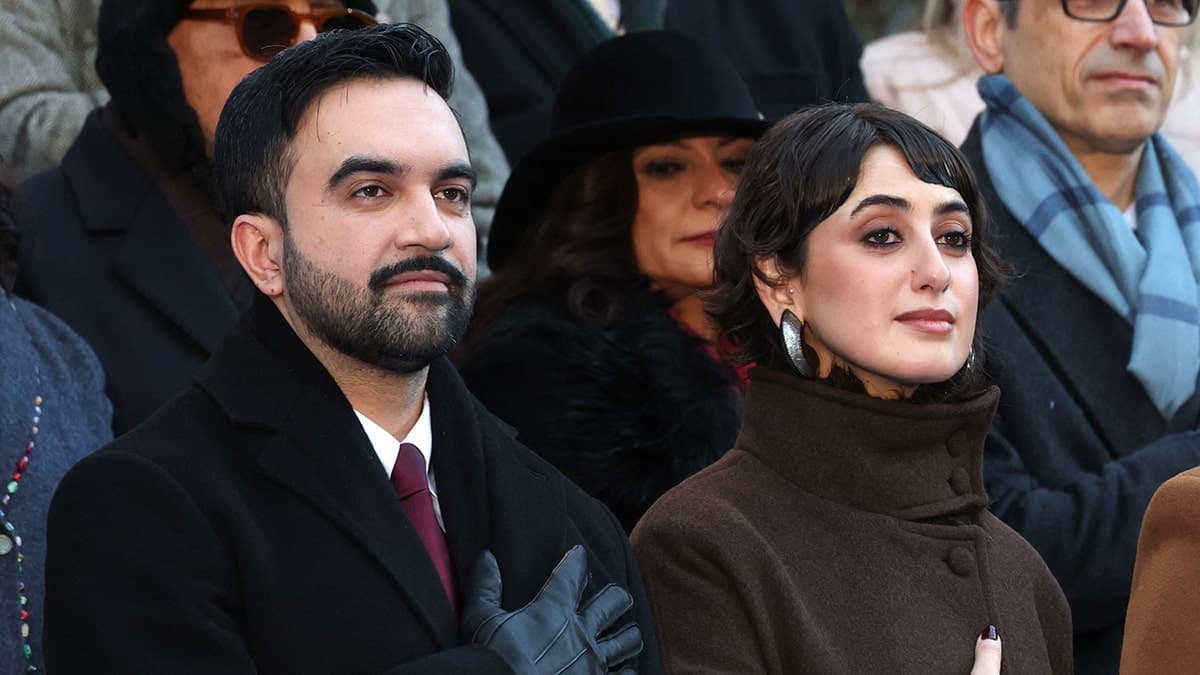
Sakina Mamdani liked posts celebrating the murder of 1,200 people. That's not characterization. The digital record shows social media engagements with content celebrating the October 7, 2023 Hamas massacre, the deadliest single-day killing of Jews since the Holocaust. Her husband, Zohran Mamdani, is the mayor of New York City. New York's press corps processed this story in roughly forty-eight hours and moved on.
I've covered media bias for fifteen years. I've watched reporters spike stories, soften ledes, and quietly bury the names that make their editors uncomfortable. The speed with which this story was absorbed and forgotten was something different. Something deliberate.
The Social Media Engagements Were Not Ambiguous
Sakina Mamdani liked multiple posts that praised the October 7 attacks as acts of legitimate resistance against Israel. These posts weren't vague geopolitical commentary, they celebrated specific acts of violence against civilians, including content referencing the Nova music festival massacre where 364 young people were killed at an outdoor concert in southern Israel. The engagements are documented, recoverable, and were reported first by Fox News.
The question isn't whether she made a mistake. People make mistakes. The question is what the press did when the evidence surfaced. The New York Times gave it a brief mention inside a political roundup. The Daily News didn't lead with it. MSNBC hosts who spent months demanding Republican politicians answer on camera for their spouses' social media activity found something else to discuss that week.
New York City has roughly 1.1 million Jewish residents, the largest Jewish urban population in the world outside Israel. Their mayor's wife liked posts celebrating the attack that traumatized that community more deeply than any event in a generation. The editorial calculation that decided this was not front-page news deserves scrutiny.
New York's Press Corps Decided Not to Follow the Story
The New York media establishment gave Sakina Mamdani's social media history the soft-focus treatment it reserves for people on the correct side of its ideological ledger. Three major metro outlets ran first-couple profiles the week after Mamdani's inauguration without mentioning the October 7 engagements. Reporters who built careers on accountability journalism couldn't find the accountability angle here.
Compare that to 2019, when the wife of a Republican state senator in Ohio liked a tweet mildly critical of a trans rights activist. That story got picked up by The Atlantic, The Washington Post, and CNN within 36 hours. It ran for eleven days. The senator was called upon to renounce, clarify, and apologize for content he personally did not create or share.
At a press briefing in February 2026, Mayor Mamdani was asked directly about his wife's social media activity. City Hall's position was that the posts had been misrepresented, with no further elaboration offered. No follow-up question was asked. The briefing moved on to trash collection schedules.
That's not a denial. It's a non-answer wearing a denial's suit. But when the press doesn't push, a non-answer becomes the official record.
Imagine the Republican Wife Who Did This
The thought experiment writes itself. A Republican mayor's wife in any major American city likes posts celebrating a terrorist attack that killed 1,200 people. The coverage doesn't stop. MSNBC runs a seven-part series. The mayor gets called to resign before the week ends. Every Republican in the state gets asked to distance themselves, by name, on camera, with a follow-up question already loaded.
That's not hypothetical grievance. That's a description of the actual machinery in operation, built over years of documented coverage decisions. Rules that apply to one party don't apply to the other. Everyone in this business knows it. Most have made their peace with it.
A 2024 study by the American Press Institute found that 54% of Americans believe news organizations intentionally slant coverage to favor one political party. Among independents, that number was 47%. Among Republicans, 76%. Those aren't fringe numbers. That's a profession that has been converting its credibility into ideological currency for a decade, and now seems genuinely puzzled to find the account overdrawn.
What Selective Coverage Does to the People It Ignores
What does it tell you about an institution when covering the mayor's wife's sympathy for terrorism is treated as too politically sensitive to pursue? The answer matters, not abstractly, but for the 1.1 million New Yorkers whose community was the target of what she was celebrating online.
The soft treatment of this story sends a specific message to a specific community: the press corps that's supposed to hold power accountable has decided their grief doesn't register in its moral hierarchy. That's not a media failure in the abstract. That's a verdict, delivered publicly, about whose suffering deserves documentation and whose gets quietly filed away.
Journalism used to justify its First Amendment privileges by pointing to its accountability function. That argument gets harder to make when accountability is applied selectively based on which coalition the subject belongs to. The Mamdani story isn't an anomaly. It's a case study. The story was there, documented, verifiable, meaningful to a significant portion of the city's population. The press made its choice. That choice tells you more about American journalism in 2026 than any media criticism panel at Columbia ever will.