The Legal Ground Has Already Shifted
Before Senator Mike Lee introduced his National Constitutional Carry Act, the Supreme Court had already done the heavy lifting. The Court's 2022 decision in New York State Rifle & Pistol Association v. Bruen didn't just strike down New York's carry permit scheme — it fundamentally restructured how courts must analyze Second Amendment restrictions. Regulations that lack a historical analogue from the founding era are now presumptively unconstitutional.
That ruling has been working its way through lower courts ever since, invalidating restrictions from California to New Jersey. The doctrinal direction is clear. Lee's bill is less a radical innovation than a statutory codification of where constitutional law is already heading.
I've argued Second Amendment cases at the appellate level and watched Bruen land in real courtrooms. The transformation has been significant. Judges who had spent careers rubber-stamping gun restrictions as mere regulatory policy are now being forced to engage with historical text in ways they've never had to before. Some are doing it well. Some are doing it badly. But the framework has changed, and it's changed permanently.
What the Bill Actually Does
Lee's legislation would override state laws that prohibit law-abiding citizens from carrying firearms without government permission. It would not preempt all gun laws — states could still restrict carrying in sensitive places like courthouses, schools, and government buildings. It preserves background check requirements for commercial sales. What it eliminates is the permitting requirement itself: the idea that a citizen must prove need or worthiness to exercise a constitutional right.
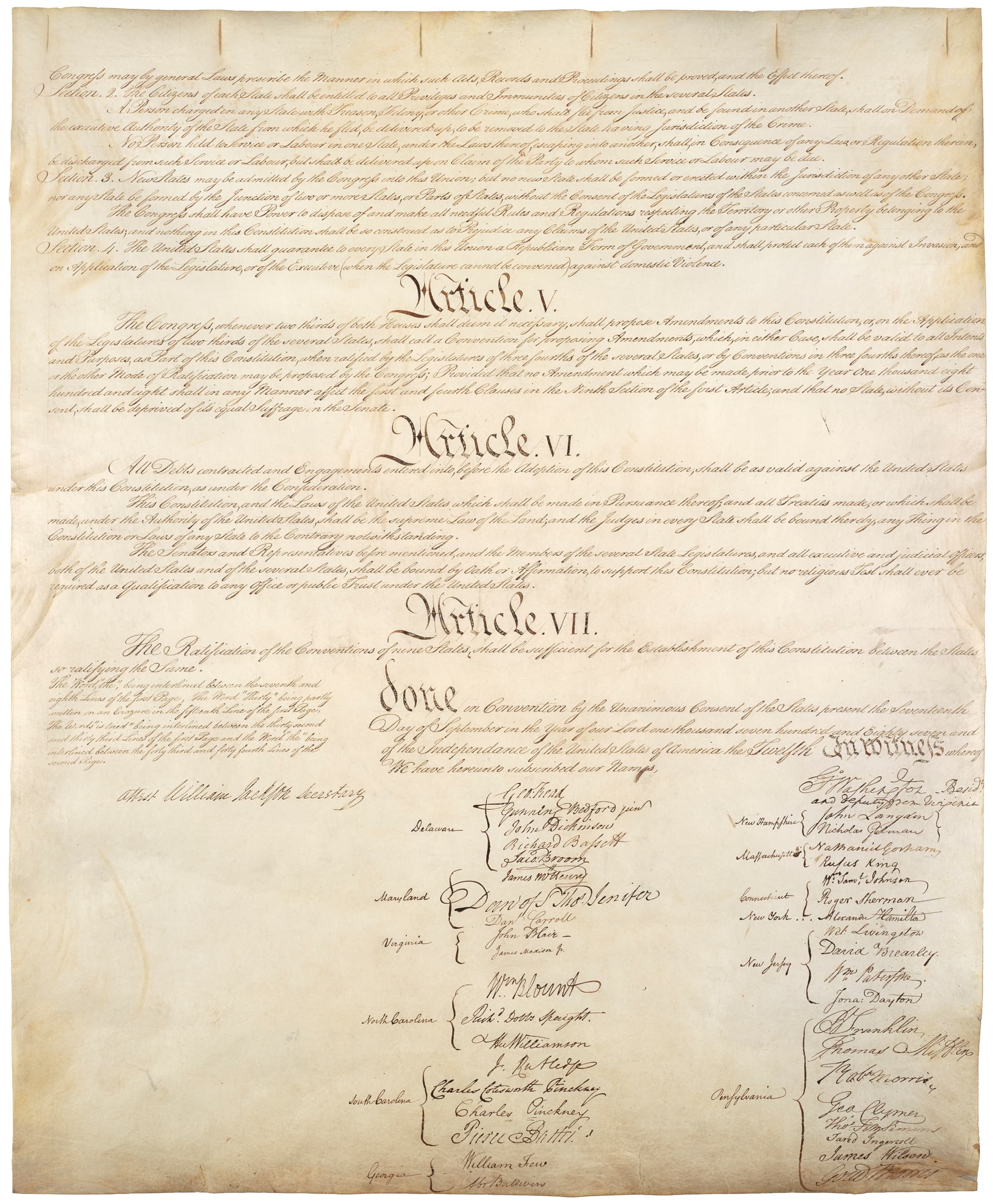
Think about that framing for a moment. We don't require citizens to obtain permits to attend church, to speak publicly, or to decline to quarter soldiers in their homes. Those are constitutional rights. You exercise them. The government doesn't issue you a license to do so. The Second Amendment is in the same document as those other protections. Its rights are, per Bruen and per the Court's earlier ruling in McDonald v. City of Chicago (2010), fully incorporated against the states.
The permit system as practiced in hostile states isn't neutral administration. It's a mechanism of attrition. New York's old licensing scheme required applicants to demonstrate particularized need — essentially, that they faced a specific threat. The result was that celebrities, wealthy donors to the right political causes, and people with connections got permits. Ordinary residents of the South Bronx who faced genuine street-level violence did not. That's not safety policy. That's class-based disarmament wearing the costume of public health.
The Federalism Objection — and Why It Fails
The strongest argument against Lee's bill comes from the federalism right, not the gun-control left. Some conservatives who support the Second Amendment have questioned whether Congress should override state gun laws, even bad ones. Doesn't that undermine the principle of state sovereignty?
It's a serious argument. But it fails for a specific reason: the Bill of Rights, by design and by subsequent constitutional interpretation, protects individual rights against state as well as federal infringement. The Fourteenth Amendment and the incorporation doctrine exist precisely to prevent states from nullifying federal constitutional guarantees. A state that prohibits carry is not exercising sovereign authority within its own domain — it's violating a right that the federal Constitution explicitly protects. Congress enforcing that protection is exactly what Section 5 of the Fourteenth Amendment authorizes.
The federalism argument would have force if we were talking about an ordinary policy preference — minimum wage, environmental regulation, healthcare mandates. Those are areas where states genuinely should be able to go their own way. Constitutional rights are different. That's why we call them constitutional. They operate as a floor beneath which no state may go.
Some states have decided they don't like the floor. Lee's bill enforces it.
The Political Moment Is Right
Thirty-two states currently have constitutional carry laws — meaning they permit their residents to carry without a government-issued license. That number has more than doubled in the last decade. The political direction is unmistakable. The holdout states — California, New York, New Jersey, Maryland, Massachusetts, Illinois — are deep blue, densely urban, and structurally unlikely to change their laws voluntarily regardless of what the Supreme Court says.
This is precisely the category of situation where federal legislation makes sense. When a constitutional right is being systematically violated in major population centers, and when the states in question show no intention of compliance with judicial mandates, Congress has both the authority and the obligation to act.
Critics will say the bill will never pass the Senate. Maybe not this session. But the legislation forces a vote, puts every senator on record, and begins building the political infrastructure for eventual passage. Lee knows how to play the long game. The constitutional carry map looked very different in 2010 than it does today.
The Second Amendment is not a rural right or a regional preference. It belongs to the citizen in Harlem as much as the rancher in Wyoming. Lee's bill says so, in statutory form, backed by a constitutional jurisprudence that is only going to get stronger.