States Sue, Courts Scramble, Small Business Bleeds
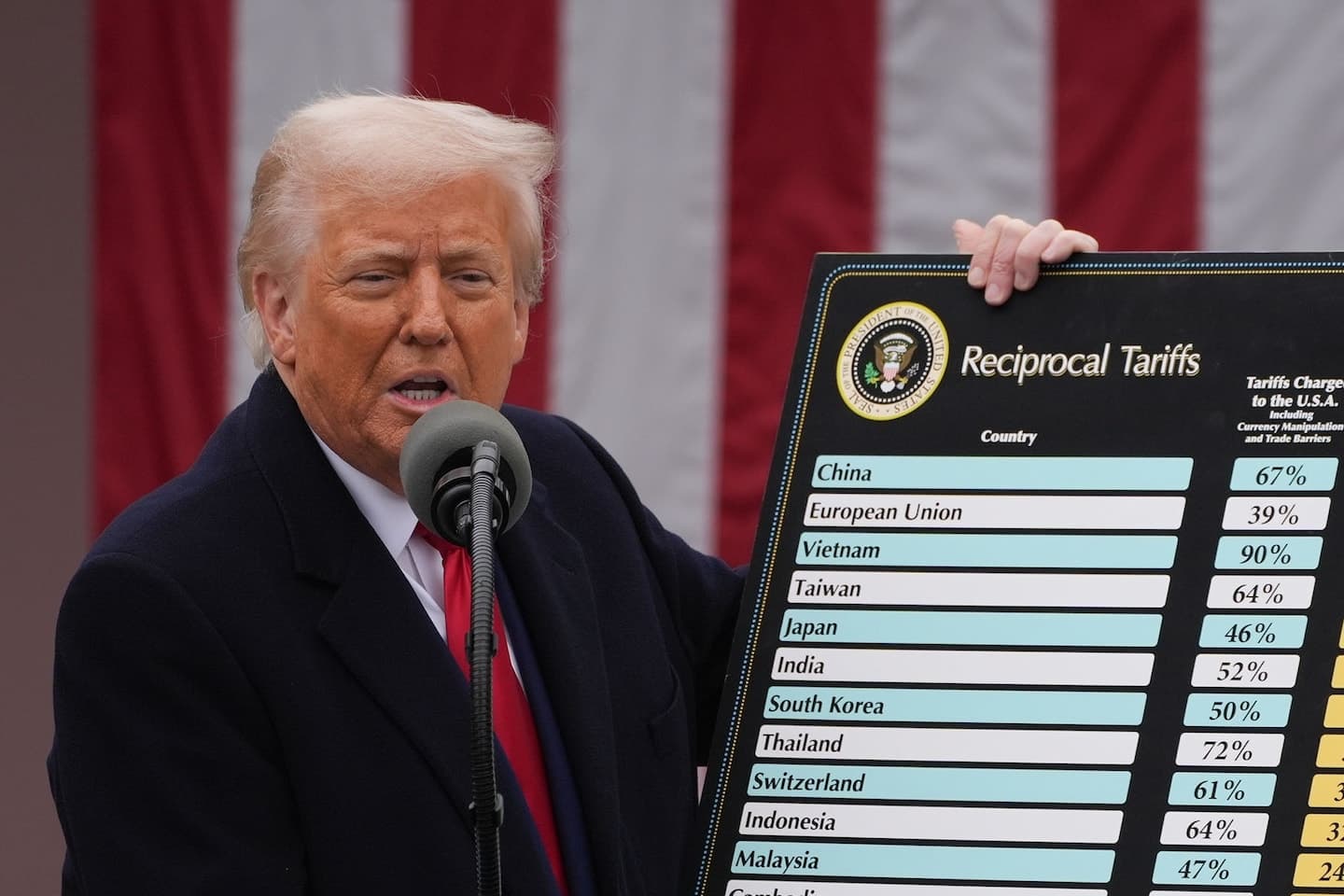
The courts are back in the tariff business. A multistate coalition of attorneys general filed suit to block President Trump's latest round of import taxes, and the federal judiciary, always eager to weigh in on executive power when the politics are convenient, now has another invitation to rewrite trade policy from the bench. The case is moving fast. The arguments are sharp. And for the small business owner trying to make payroll this Friday, none of it matters.
I'll get to the legal arguments in a moment. First, the practical reality: I import medical supply components from Taiwan and Germany. When tariff rates climbed 25 percent, my costs went up. Medicare reimbursement rates, fixed by federal schedule, didn't. I ate the difference. Last quarter that meant cutting hours for two part-time employees. Not a statistic. People with names and rent payments.
So I have skin in this fight. And my view, after watching this drama unfold, is that the states suing Trump are right on the constitutional merits and useless on the practical ones. The lawsuit might win. It won't help.
The IEEPA Stretch Nobody Wants to Admit
The International Emergency Economic Powers Act was enacted in 1977. Congress designed it to give presidents rapid authority to manage genuine foreign crises, asset freezes during the Iranian hostage standoff, sanctions against terrorist regimes, targeted economic pressure on specific bad actors. What it was emphatically not designed to do is function as a permanent tariff mechanism on $3.3 trillion in annual imports.
The Trump administration's legal theory holds that chronic trade deficits constitute a national emergency. The goods trade deficit hit approximately $1.2 trillion in 2025. If that number represents an emergency, it's the slowest-moving emergency in American history, it's been building for four decades. IEEPA emergency declarations are supposed to address sudden, acute threats to national security. Rebranding a structural macroeconomic condition as an emergency to unlock tariff authority is a creative interpretation that strains even sympathetic judicial reading.
The states are right to challenge it. Federal courts have long held that executive power requires a statutory hook, and IEEPA's text contemplates genuine emergencies with specific foreign adversaries, not blanket trade rebalancing campaigns. The administration will cite the president's broad foreign affairs discretion, and some of those arguments have weight. But the weight isn't unlimited.
Here's the thing, though. Courts don't set trade policy. When they strike down a tariff regime, they create a vacuum filled with uncertainty, not with something smarter. I can plan around a known cost. A 25 percent tariff is painful, but it's calculable. A world where tariff rates oscillate based on circuit court rulings and Supreme Court certiorari calendars is a planning nightmare that's arguably worse.
The Conversation Both Sides Are Avoiding
Neither the tariff advocates nor the states suing to stop them want to have the real conversation. American manufacturing didn't hollow out because of trade deals alone. It hollowed out because of regulatory costs, litigation exposure, zoning restrictions, occupational licensing barriers, and tax structures that made it genuinely cheaper and easier to build a factory in Shenzhen than in Spartanburg. Tariffs don't fix any of that. They raise the price of imported inputs, make American manufacturers less competitive in export markets, and generate revenue that disappears into the general fund without doing a thing for the underlying structural problem.
The small businesses I know aren't asking for protection from Chinese competition. They're asking for an FDA that doesn't take three years to approve a minor product modification. An OSHA regime that doesn't hit a twelve-person operation with the same compliance burden as a Fortune 500 manufacturer. A tax code that rewards reinvestment instead of punishing it.
We're not getting that conversation. We're getting dueling press conferences about IEEPA statutory interpretation while the people who actually build things figure out how to survive the next quarter.
The states suing are largely the same states that spent four years demanding more federal economic intervention in housing, healthcare, and broadband. Their sudden passion for limiting executive authority is constitutionally convenient and politically timed. That doesn't make them wrong on the legal question. It does make their motivation transparently political rather than principled.
Where This Ends
The courts will probably punt, at least in the near term. Federal judges have historically shown deference to broad executive foreign affairs claims when national security language attaches to the justification, and the Trump administration has been careful to attach that language. The Supreme Court's 2019 ruling in Trump v. Hawaii established that deference applies even when plausible security rationale is contested. Expect this to drag through the circuit courts for a year or more while tariffs remain in effect.
By the time any definitive ruling arrives, the tariff schedule will have been renegotiated three times anyway. That's how these things work. The legal challenge is a pressure tactic as much as a genuine constitutional remedy. It might succeed. It won't arrive in time to help anyone currently bleeding on the wrong side of the tariff line.
I've been in business eleven years. Survived 2008, COVID supply chain collapse, two rounds of federal regulatory overhaul. The tariffs alone don't kill small business. But tariffs stacked on top of regulatory burden, inflation, supply chain fragility, and legal uncertainty? That's a different equation entirely. The courts are fighting over one variable in a multi-variable crisis. Who's fighting over the rest? Nobody in either party seems particularly interested.