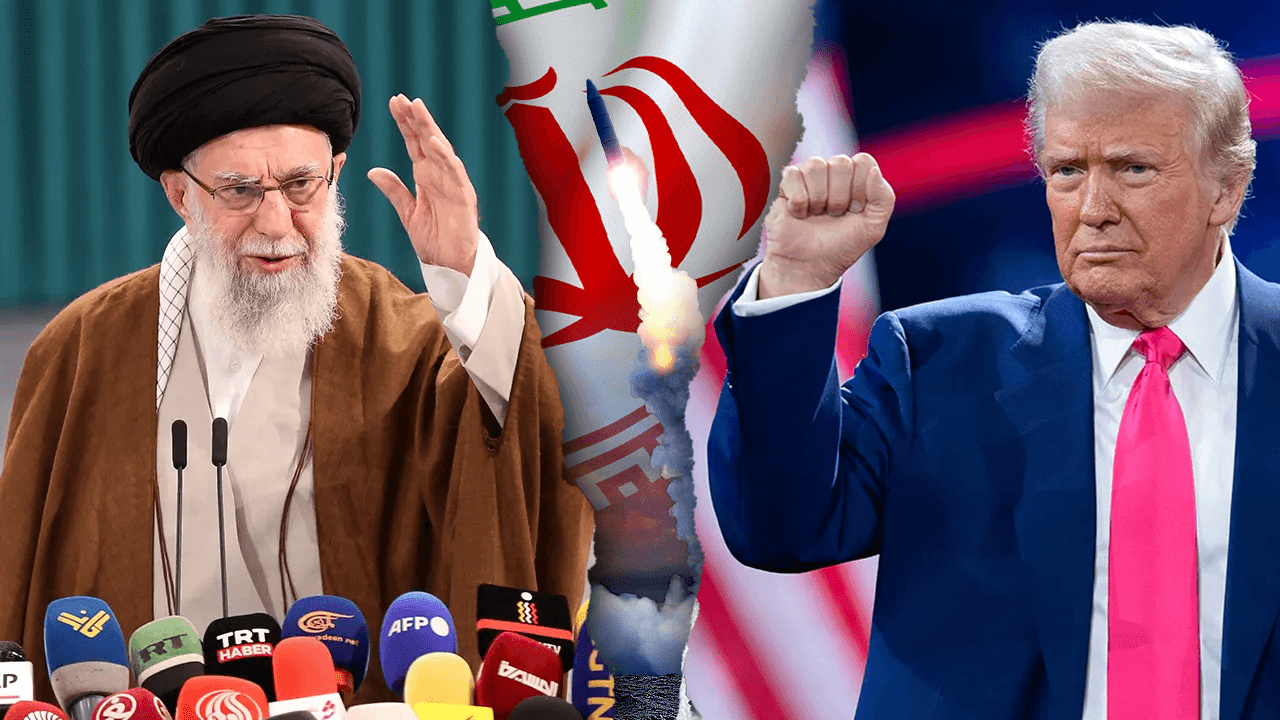
The Economics of Maximum Pressure
The Trump administration's strategy toward Iran rests on a premise: economic pain changes behavior. Maximum pressure, comprehensive sanctions, secondary sanctions on Iran's trading partners, oil export restrictions, financial system exclusion, aims to make the cost of pursuing nuclear weapons greater than the cost of abandoning them. The strategy has some empirical support. Iran's economy contracted significantly under the first-term maximum pressure campaign, and there were documented moments when Iranian officials internally discussed the unsustainability of their position.
What the strategy requires to work, however, is sustained American economic capacity to absorb the costs it generates. Sanctions on Iranian oil exports push energy prices higher globally. Secondary sanctions strain relationships with European and Asian trading partners who resent being told how to manage their own commerce. Military posture in the Gulf requires ongoing logistical expenditure. Maximum pressure is expensive to maintain. Its effectiveness depends on an American political economy that can sustain that expense without destabilizing domestically.
That's the condition now in question. And it's deteriorating at a moment when the Iran question demands the most sustained American attention it has in years.
The Timing Problem
The administration launched its intensified maximum pressure campaign against Iran during a moment of significant domestic economic turbulence. Tariffs on imports from major trading partners have raised costs across American supply chains. Inflation, while down from its 2022 peaks, remains above the Federal Reserve's 2 percent target. Consumer sentiment indices registered notable declines in the first quarter of 2026. And the energy market, the key lever of maximum pressure against Iran, is sensitive to exactly the kind of geopolitical signaling that military action against Tehran would produce.
A strike on Iran's nuclear facilities would almost certainly produce an Iranian response aimed at the Strait of Hormuz, through which approximately 20 percent of global oil supply flows. Even partial disruption, through mining operations, drone attacks on tankers, or coordinated Houthi escalation, sends oil prices sharply higher. Higher oil prices amplify inflation at a moment when the administration is already absorbing political costs from tariff-induced price pressures. The economic feedback loop runs directly into the domestic political space where the administration is most vulnerable, and Iran knows it.
I spent several weeks in 2024 reviewing economic modeling on maximum pressure at a policy institute in Washington. The consistent finding across multiple analytical frameworks was this: the strategy's domestic political sustainability depends heavily on oil price stability, and oil price stability is the first casualty of any kinetic escalation with Iran. The administration cannot simultaneously pursue maximum economic pressure, conduct or back military action, and maintain domestic political cohesion on the economy. Two of the three, perhaps. Not all three at once.
What Iran Knows About American Attention Spans
Iranian strategic planners are not naive about American domestic politics. Forty-seven years of managing relations with successive American administrations, each arriving with a different Iran strategy, each eventually modifying or abandoning it under domestic political pressure, have produced a sophisticated understanding of American institutional patience and its limits.
The calculation in Tehran isn't simply whether Iran can withstand maximum pressure. It's whether Iran can withstand maximum pressure long enough for American domestic conditions to make its continuation politically untenable. Economic pain at home has historically been one of the most reliable mechanisms for shortening American strategic attention abroad. The dynamics of the Vietnam withdrawal, the Iraq debate, the Afghanistan exit, domestic exhaustion played significant roles in each case, and Iranian strategists have studied each one carefully.
Iran's nuclear program has survived the Carter, Reagan, Bush, Clinton, Bush, Obama, Trump, Biden, and now second Trump administrations. Eight presidencies. Each announced a definitive approach to the problem. The program continues advancing. Not because Iran is invincible, but because American strategic patience has limits that Iranian planners have learned to exploit, and the current economic headwinds accelerate that dynamic considerably.
The Gap Between Rhetoric and Capacity
A gap is opening between what the administration has said about Iran and what it can sustainably do. The rhetoric is maximalist, no nuclear weapon, full regime accountability, all options on the table, a deal only on American terms. The practical economic and political constraints are tightening in ways that haven't been publicly acknowledged. That gap is where policy failures are born, and we've seen the pattern before.
I'm not arguing for accommodation of Iran's nuclear ambitions. Iran with nuclear weapons is a catastrophic strategic outcome, for Israel, for Gulf Arab states, for American interests across the region, for the global non-proliferation regime that the United States spent seven decades building. The urgency is real and the stakes are high. But urgency without capacity produces bluster or catastrophe. Bluster emboldens adversaries who correctly read American limitations. Catastrophe, military action that produces economic and regional consequences the administration isn't prepared to manage, generates its own disasters that outlast the administration that initiated them.
What's absent from the current policy debate is honest accounting of the resource and political economy constraints on American strategy. At what oil price does the domestic political coalition supporting maximum pressure recalculate? What's the fallback position if secondary sanctions produce more allied resistance than Iranian capitulation? How does the administration manage the energy market implications of military escalation while simultaneously managing tariff-induced inflation? These aren't defeatist questions. They're operational ones. Military planners ask them about every campaign before it launches. Someone should be asking them about this one before the economic and strategic variables narrow the available options to ones nobody actually wants.
The financial pain building at home isn't just an economic story. It's a geopolitical variable, and Iran is watching it more carefully than most of Washington seems to be.