The Balkans Don't Forget, Even When Washington Does
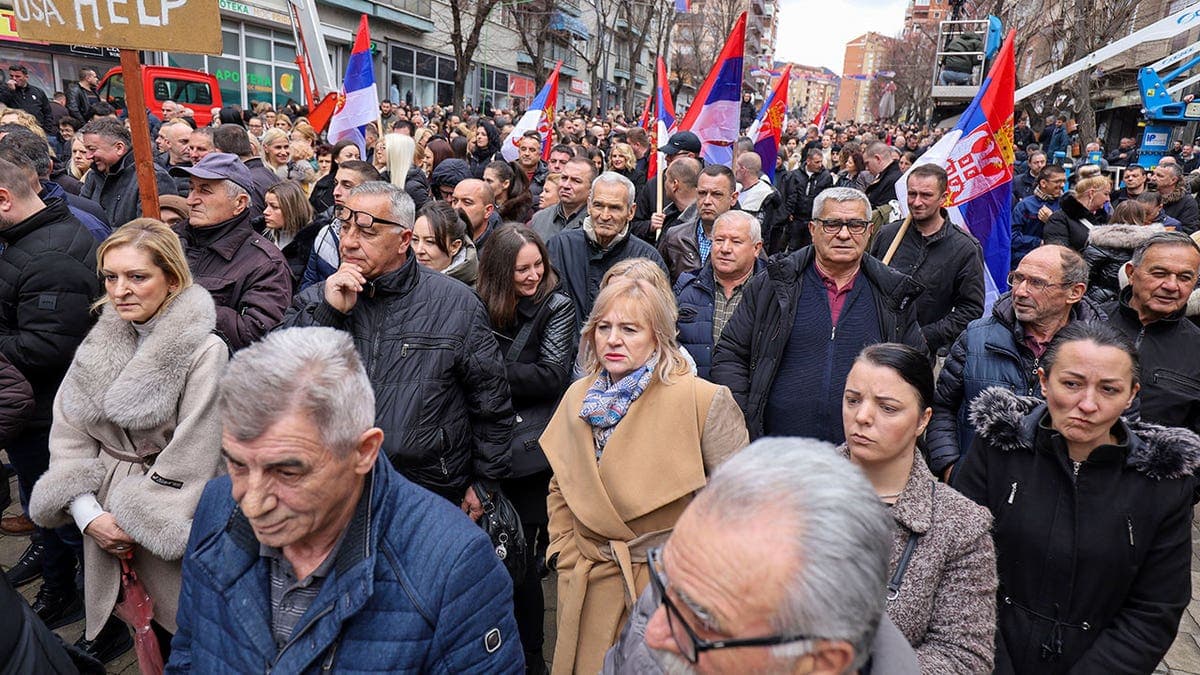
Kosovo's political crisis in the spring of 2026 is not a surprise. It's a reminder. The country, formally independent since 2008 but still contested by Serbia, watched its governing coalition fracture in January when Prime Minister Albin Kurti's Vetevendosje party lost its parliamentary majority after three coalition partners withdrew over disputed municipal election results in the Serb-majority north. Shots fired near Mitrovica in February. EU monitors pulled from two northern checkpoints. KFOR, the NATO peacekeeping force that includes roughly 700 American troops, put its quick reaction units on standby.
None of this is new. This is just Kosovo being Kosovo.
I spent a week in Pristina in 2019 with a U.S. Army colonel who had been deployed to the region three separate times over his career. "Every time I come back," he told me, "it looks like we're five years away from the same outcome." He wasn't being cynical. He was being precise. The ethnic hatreds that produced the 1998-1999 war between Kosovo Albanians and Serbian forces didn't dissolve when NATO bombs fell. They went underground. They stayed there. And every few years they re-surface just enough to remind everyone that the underlying problem was never actually solved.
What the U.S. Has Spent, and What It Has to Show For It
American involvement in Kosovo has cost more than the headlines suggest. The U.S. contributed approximately $6.3 billion to the NATO Kosovo Force operation between 1999 and 2020, according to Congressional Research Service figures. American troops have maintained a presence at Camp Bondsteel, one of the largest U.S. military installations in the Balkans, continuously since 1999, at an estimated annual cost of $50 million per year. That's 27 years of rotating deployments, training exercises, diplomatic missions, and carefully worded State Department statements about "dialogue" and "normalization."
Serbia still doesn't recognize Kosovo's independence. Russia backs Serbia. China abstained from the UN resolution that might have formalized Kosovo's status. Five EU member states, Spain, Greece, Slovakia, Romania, and Cyprus, have never recognized Kosovo either. So we spent six billion dollars and three decades of military commitment stabilizing a country that most of the UN Security Council's permanent members refuse to acknowledge exists.
That's not a foreign policy success. That's a frozen conflict with an American price tag.
Why the Serbian North Is the Powder Keg Nobody Will Touch
The flash point in 2026 is the same as it always is: northern Kosovo, where ethnic Serbs form the majority and where Belgrade's influence runs deeper than Pristina's. The disputed municipal elections that triggered the coalition collapse centered on Leposavić and North Mitrovica, towns where Kosovo Albanian governance has always been resisted, and where Serbia has for years paid the salaries of local Serb officials who refuse to answer to the Kosovo government.
This is the core dysfunction. Kosovo's constitution grants Serb-majority municipalities significant autonomy, but implementation has been a running standoff for 18 years. The Association of Serb Municipalities, a body that would formalize coordination between northern Serb enclaves, was agreed to in the 2013 Brussels agreement and still hasn't been established. Kurti's government opposes it. Brussels keeps pushing it. Belgrade sees it as leverage. Nobody has defused anything; they've just renegotiated the terms of the standoff.
The violence risk is real. Not because either side wants a full-scale war, but because localized incidents, a checkpoint confrontation, a disputed election result, the arrest of a local official, escalate fast in an environment where weapons are accessible and grievances run three generations deep.
What Washington's Actual Role Should Be
The argument for continued American involvement in Kosovo rests on two claims: stability in the Balkans prevents a Russian foothold, and our credibility with European allies depends on not abandoning a commitment made in 1999. Both are partially true. Both are mostly insufficient as policy rationale.
Russia already has a foothold in Serbia through natural gas dependency and deep political influence. That ship sailed a decade ago. Our presence in Kosovo doesn't block Moscow; it gives Belgrade a convenient grievance to wave at Russian sympathizers. And the credibility argument assumes European allies are actually carrying their share, they aren't. KFOR's 4,500 troops are majority European, but the diplomatic heavy lifting, the intelligence architecture, and the implicit security guarantee all flow through Washington.
What's the actual American interest here? Making sure this doesn't turn into a shooting war that requires a much larger intervention. That's a minimalist argument, not a triumphalist one. It implies a very different posture than what we've maintained, less permanent camp infrastructure, more sustained pressure on Belgrade to accept a reality it's been allowed to deny for 18 years.
Balkans scholars at the University of Graz have argued the point plainly: the EU cannot solve this on its own, and Washington knows it. The real question is whether anyone has the political will to push for an actual resolution, or whether indefinite crisis management has simply become the policy.
Manage the crisis indefinitely. There's the American foreign policy model in a sentence. Twenty-seven years, $6.3 billion dollars, and we're still managing.


