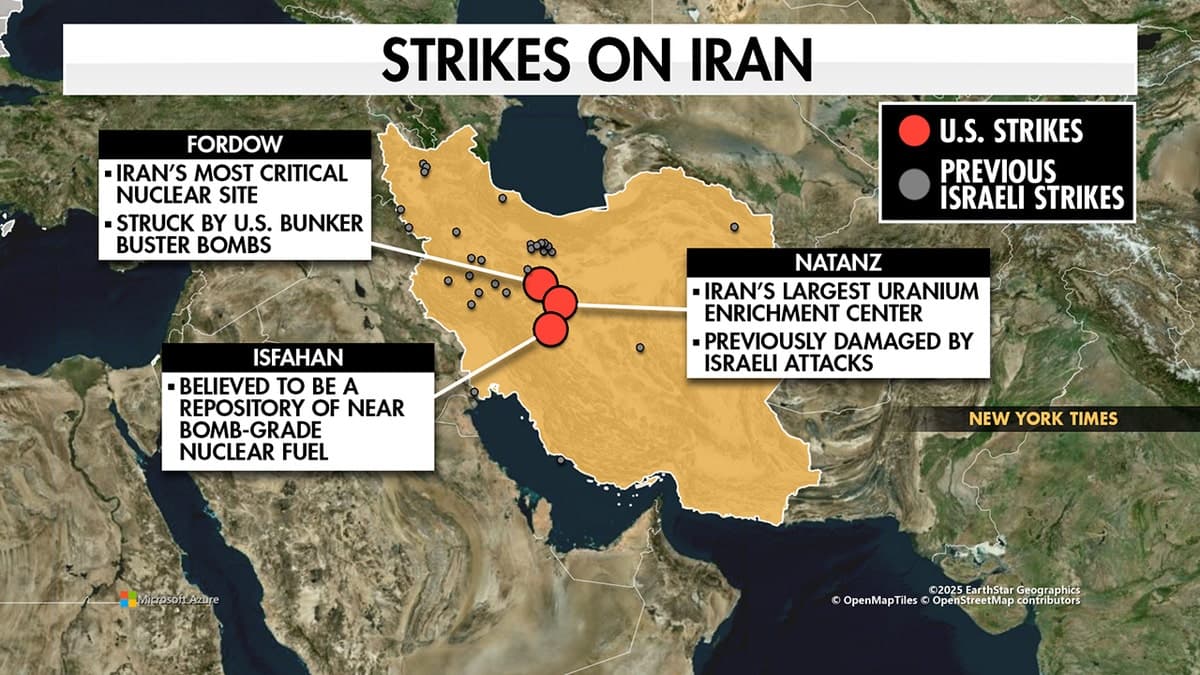
Iran fired another wave of ballistic missiles at targets in Saudi Arabia and the UAE last week. The interceptors went up. Most of the missiles went down. The radar screens lit up, the press conferences happened, and everyone went back to business as usual. How long can we keep playing this game?
I grew up outside of Laredo, Texas. My uncle did two tours in the Gulf, Desert Storm and Iraqi Freedom. I watched what happens when America decides to manage threats like Iran instead of ending them. You manage them for twenty years. Then you manage them for another twenty. The whole time, they're getting smarter, building faster, and watching you blink.
Iran's Attack Pattern Is Methodical, Not Erratic
Iran has fired over 1,400 rockets, missiles, and drones at neighboring states in the first quarter of 2026 alone, a 40% increase over the same period the year before. This is not random aggression. It's a systematic campaign designed to exhaust allied air defense stockpiles, test the limits of American resolve, and expand Tehran's operational reach one fired projectile at a time.
The targets aren't random either. Saudi infrastructure at Abha and Jizan has been hit repeatedly. UAE energy facilities have absorbed multiple attempted strikes. Jordan intercepted a Shahed-136 drone last Tuesday afternoon, the kind that costs Tehran about $20,000 to manufacture and costs the intercepting country several times that to knock down. Every fired drone is a small tax on allied defense budgets. Fire enough of them and the math starts working in Tehran's favor.
American forces in the region logged 73 confirmed intercepts in March 2026 alone. The Pentagon hasn't said publicly how many interceptors that consumed. That silence is itself a data point worth reading carefully.
We're Spending Millions to Stop Twenty-Thousand-Dollar Drones
A Patriot interceptor costs the United States between $3 million and $4 million per missile. A THAAD interceptor runs closer to $10 million. When Iran fires a $20,000 Shahed drone and we fire a $4 million response, the economics of attrition don't favor us. Iran can lose 200 drones to one interceptor and still come out ahead in procurement terms. That's not a bug in their strategy. That's the entire strategy.
Members of the Senate Armed Services Committee, following a classified briefing in March, characterized the pace of Iranian attacks as deliberate resource warfare designed to drain allied interceptor stockpiles, not opportunistic aggression. That framing came directly from the intelligence summary the committee had just reviewed.
The United States holds roughly 1,100 Patriot missiles in active Middle East and European stockpiles. At the current intercept pace, with replenishment cycles running 18 to 24 months from order to deployment, those stockpiles are finite in a way they weren't five years ago. Iran has been counting longer than we've been worried about the math.
Our Allies Are Watching America Decide What It Stands For
Saudi Arabia, the UAE, and Jordan are Western-aligned states bearing the sharpest end of Iranian munitions. They've been reliable partners, on counterterrorism, on Abraham Accords normalization, on containing Iranian proxies from Yemen to Lebanon. But partnership has a breaking point. That point is simple: if your ally can't protect your capital, you start wondering whether the alliance is real.
The Saudis have quietly begun conversations about additional missile defense procurement through non-American channels. The UAE has accelerated its domestic defense technology investment. These countries aren't abandoning America. But they're watching what America does in the next sixty to ninety days with attention that goes well beyond diplomatic courtesy. Alliance relationships don't break all at once. They fray quietly, one unreturned commitment at a time, until one day you discover the partnership meant less than you thought it did.
That fraying is exactly what Tehran is engineering. Keep the pressure on. Keep the intercepts coming. Keep the partners anxious. Let time and arithmetic do the work that open war can't.
This Ends One Way or Another
Iranian missile attacks will stop. The question is whether they stop because the United States imposes a real cost on Tehran, one that changes the strategic calculation at the top of the regime, or because our allies lose confidence and Iran's forward-pressure campaign achieves its objective of regional dominance. Those are the two outcomes. There is no third option where everyone keeps going indefinitely with no consequence to anyone.
Two decades of sanctions and warnings produced this situation. The people who designed that policy are not offering a strategy that ends differently. What's needed is a decision, an actual, clear-eyed decision about what the United States will do to protect its partners in this region. Not another diplomatic framework. Not another round of enrichment negotiations. A decision that Tehran believes and that our allies can actually see being made.
My uncle always said you can pay for security up front or you can pay for it after the fact. The up-front price is always lower. He drove a pickup truck and read Tom Clancy novels, not Foreign Affairs. But he was right.


