What Tom Emmer Said, and Why the Left Can't Dismiss It
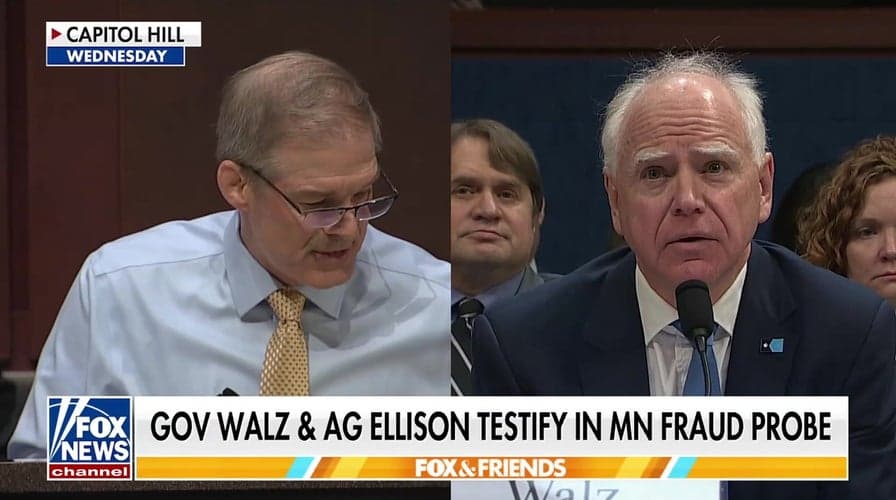
Congressman Tom Emmer stepped in front of a Fox News camera last week and said something that Washington's political class usually avoids saying out loud: that Democratic officials should go to prison if fraud coverup allegations are proven true. He named Governor Tim Walz and Attorney General Keith Ellison by name, saying both should "serve jail time" if the evidence supports it. Democrats called it grandstanding. It isn't. Emmer is a congressman from Minnesota, he knows these men, knows the state's political machine, knows what the federal case files say. When a sitting congressman from the same state draws a line this stark in public, it means the evidence has moved past the point where studied vagueness is defensible.
The underlying scandal, the Feeding Our Future case, involved over $250 million in fraudulent pandemic relief payments processed through Minnesota's child nutrition program between 2020 and 2022. Federal prosecutors have secured convictions against more than 70 individuals. Money was wired to Somalia, Kenya, and the United Arab Emirates. Some defendants received sentences of up to 20 years in federal prison. And the entire scheme operated under the administrative umbrella of a state government led by Tim Walz, overseen in part by an attorney general's office run by Keith Ellison.
The Feeding Our Future Scandal Is Exactly as Bad as It Looks
The Feeding Our Future case is the single largest pandemic fraud by dollar amount within one state in American history. Federal prosecutors documented how a nonprofit exploited Minnesota's COVID-era oversight failures to fabricate child nutrition program participants at industrial scale. The money never fed children. It funded real estate purchases, luxury vehicles, and international wire transfers to East Africa and the Gulf states. Seventy-plus defendants. A quarter billion dollars. Overseas accounts. This is not a clerical error.
What the state knew and when is the central open question. Internal emails cited during the federal trial showed that state officials received complaints about Feeding Our Future as early as 2021. The Minnesota Department of Education flagged the organization for potential fraud. The payments continued anyway. Walz's administration didn't shut down the program until federal investigators were already at the door. Ellison's office has maintained strategic silence throughout the entire proceeding.
I've tracked state-level corruption cases for years. The signature of a coverup is rarely a smoking gun. It's an absence: missing referrals, stalled investigations, witnesses who were never called. Minnesota has several of those absences in this case. They deserve explanation under oath, not press-release management.
The "If True" Qualifier Is the Correct Standard
Emmer's conditional, "if these allegations are true", is being mocked as a hedge. It's the opposite. The qualifier draws the line exactly where it belongs: if evidence of a coverup exists, the consequence is prosecution. That's not a partisan demand. That's what obstruction law requires of public officials who interfere with federal investigations. Emmer isn't rushing to judgment. He's stating what the outcome of a proven judgment must be.
What Democrats are doing in response is treating the "if" as a permanent escape clause. As long as nothing has been formally adjudicated against Walz or Ellison specifically, the questions themselves get characterized as bad-faith attacks. But the questions are legitimate because the fraud was real, the money is gone, and the failure happened on specific people's watch. Republican Representative Michelle Fischbach told constituents in 2024 that the state oversight failures were "systemic and willful", not accidental or administrative. That's a serious claim from a serious officeholder. The way to answer it is to produce documents, testify publicly, and let the record speak. Not to question the motives of whoever's asking.
How Many Republican Governors Could Survive This Record?
Picture a Republican governor presiding over $250 million in pandemic fraud routed to overseas accounts. Seventy-plus convictions. Federal investigators who received complaints two years before the program was shut down. Now picture that same governor running for national office, standing on a debate stage, doing TV interviews about his values and his record, accepting a place on a national ticket. The press coverage would be relentless. It would define the candidacy. It would be the only story for months.
What actually happened to Tim Walz? He appeared at a national convention. He did interviews about his biography. He debated on national television. The Feeding Our Future scandal, with its 70-plus convictions, its overseas wire transfers, its quarter-billion-dollar price tag, barely registered in national coverage. That asymmetry isn't coincidental. It's a choice made across hundreds of newsrooms simultaneously. And it corrodes public trust in every institution that's supposed to enforce the rules.
Emmer naming that asymmetry on camera, and attaching specific legal consequences to it, is the most honest thing a Minnesota politician has said about this case publicly. Honest things tend to get characterized as attacks. That's how you know they landed.
Accountability Means Consequences, Not Just Questions
Emmer calling for accountability is the beginning, not the end. Real accountability requires congressional hearings with subpoena power, document requests that can't be slow-walked indefinitely, and prosecutors operating without political constraints. It requires Minnesota voters to decide whether the officials who led their state during its largest fraud in history deserve continued public trust.
If Walz and Ellison can demonstrate their offices acted correctly, that they referred concerns to federal authorities promptly, cooperated fully, and any failure was administrative rather than deliberate, then they should do that. Release the records. Answer the questions on the record instead of through press secretaries. Show the work. That's what innocent officials do.
And if the record shows something different? Tom Emmer is right. Prison isn't optional. It's the appropriate response to public officials who used their positions to shield a quarter-billion-dollar fraud from scrutiny, at the direct expense of the children the program was supposed to feed. Accountability means consequences. That's not partisan. That's just what the word means.