Reading Newsom's Tea Leaves
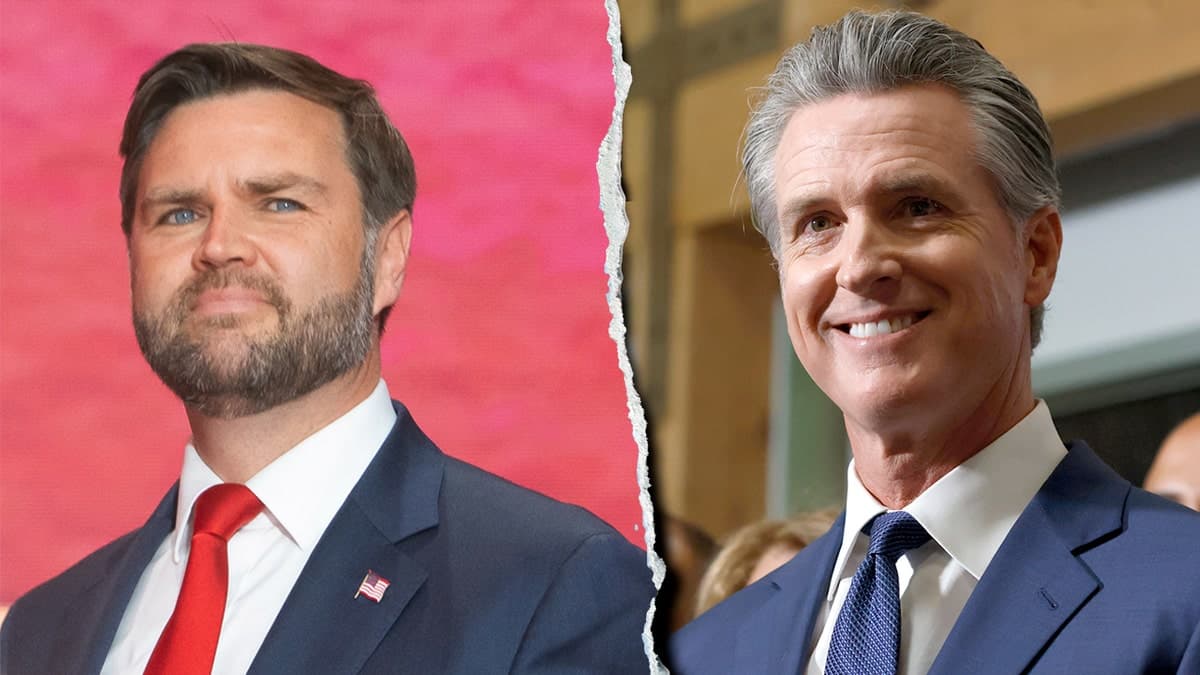
Gavin Newsom told a reporter recently that JD Vance is 'scarier' than Donald Trump. The comment got some coverage, prompted the predictable conservative eye-rolling, and then mostly disappeared into the news cycle. That's a mistake. When a politician with Newsom's level of national ambition makes a public statement about a specific Republican, not in a general policy debate, but as a personal threat assessment, he isn't sharing a candid opinion. He's making a calculation.
Newsom has been running a shadow presidential campaign since at least 2023. The California governor launched a national podcast, commissioned polling in key swing states, traveled to red-state media markets, and positioned himself repeatedly as the Democratic Party's most compelling messenger against MAGA conservatism. None of this is subtle. His entire post-2024 media strategy has been explicit positioning for a 2028 run, assuming the Democratic Party survives its current identity crisis long enough to nominate someone.
So when Newsom says Vance scares him more than Trump, the question isn't whether he means it. The question is what strategic purpose it serves to say it publicly, right now, four years out.
Why Vance, Why Now
Vance's political profile has sharpened considerably since he became vice president. He's proven himself a disciplined communicator who can translate the populist nationalism of Trumpism into a more intellectually coherent framework, one that holds an audience that finds Trump personally exhausting while remaining committed to the underlying policy agenda. That combination is genuinely dangerous for any Democrat planning a 2028 strategy.
Trump wins by being Trump, by creating a gravitational field around his personality that scrambles normal political calculations. His appeal is simultaneously his ceiling. He tops out somewhere around 47 percent of the electorate and relies on opposition fragmentation to cross the finish line. Vance doesn't carry that ceiling. He's younger, more articulate in policy terms, culturally fluent in a way that plays well in the upper Midwest states that decide presidential elections, and he's been carefully positioning himself as a credible heir apparent rather than an understudy.
Ohio went Republican by 11 points in 2024. Pennsylvania by 2. Michigan by 1.5. Vance knows that map. He grew up in it. He's written about the communities that have been deciding Rust Belt elections for a decade. Democrats who think they can run the 2028 playbook against Vance the way they'd run it against Trump are misreading the threat entirely. Newsom isn't misreading it. That's why he's naming Vance now.
The Danger in Newsom's Framing
There's tactical logic to Newsom's move. By elevating Vance as the real threat, he subtly positions himself as the Democrat who takes the long view seriously. He differentiates himself from the rest of the Democratic field, which is currently focused on opposing Trump-in-office rather than planning for post-Trump politics. He's drawing a line in the sand early: I see Vance coming, and I'm the one who can stop him.
But the framing carries risk. Calling a sitting vice president 'scarier' than the sitting president implies the current administration isn't Newsom's real concern, that he's already looking past Trump to the succession. That reads as dismissive of the immediate stakes, which is a credibility problem in a general election. I watched Newsom give a press conference in Sacramento in late 2024, after the election, where he was already talking about the Democratic Party's structural problems in terms that sounded less like grief and more like preparation. The 2028 clock was running before 2024 was even certified.
California under Newsom has the highest income tax rate in the nation, a homelessness crisis that has become a national symbol of policy failure, and an outmigration problem that cost the state a congressional seat after the 2020 census. Running for president on that record requires relentless narrative reframing. Picking a fight with JD Vance four years early is one way to change the subject before anyone gets a chance to ask about the substance.
What Conservatives Should Take From This
Don't dismiss Newsom. That's been the mistake before, with Obama, with Clinton, with every Democratic politician who looked like a regional story until they weren't. Newsom is disciplined, well-funded, media-savvy, and he's studied the Democratic Party's post-2016 failures with unusual care. He won't run against Vance on coastal liberalism. He'll try to reposition as a centrist, just as every Democratic nominee since 2016 has attempted with varying degrees of success.
And don't misread Vance's position. He's accumulating real executive experience as vice president, managing foreign policy engagements at a pace unusual for someone in that office. His Munich speech, his public posture on Ukraine and NATO, his statements on Iran, these are building a foreign policy record that he'll need if he runs in 2028. Vance at the end of this term will not be the same political figure as Vance in 2022. He's growing into the role fast, and it's showing.
Newsom sees it. He's saying so. The Republican Party should probably listen, not because Newsom is right about Vance being scary, but because he's right that Vance is the one worth watching. The 2028 race started last week, quietly, in a press interview almost nobody took seriously enough. That's how these things always begin.