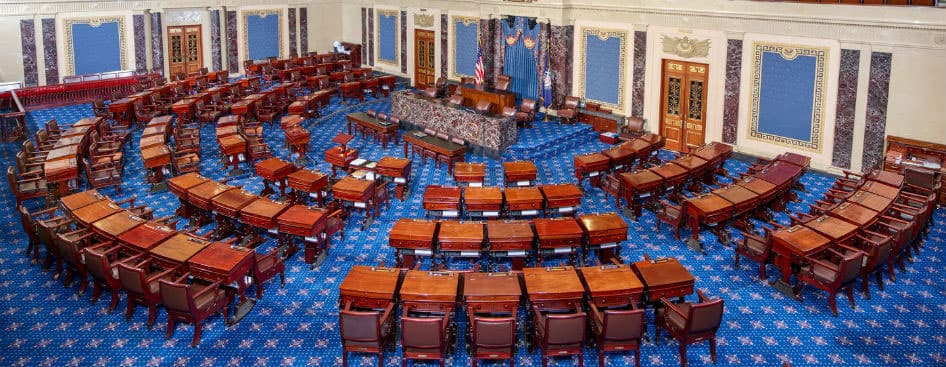
A Confirmation Fight That Reveals Everything
Senate confirmation hearings are rarely about the nominee. They're about the coalition that nominated them and the coalitions arrayed against them. The current standoff over Trump's surgeon general nominee is a case study in the fracture lines running through the Republican Party's evolving relationship with public health — and what the MAHA movement actually means as a governing philosophy rather than a campaign slogan.
The nominee is caught in an unusual crossfire: skepticism from traditional GOP senators who represent pharmaceutical-adjacent donor interests, and pressure from MAHA-aligned populists who want a true believer willing to challenge the existing public health infrastructure rather than manage it. Neither side is offering a clear path to confirmation. Both sides are revealing something important about their priors.
The Institutional Problem with Public Health
American public health institutions suffered a credibility collapse during COVID-19 that institutional actors have spent the years since pretending didn't happen. The CDC's mask guidance reversed multiple times. School closure recommendations were driven by teacher union pressure rather than epidemiological evidence — a fact now documented in contemporaneous emails, not retrospective interpretation. The NIH's handling of gain-of-function research funding remains opaque despite years of congressional inquiry.
The surgeon general's office, historically a bully pulpit rather than an operational post, sits at an interesting intersection. The office has no regulatory authority. It has no budget to speak of. What it has is convening power, symbolic weight, and the ability to set the terms of public health discourse in ways that precede and shape regulatory action downstream.
That's why it matters who holds it. And that's why the MAHA wing of the Republican coalition is fighting for it with unusual intensity.
What MAHA Actually Wants
Make America Healthy Again is, at its core, a challenge to the processed food industry, the pharmaceutical industry, and the regulatory capture that has allowed both to externalize their costs onto the American public while capturing the agencies nominally responsible for oversight. That critique is not wrong. The FDA's relationship with the processed food industry is one of institutional proximity bordering on co-dependency. The approval processes for food additives that have been banned in Europe for decades reflect not scientific consensus but regulatory inertia and lobbying effectiveness.
Robert F. Kennedy Jr.'s influence on this framework is real, documented, and genuinely complicated. Some of what the MAHA coalition argues is well-grounded in evidence. Some of it — particularly the more aggressive vaccine skepticism — represents a break from the kind of evidence-based reasoning that makes the rest of the critique persuasive. Conflating the legitimate critique of institutional capture with the more speculative claims about vaccine injury does the movement a disservice.
A thoughtful surgeon general nominee could thread that needle. Could use the office to drive genuine accountability on food additives, chronic disease epidemiology, and the pharmaceutical approval pipeline without lighting the vaccine schedule on fire. Whether the current nominee is positioned to do that is exactly what the confirmation fight is supposed to determine — but isn't, because the fight has become proxy warfare for the broader MAHA versus establishment divide.
The Intellectual Failure on Both Sides
The traditional GOP skeptics of the MAHA agenda are not making a principled stand for evidence-based medicine. Most of them are protecting donor relationships with pharmaceutical and agriculture interests that have benefited from the status quo. Their invocation of 'science' as a shield against MAHA criticism would be more convincing if those same senators had been consistently vocal about the FDA's failures on opioids, or the NIH's funding of research that produced minimal public health benefit at enormous cost.
They weren't. They're not defenders of rigorous public health science. They're defenders of incumbent interests.
But the MAHA-aligned senators pushing for a maximalist candidate are making their own intellectual error: treating the surgeon general confirmation as a cultural signaling exercise rather than a governance decision. The office needs someone who can credibly engage with the scientific literature, navigate the existing institutional landscape, and build coalitions for genuine reform. A nominee who alienates the public health establishment entirely will accomplish nothing except providing fodder for the inevitable media backlash.
The 2025 fiscal year NIH budget was $47.2 billion. That money flows through institutional channels that a surgeon general with zero credibility in those institutions cannot redirect. Credibility isn't capitulation. It's a tool.
The nominee deserves confirmation hearings that actually interrogate these tensions rather than perform them. What we're getting instead is theater. And the American public, whose health is ostensibly the subject of this debate, is watching from the audience.