The Thing You're Not Supposed to Say Out Loud
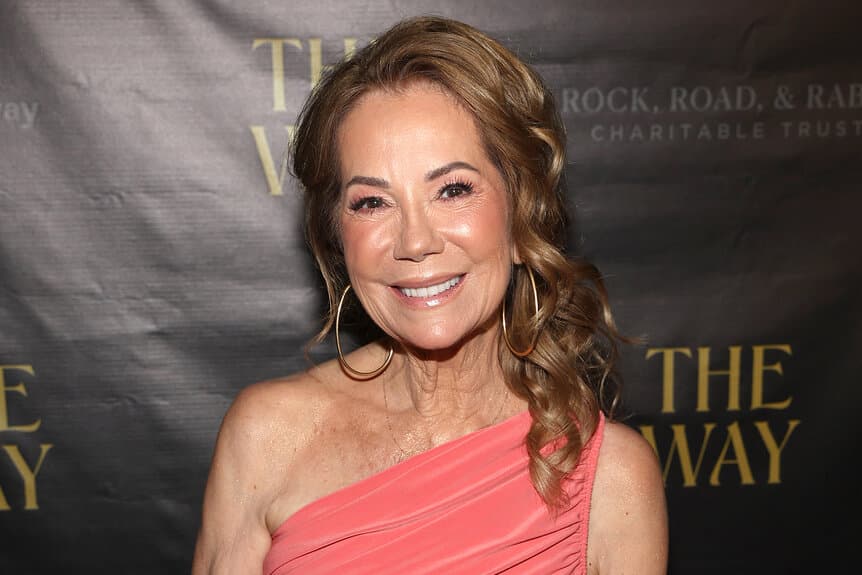
Kathie Lee Gifford sat down for an interview recently and said something you don't often hear from people with her level of celebrity: God made her famous so she could be bold about Jesus. Not as a private confession whispered to a sympathetic host. Not hedged with qualifiers about personal journeys and not judging others. Flat out. Deliberate. God made me famous for this reason, and I intend to use it.
The reaction was predictable. Warm coverage on faith-adjacent outlets. Polite acknowledgment elsewhere. And then, underneath it all, the unmistakable edge of discomfort that always accompanies Christian celebrity in the entertainment industry, the same industry that has spent twenty years treating every form of personal identity as a protected, celebrated revelation. Except this one.
I've watched this dynamic play out across decades of entertainment coverage. A celebrity comes out as gay or non-binary or polyamorous and the press calls it courage. Raw. Brave. A celebrity says they found Jesus and the press calls it a lifestyle choice, or a phase, or something to be reported with just enough careful distance to signal that reasonable people might find it puzzling. Kathie Lee Gifford is not letting that dynamic run unchallenged. Good for her.
What She's Actually Arguing
Her claim is theologically interesting, and it deserves to be taken seriously rather than simply celebrated as a culture war talking point. She isn't saying God blessed her with fame as a reward for faithfulness. She isn't running the prosperity gospel formula. She's making a different argument entirely: that her platform came with a purpose attached, that her visibility is a stewardship question rather than a personal achievement. That distinction matters more than it might seem.
The prosperity gospel version of this claim would be: I was faithful, so God made me successful. Gifford is making something closer to the opposite move: I was given something I didn't earn, and the honest question is what to do with it. The answer she's arrived at, after four decades in entertainment, after the losses she's carried publicly, after outlasting contracts and critics and multiple cultural moments, is that the platform is most honestly used to point beyond herself.
That's not self-promotion wearing religious clothing. It's actually in direct tension with what Hollywood typically values, which is self-promotion wearing every available clothing simultaneously.
She's been saying versions of this for years, going back to her time on Live with Regis and Kathie Lee when Christian faith was even more culturally unwelcome in celebrity contexts. The remarkable thing isn't that she's changed her position. It's that she's saying it more plainly now, at 72, at a stage in her career where she has nothing left to protect and no contracts that depend on managing the perception of her faith.
Hollywood's Last Real Taboo
The entertainment industry has made a sustained, visible effort over the past two decades to demonstrate openness to every kind of difference, sexual, racial, religious in almost any direction, political if it runs left. Sincere Christian faith remains the exception. Not Christian aesthetics, those are marketable. Not Christmas movies, those are profitable. Not vague spiritual language about gratitude and the universe, which slides through without friction. Actual Christianity, the kind with Jesus as a specific person who did specific things and to whom Kathie Lee Gifford credits her entire public life, that still makes rooms uncomfortable in ways that nothing else quite does.
Why? Because sincere Christian faith makes a claim. It isn't content to be one valid lifestyle option among many. It says something happened, something is true, something is at stake eternally. That claim is structurally incompatible with the relativism that functions as Hollywood's unofficial theology. You can celebrate all identities simultaneously only if no identity claims to be more than an identity. Christianity refuses that constraint. It always has.
Gifford knows this. She's navigated it for forty years in an industry that would have preferred she keep the Jesus talk backstage. She hasn't.
The Witness That Costs Something
There's a Christian concept, witness, that means more than church attendance or private belief. It means being seen, publicly, in a way that points to something beyond yourself. It carries social cost. It risks mockery. It closes certain doors and makes certain rooms colder. Gifford has had doors closed on her and kept talking anyway. That's not performance. Performance stops when the audience stops paying.
She's 72 years old. She lost her husband Frank in 2015. She's watched friendships fade, watched the industry move on, watched the culture drift in directions she finds troubling. She doesn't need another television deal. She doesn't need the approval of a press corps that has never quite known what to do with her brand of unironic faith. She's choosing to say what she believes, clearly, in public, because she thinks it matters.
Think of Elijah sitting under the broom tree, not the triumphant version, the exhausted one, asking to be done. And still being sent back. Still being asked to speak. The faithfulness isn't in the dramatic moments. It's in continuing to show up when silence would be so much easier.
Hollywood can file Kathie Lee Gifford under lifestyle content. The rest of us can recognize it for what it is: a person with history and loss in her eyes, saying this is true, and I'm going to keep saying it. That kind of testimony doesn't need a prime-time slot to land.