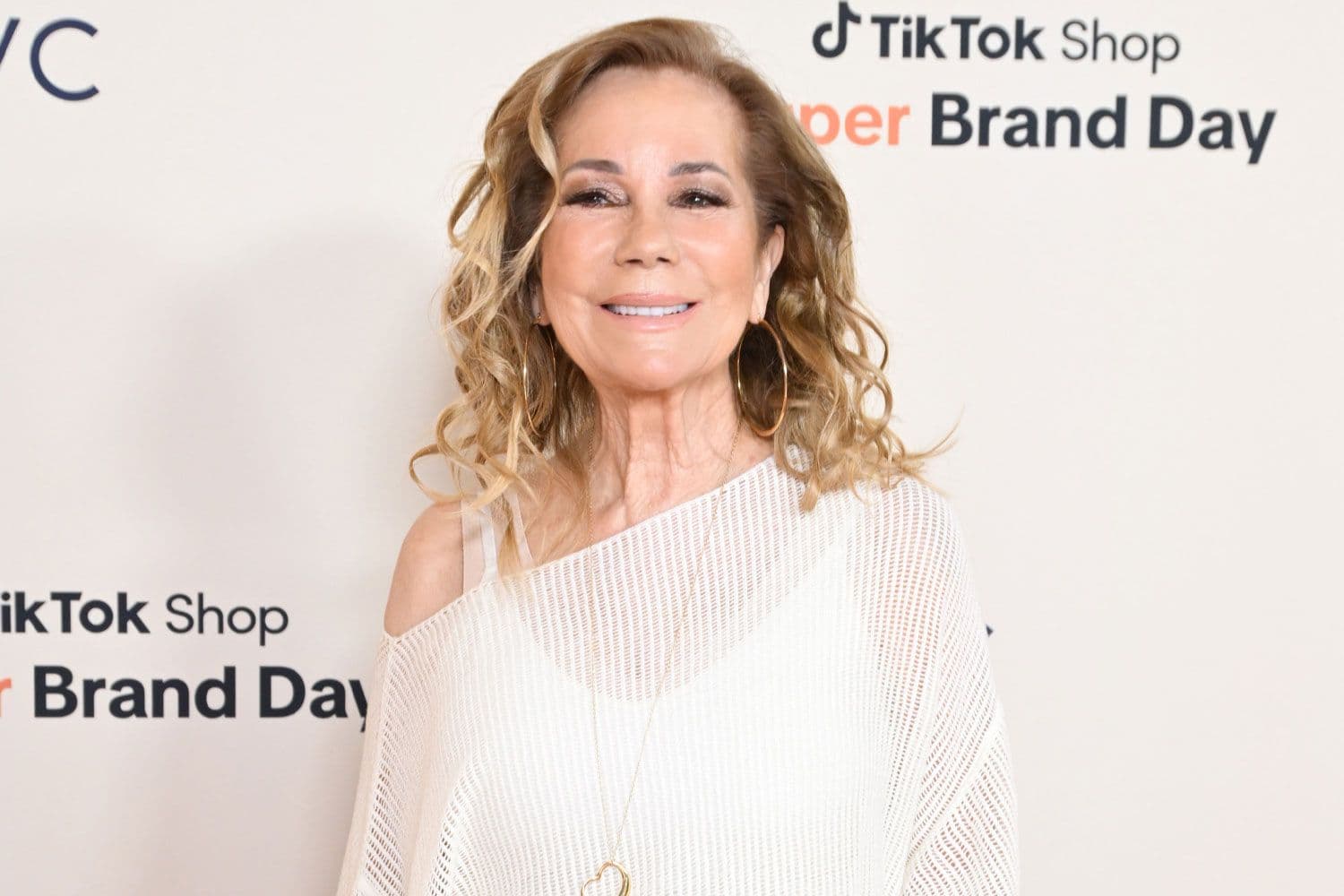
She Said It Out Loud, and That's the Whole Point
Kathie Lee Gifford didn't hedge. Didn't soften it with "I feel called" or retreat into careful vagueness. She said God "made me famous" so she could be "bold" about Jesus. In the current entertainment environment, that kind of directness is practically a controlled substance. She's been administering it for decades.
I'll admit: I grew up watching Kathie Lee on daytime television, back when she and Regis Philbin were the wallpaper of sick days and summer mornings. I thought of her as warm, funny, occasionally weepy, not as someone with a theological framework worth examining in 2026. But she's always had one. She just got louder about it as the social cost of loudness went up. That's the inverse of how most public figures operate.
Her new memoir, "It's Never Too Late," is out this spring. She's 72. Her career started in the 1970s, survived the tabloid years after Frank Gifford's death in 2015, outlasted several rounds of cultural hostility, and landed her here: still working, still talking about Jesus, still refusing to pretend that her faith is separate from her fame.
The Theology She's Describing Is Serious
When Kathie Lee says God made her famous to be bold about Jesus, she's articulating a theology of stewardship, the idea that gifts, platforms, and influence are entrusted rather than self-generated, and that the entrusting comes with a purpose. This isn't celebrity grandiosity. It's embedded in the evangelical Protestant tradition she's worked from her entire career. What's unusual is hearing someone say it plainly in a publicity context without immediately walking it back.
The theologian Dallas Willard spent his career arguing that Christianity is meant to be lived out in the open, not quarantined to Sunday mornings but carried into every conversation and relationship. Kathie Lee is doing exactly what that tradition describes: naming her platform as an extension of her faith, publicly, without apology. That's closer to historic Christian witness than the careful vagueness most celebrity Christians deploy when a camera gets pointed at them.
She's 72. She has nothing left to sell except the work and the truth as she understands it. That's a different kind of credibility than a 28-year-old pop star thanking God at an awards show. Kathie Lee has had five decades to test whether her faith holds. She's reporting that it does.
Why Celebrity Faith Usually Goes Soft
Most public figures who identify as Christian do so defensively. They acknowledge it when pressed, pivot quickly to inclusivity, and make sure the whole thing lands as "faith is a private matter." It keeps the doors open. Costs nothing. And it's basically useless as witness, because witness requires specificity. You can't witness to a feeling. You can only witness to something true.
The entertainment industry enforces a tolerance that is actually quite intolerant. Say something universal, "love wins," "the universe provides," "be your authentic self", and audiences open up. Name Jesus specifically, name him as the Christ, name the resurrection as a historical event, and you'll find friction. Kathie Lee has been finding that friction on purpose for years. She told the interviewer she looks for opportunities in every conversation to talk about her faith. Not to argue, she said. To be present. There's a pastoral instinct there that career pastors would recognize.
A 2024 Gallup poll found 68 percent of Americans still identify as Christian, down from 90 percent in 1976, but still the country's overwhelming majority. Those people have almost no representation in entertainment culture. Kathie Lee is one of the rare public figures who actually reflects their interior lives. She's been doing it so long she's outlasted the people who wanted her to stop.
The Culture War Reading Misses the Point
There's a temptation to read Kathie Lee's public faith as a political signal, conservative resistance to Hollywood liberalism, a culture war posture for a specific audience. That reading is too small for what she's actually doing. She was talking about Jesus on daytime television in the 1990s, years before "culture war" became the frame for everything. When Frank Gifford's affairs became tabloid fodder in 1997, she talked about forgiveness openly, by name, and attributed it to her faith. That's not politics. That's something harder to categorize and more durable than politics.
She told the interviewer: "I don't have any fear anymore. I know who I am. I know whose I am." That last phrase, "whose I am", is doing serious theological work in four words. It names identity as relational rather than self-constructed. It names belonging as the foundation of courage. That's the kind of thing that sounds simple until you've spent a lifetime trying to actually believe it. She got there.
What It Means to Spend Fame Well
How many people with a platform that large actually spend it on something besides themselves? The honest answer: almost none. Most people with platforms spend them on their brand, their arc, their legacy. Their own story, told their own way, indefinitely. Kathie Lee is 72, has buried her husband, written her memoir, and is still showing up to talk plainly about Jesus with the same directness she brought to morning television thirty years ago. That's not calculation. That's conviction that held.
She said God made her famous so she could be bold. She's been bold. The culture pushed back, the tabloids came and went, the years accumulated, and she's still saying the same thing she said at the start. Not because she's stubborn. Because she believes it.
Fame is almost always wasted. People spend it on themselves, on their image, on whatever keeps the phone ringing for another decade. Kathie Lee spent hers on something she believes will outlast her career and probably outlast the people who dismissed her. She may well be right about that. And she's using the platform she has left to say so one more time. That's how it's supposed to be done.