Last winter, a friend of mine who runs an auto parts shop in San Antonio, third-generation Mexican-American, built it from the single bay his grandfather opened decades ago, called me with a simple problem. His wholesale costs on steel-adjacent inventory had jumped nearly 20 percent. He absorbed it at first, the way small business owners do, figuring it would pass. By spring, he couldn't hold on anymore. His customers are paying more now for the same brake pads and rotors they bought last year.
That's what a tariff looks like when it lands. Not in a press release. On a receipt.
How a Tariff Actually Works, Since Washington Won't Explain It
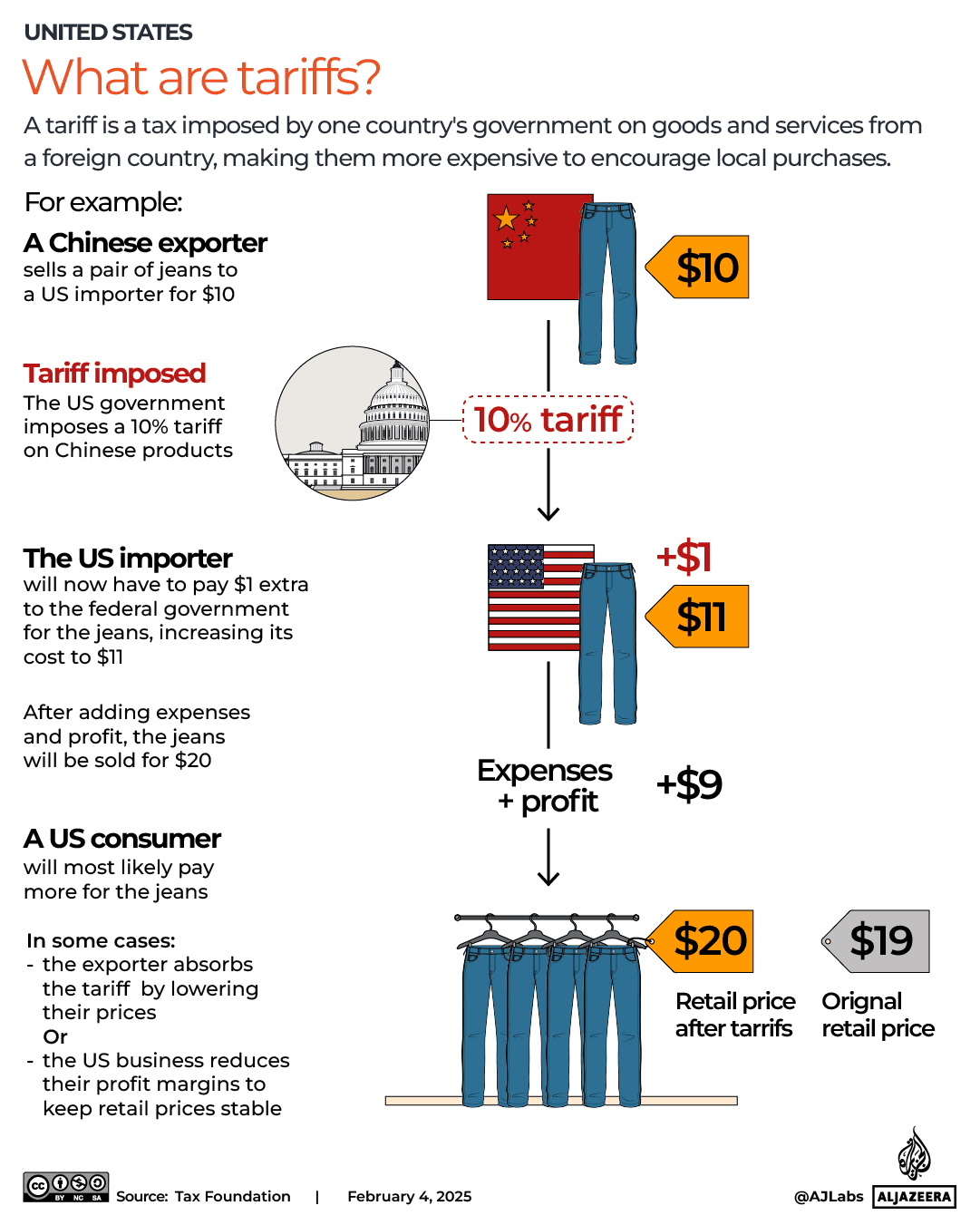
A tariff is a tax paid by the American importing company when goods cross the U.S. border. Foreign governments do not pay it. Foreign exporters do not absorb it. American businesses pay it, and those businesses, operating on margins that are rarely as generous as politicians imagine, pass most of that cost to customers. The Tax Foundation estimated that the 2018 round of Trump tariffs cost the average American household between $800 and $1,200 per year in higher prices on goods. That's real money for families who aren't wealthy.
The narrative out of Washington, that we're making China pay, making Mexico pay, protecting American workers, sounds like strength. Sounding strong and being correct are different things. Broad tariffs function as a regressive consumption tax. Lower-income households spend a higher share of their income on physical goods, so they feel price increases more acutely. A wealthy family absorbs a 20 percent price hike on a washing machine differently than a household earning $42,000 a year absorbs it. The wealthy family barely notices. The working family rearranges the budget.
Veronique de Rugy, an economist at the Mercatus Center, not a liberal institution, has spent years documenting this pattern. "Tariffs are simply taxes paid by American consumers and businesses," she wrote earlier this year. "Calling them something else doesn't change what they are."
The Populist Sales Pitch Versus the Receipt
The populist trade argument claims tariffs protect American workers, and the 2018 steel and aluminum case shows exactly why that claim doesn't survive scrutiny. Those tariffs protected roughly 140,000 jobs in steel and aluminum production. But the 6.5 million Americans employed in steel-consuming industries, automotive, construction, appliance manufacturing, saw their input costs rise. That's not a trade-off that pencils out in any honest accounting.
I want to be clear about where I'm coming from. I've voted Republican in every election since I turned 18. I believe in secure borders, low taxes, and the principle that government interference in markets usually makes things worse. I'm not writing from some free-trade think tank that's never talked to a working person. I'm writing because I've watched the populist trade argument evolve over a decade into something disconnected from economic outcomes, and closely connected to political performance.
How is it conservative to raise costs on working families in the name of protecting them?
And then the feedback loop makes it worse. When a tariff raises prices in industries that relied on those imports, the administration announces relief programs, farm bailouts, manufacturer subsidies. We tax imports, raise prices on consumers, then spend tax dollars to compensate the industries our own policy damaged. Money churns through the federal government. The net economic effect is negative. Someone in Washington gets to announce they're fighting for American workers on both ends of the same policy that hurt them.
The Conservative Case Against This Policy
The argument for broad tariffs is a central planning argument, not a conservative one. Ronald Reagan called protectionism "a very quick fix with a long-term pain" in 1985. The intellectual tradition of conservatism on trade, the actual tradition, not the cable news version, has always been skeptical of tariffs because conservative economics understands that distorting price signals creates damage that compounds. Washington picks which industries to protect, which prices to elevate, which trade flows to redirect. This is the same logic progressives apply to green energy subsidies and fossil fuel penalties. The mechanism is identical. We used to know this.
The answer is not to abandon trade policy. It's to do trade policy correctly. Negotiate reciprocal market-opening agreements. Press China on intellectual property theft and state subsidies through mechanisms that don't tax American consumers in the process. Invest in workforce development so American workers compete on quality, not on price floors held up by tariff walls. None of that is as satisfying as announcing a number with a percent sign attached to it. All of it produces better outcomes for the people we're supposed to be protecting.
My friend in San Antonio didn't ask for tariffs. He never asked for protection. He asked for a government that would get out of his way and let him compete. He already knows how to compete, his family has been doing it for three generations. The last thing he needed was a Washington policy that raised his costs and then called it help.
The tariff bill comes due on ordinary people. Working-class families. Small business owners. People without lobbyists or industry association lunches or PACs to make sure their interests get represented. They're paying right now, in higher prices and squeezed margins. Washington should at least be honest about who's paying before asking them to be grateful for it.