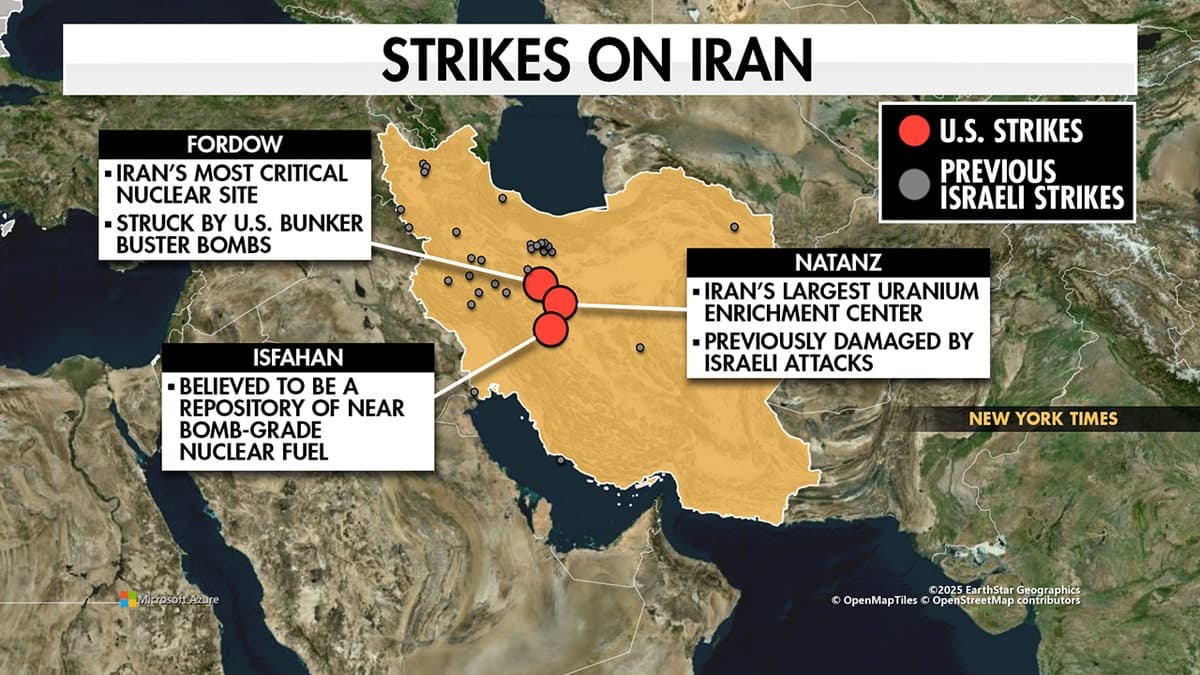
The supplemental appropriations request landed in Congress last week: $14.3 billion to fund ongoing operations against Iranian nuclear infrastructure, backfill munitions stocks depleted by the March strike campaign, and maintain the naval presence now required to deter retaliation against Gulf shipping lanes. Democrats immediately called it a blank check for endless war. Republicans are fighting over whether the number is accurate. Meanwhile, the Fordow enrichment facility is rubble, the Natanz centrifuge halls are destroyed, and Iran is threatening to reconstitute at undisclosed locations within eighteen months.
I spent three years working alongside the foreign policy apparatus in Washington, watching these debates at close range. The argument is almost never really about the money. The money is a proxy for the deeper question nobody will ask out loud in these hearings: Was this worth it, and what are we prepared to do next?
The $14.3 Billion Figure Understates the True Cost
The $14.3 billion supplemental request before Congress covers only direct operational and munitions costs, independent analysts at the Center for Strategic and Budgetary Assessments estimate the true first-year cost, including sustained naval deterrence, intelligence collection operations, and accelerated bomber maintenance cycles, runs closer to $21 billion. The administration is presenting the smaller number because it's more defensible in committee. That calculation will cost more to defend in the long run.
The GBU-57 Massive Ordnance Penetrators dropped on Fordow and Natanz cost approximately $3.5 million each. The Air Force expended 14 of them across the opening two nights of the strike campaign, $49 million in penetrator munitions alone, before flight hours, tanker support, escort packages, and intelligence assets are factored in. The F-22s flying top cover burn roughly 6,500 pounds of fuel per flight hour. On a twelve-hour combat operation, those numbers compound in ways that aren't obvious until you're looking at the final tally.
Congress authorized $9.2 billion for the initial strike package in a March emergency resolution. The administration has now returned to say that figure won't cover the full operation, and that maintaining credible deterrence posture through the end of the fiscal year requires the additional $14.3 billion. That's not a scandal. That's what sustained military operations cost. The scandal would be refusing to fund what we've already committed to doing.
Why Democrats Are Wrong About What This Fight Is Really About
Democratic opposition to the Iran supplemental is not driven by fiscal conservatism, the same party that passed $2.3 trillion in domestic spending through the Inflation Reduction Act without a single Republican vote is not suddenly seized with concern about the national debt. Their opposition is political, which means it should be understood on political terms rather than accepted at face value as principled restraint.
The Democratic coalition is fractured on Iran. Its progressive wing, which controls primary outcomes in most blue districts, views any Middle East military action through the lens of post-Iraq War trauma. Its foreign policy establishment, the Blinken-Sullivan wing, privately believes Iranian nuclear capability needed to be stopped but won't publicly say so while Trump is receiving the operational credit. These two factions together produce incoherence dressed as principle.
Democratic members of the Senate Foreign Relations Committee argued last week that Congress would not write a blank check for a war that was never authorized. That position is technically right on the authorization question but strategically wrong about the remedy. The 2001 and 2002 AUMFs have been stretched across seven countries by three administrations, including two Democratic ones. If Senate Democrats want that constitutional argument on the record, they should make it consistently, not invoke it selectively when their party's political interests align with restraint.
The Strategic Cost of Funding This Fight Halfway
Leaving a military campaign half-funded is not a neutral act. It degrades operational capacity, signals to adversaries that American resolve is conditional on domestic politics, and forces military planners to make targeting and posture decisions based on budget constraints rather than strategic necessity. This is precisely how a successful opening campaign turns into a protracted, inconclusive stalemate.
The IAEA reported in late March that Iran's 60% enriched uranium stockpile, 275 kilograms before the strikes commenced, has been destroyed. That represents two to three years of enrichment work eliminated in a single campaign. But Iran's nuclear knowledge, its centrifuge manufacturing capacity, its network of potential reconstitution sites, and its hardened political will all remain intact. The work is not finished.
The historical precedent is not obscure. The first Gulf War ended with Saddam Hussein's military degraded but his regime intact, a partial success that required a second invasion twelve years later at a cost of $2.4 trillion and over 4,400 American lives. A half-funded campaign against Iranian nuclear infrastructure will reproduce that dynamic on a compressed timeline. The cost of doing this incompletely will exceed the cost of doing it right by an order of magnitude.
Congress Has to Decide What This Country Actually Means
The supplemental funding vote is a referendum on whether the United States is willing to finish what it starts. Not in the abstract, in this specific case, against this specific adversary, with these specific costs. Iran was estimated to be 60 days from weapons-grade enrichment capability when the strike campaign commenced. Allowing reconstitution because Congress can't pass a $14.3 billion supplemental would rank among the most consequential foreign policy failures in recent memory.
Republican members wavering over deficit concerns should ask themselves one question: what is the actual cost of an Iranian nuclear weapon? In direct expenditure, in regional stability, in American credibility, in the price of whatever military response a nuclear-armed Iran eventually forces. That calculation makes $14.3 billion look like a line item in a rounding error.
This isn't about giving Trump a legacy. It's about not giving Iran a bomb.