How We Got Here
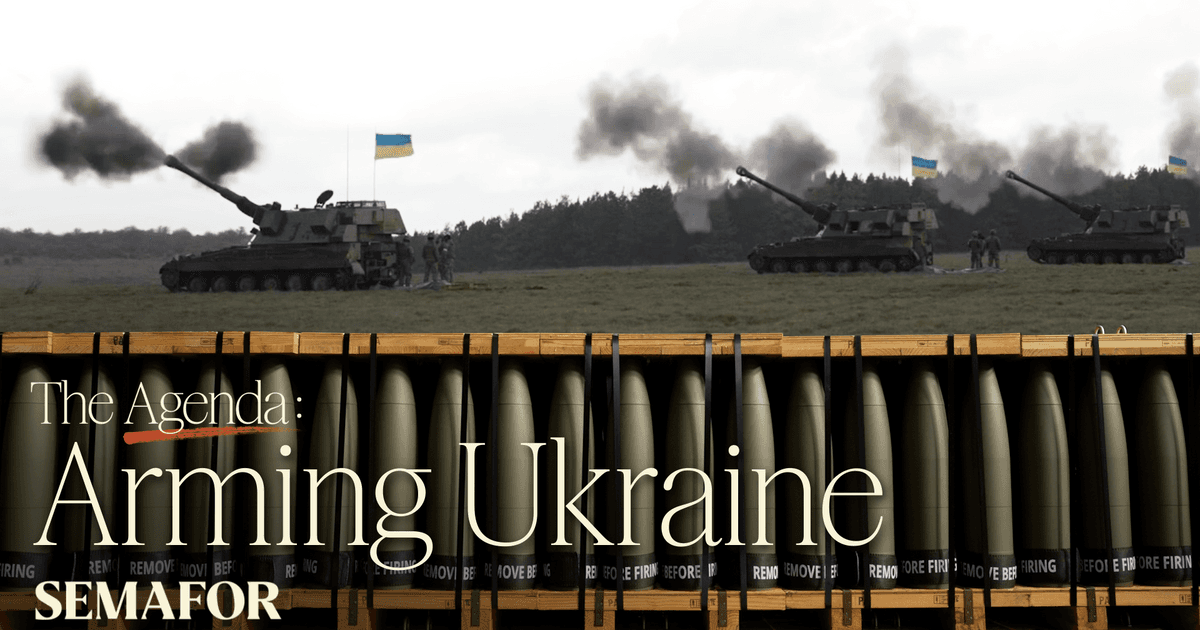
Over the past 14 months, Ukraine's military has fired more than 7 million rounds of artillery ammunition. That figure comes from Ukrainian military officials cited by Reuters and the Associated Press. It's a consumption rate that catches Western manufacturers off guard. NATO suppliers, built for peacetime procurement cycles, suddenly face sustained battlefield demand they've never encountered. The result: production facilities running at capacity while stockpiles deplete faster than new rounds reach the front.
General Valeriy Zaluzhnyy, commander of Ukrainian ground forces until February 2024, stated plainly in his final address to international defense audiences that ammunition shortages were constraining operational strategy. That was over two years ago. The situation hasn't improved. It's gotten worse. The gap between what Ukraine needs and what the West can supply has widened month after month. Field commanders across the Donbas are reporting hard restrictions on daily fire plans. Some artillery units are rationing to four rounds per day when they're trained to sustain twenty times that volume. An artillery battalion commander told Western journalists that his unit once fired 300 rounds in a single engagement. Now they're approved for thirty. That's a tenfold reduction in firepower.
The Production Gap
Europe and North America are finally ramping production, but they started too late. The U.S. is investing 200 million dollars to expand 155mm shell manufacturing across three facilities in Pennsylvania, South Carolina, and Texas. Germany approved new artillery ammunition plants in Bavaria and Lower Saxony. Belgium, Poland, and Sweden are all expanding capacity. But ramping takes time. Industrial capacity doesn't scale overnight. A shell factory that produces 14,000 rounds per month can't jump to 40,000 next quarter. The metallurgy, the machine tooling, the trained workforce, all of it requires months to build.
Consider the manufacturing process. Each shell requires precision forging of the casing, chemical propellant loading in exact ratios, fuse assembly, and quality testing. That's not something you automate in ninety days. The European ammunition industry spent three decades consolidating for profit margins. Now it's learning that sustained wartime production is a different beast entirely. You can't make artillery shells in garages. You need specialized blast-resistant facilities, certified explosive handlers, and supply chains for raw materials. The lead time for a new facility to reach full production is eighteen months minimum. Some plants are reporting 24-month timelines.
Meanwhile, Ukraine's military is burning through ammunition at a rate that outpaces what Western industry can currently replace. Some Ukrainian units report they're consuming 152mm and 155mm rounds at five times the production rate of NATO nations. It's a gap that won't close until late 2026 at the earliest, according to Pentagon officials cited by the Wall Street Journal in March. NATO's defense ministers held an emergency meeting in Brussels to discuss ammunition priorities. The outcome: older NATO members agreed to prioritize Ukraine, but that decision forced other NATO allies to reduce their own stockpiles.
And that assumes no new surge in combat intensity. Any Russian offensive, any Ukrainian counter-operation, any escalation in the artillery duel pushes the shortage deadline further out. Spring 2026 could see renewed Russian attacks in the Sumy and Kharkiv regions. If that happens, ammunition demand spikes again.
The Logistics Bottleneck
Even when shells are manufactured, getting them to Ukrainian forces is a separate crisis. Ammunition must traverse Poland, Slovakia, Hungary, and then overland routes into Ukraine, all while Russian strikes target transport corridors. A single cargo train carrying 60 tons of ammunition is exposed for days. Supply depots near the front are hardened targets. The distance from Western ammunition plants to active combat lines is nearly 2,000 kilometers.
The Russian Air Force and long-range missile forces know where ammunition moves. Dnipro has been hit repeatedly because it's a logistical hub. Mykolaiv faces constant drone strikes for the same reason. The Ukrainians have learned to disperse storage, move ammunition at night, and create redundant supply routes. But it costs time and fuel to operate this way. Efficiency drops. The supply chain becomes slower and more brittle.
Some ammunition is being rerouted through southern routes via Romania, but that adds two extra days of transit time and strains Romanian rail infrastructure. NATO's own military logisticians have privately said they've never managed a supply chain this complex under sustained enemy fire. A staff officer at NATO's Joint Forces Command told Defense News that the challenge isn't just distance but unpredictability. You can't guarantee that a shipment leaving Poland will arrive intact. Weather delays trains. Ukrainian and NATO security forces must inspect shipments. Border crossings operate at capacity. Every delay compounds.
What Comes Next
Ukraine won't run out tomorrow. But it will continue operating under rationing constraints that limit its military options. The shortage won't be solved by production ramp-ups alone. It requires a fundamental rebuild of Western ammunition manufacturing and strategic reserves. That's a multi-year project, and it started late. European defense budgets are increasing, but they won't reverse the deficit overnight. The Western alliance is learning an ugly lesson: peacetime defense spending and wartime demand are not compatible. You choose one or the other. The West chose peacetime for thirty years. Now the bill comes due. It's the difference between having shells and having shells where they're needed. Right now, Ukraine often doesn't have the second one.


