The Operational Wave The Officials Describe
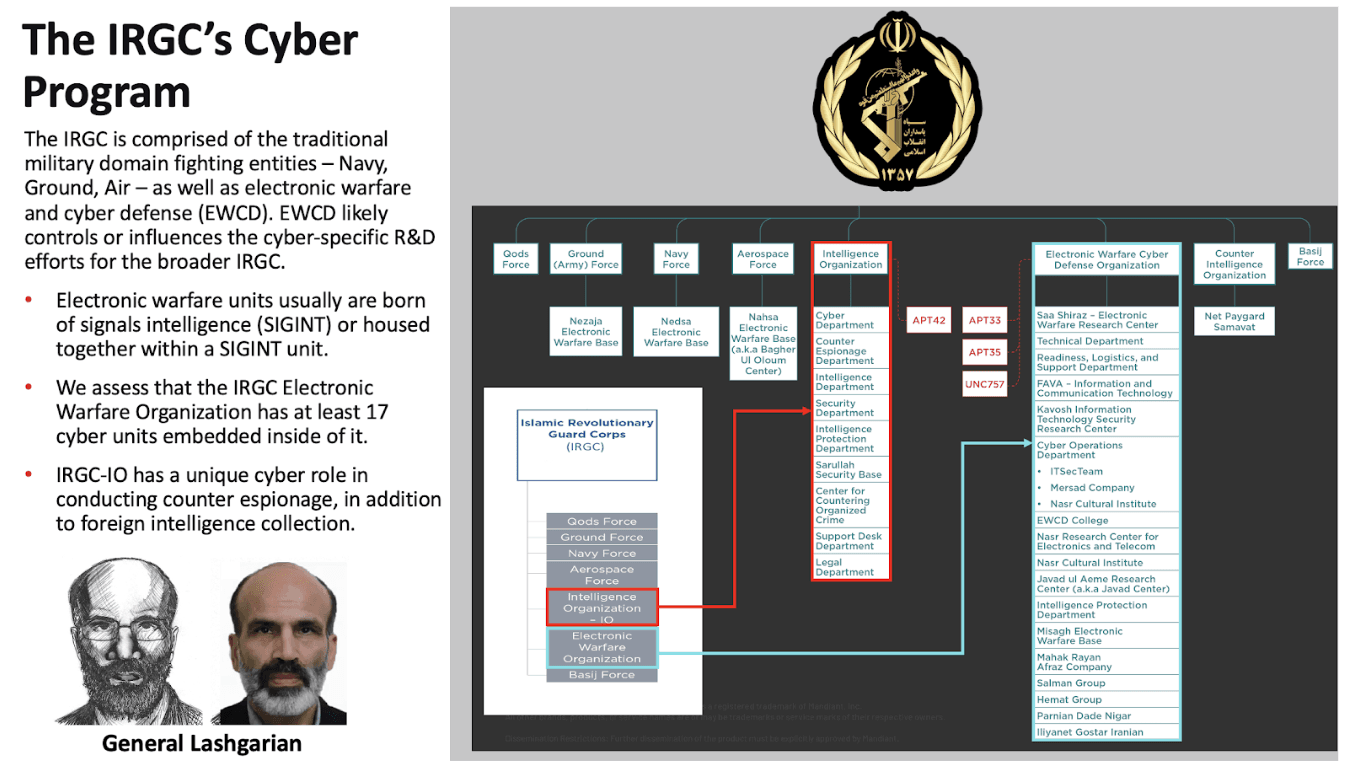
The Iranian Revolutionary Guard Corps cyber component is standing up an operational wave that, by the description of two intelligence officials in interviews this week, is the most consequential institutional posture shift the IRGC's cyber elements have made since the conflict cycle began. The officials, who work in adjacent positions at separate intelligence community components and who spoke on condition of anonymity, characterized the wave in terms that diverge from the public framing the executive branch has so far provided. The public reporting on the wave is days away. The defensive posture across critical infrastructure verticals is the question the next several days will resolve.
The officials' rendering of the operational wave includes three categories of activity that, in the aggregate, indicate the IRGC's cyber leadership has been positioning for a sustained campaign across U.S. critical infrastructure and U.S.-affiliated commercial targets. The categories are reconnaissance against industrial control system interfaces, positioning against identity provider infrastructure at U.S.-affiliated companies operating in the broader region, and influence-operation capacity-building that the IRGC's cyber elements have not previously demonstrated at scale.
The Reconnaissance Pattern
The reconnaissance pattern, as the officials described it, concentrates on U.S. water distribution, electric distribution, and natural gas distribution operators whose service territories include population centers of substantial size. The pattern includes the kind of internet-exposed industrial control interface probing that prior FBI advisory cycles have warned the operator population about. The pattern is, by the officials' working-level read, the precursor activity that an operator cluster runs in preparation for a disruption campaign rather than for a sustained intelligence collection campaign.
The distinction matters. Disruption campaigns operate on shorter timelines than collection campaigns. Disruption campaigns produce visible consequences for the affected operators and for the populations the operators serve. Disruption campaigns are calibrated for political signaling rather than for operational intelligence yield. The campaign architecture the IRGC's cyber elements appear to be positioning for is, on the officials' analysis, a disruption-and-signaling campaign rather than a collection campaign.
The Identity Provider Positioning
The identity provider positioning, as the officials characterized it, targets U.S.-affiliated commercial firms with substantial operational footprint in the broader region. The targeting includes firms in financial services, in technology services, and in logistics and supply chain operations whose disruption would carry second-order consequences for U.S. commercial activity in the region. The positioning is, by the officials' read, designed to produce optionality for the IRGC's leadership rather than to execute a specific operation in the near term.
The optionality framework is the framework state-affiliated cyber programs typically use to maintain operational latitude. The framework involves establishing access positions that can be activated on a leadership timeline rather than on an operational timeline. The framework also involves maintaining the access positions in a quiescent state that does not produce defender-visible alerts during the dormancy period. The IRGC's cyber elements have demonstrated this framework's tradecraft in prior campaigns. The current positioning, on the officials' read, is consistent with the framework's standard pattern.
The Influence Operations Dimension
The influence operations dimension is the dimension that has produced the most internal IC concern, by the officials' description. The IRGC's cyber elements have not, in their documented prior campaigns, demonstrated the kind of integrated influence operations capacity that the current posture suggests. The integration involves coordination between the technical access teams and a population of public-facing personas the IRGC's cyber components have been cultivating across multiple social media platforms.
The cultivation, by the officials' working-level read, has accelerated materially in the trailing six weeks. The accelerated cultivation includes the recruitment of additional persona-operator personnel, the development of platform-specific tradecraft for personas operating in U.S. and U.S.-allied information environments, and the production of content infrastructure that supports the personas at scale. The aggregate of these capacity-building activities is the aggregate of an operational influence campaign in late-stage preparation.
The IC Coordination Posture
The intelligence community coordination on the wave, as the officials described it, has tightened across the trailing two weeks. The National Security Agency's coordination with the Federal Bureau of Investigation's Cyber Division has, in working-level patterns, produced the kind of joint analytic product that anchors the executive branch's operational response. The Office of the Director of National Intelligence has, by one official's description, briefed the leadership of the two intelligence committees on the wave in closed sessions held this week.
The closed-session briefings have produced, by one official's description, congressional reactions that have not produced public statements. The reactions are appropriate to the operational sensitivity of the underlying intelligence picture. The committees have not requested public testimony. The committees have not produced public commentary. The committees are, in the officials' rendering, operating in the cooperation posture that the executive branch's operational response requires.
The Public Reporting Window
The public reporting on the wave is, on the cadence pattern that comparable IC posture shifts have produced in prior episodes, on a timeline of days rather than weeks. The reporting will likely include a joint advisory from CISA and the FBI, an unclassified summary of the intelligence community's analytic assessment, and the sector-specific guidance for the affected critical infrastructure verticals. The reporting will not, on the standard practice, characterize the closed-briefing content or the IC coordination posture in any detail beyond what the unclassified summary supports.
The reporting will be the reporting. The defensive posture across the affected verticals is the question the reporting will frame. The operators whose configurations are most exposed are now, on the officials' description, in the late-stage remediation work that the IC's sector-specific outreach has been driving across the trailing several weeks. The operators whose remediation has been incomplete are the operators most exposed when the public reporting arrives and the IRGC's cyber elements activate whatever element of their operational wave the public reporting forces them to either execute or postpone.
What To Watch
The next inflection point is the joint advisory, expected within the coming days. The advisory will frame the defensive posture across the affected verticals. The advisory will frame the public conversation. The advisory will frame the response space the IRGC's cyber leadership operates within during the immediate post-publication period. Officials familiar with the assessment said the operational tempo from this point forward is the operational tempo. The reporting follows the operational tempo. The operational tempo is the operational tempo. The defensive posture is the variable defenders control.


