The Persistent Gap Reality
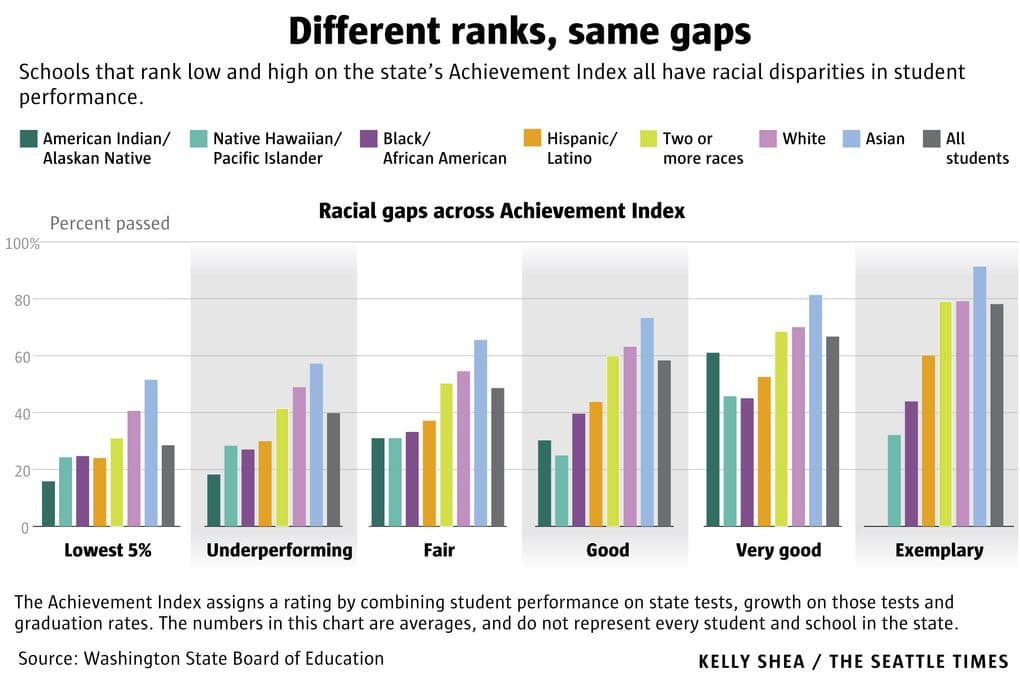
The 2026 National Assessment of Educational Progress (NAEP) released data confirming what decades of research has documented: significant gaps in standardized academic performance between racial groups persist. In mathematics, white students scored an average of 292 on the NAEP scale (grade 8 equivalent). Black students scored 264. Hispanic students scored 272. That 20-28 point gap represents roughly 1.5 years of academic progress. In reading, the gaps are similar: white students 266, Black students 243, Hispanic students 247.
These gaps have narrowed slightly from 2015 data but have plateaued since 2019. The plateau is frustrating for researchers and policymakers who expected continued progress toward equity. Instead, the data suggests that the low-hanging fruit of educational improvement has been picked. Schools that were able to narrow gaps by focusing resources on disadvantaged schools and students did so. But something harder is preventing further progress. That something involves factors both inside schools and deeply embedded in families and communities.
Causation is hotly disputed. Conservative analysts emphasize family factors: parental educational attainment, family structure stability, and home literacy environments. Black and Hispanic students, they note, are more likely to have parents without college degrees and more likely to live in single-parent homes. These family factors predict academic achievement independent of school quality. Progressive analysts emphasize school funding disparities, teacher quality differences, and systemic discrimination in tracking and discipline. Schools serving predominantly minority students receive less per-pupil funding and have less-experienced teachers. Discipline disparities mean minority students are excluded from instruction more frequently. Both analyses are supported by data, which means the problem is overdetermined. Multiple causes create the gap.
The Policy Response Dilemma
If the gap is driven primarily by family factors, then school-based interventions have limited leverage. Schools can improve within their constraints, but they can't replace families. If the gap is driven by school-system factors, then school improvements and resource reallocation can produce measurable progress. Current policy assumes both are true: schools should improve while families are supported. That requires sustained funding and commitment. What actually happens is that schools face competing demands, budgets are tight, and priorities shift. Test scores don't move reliably.
A 2026 analysis of Title I funding (federal support for high-poverty schools) found that money did reach disadvantaged schools, but schools used the money for compliance costs, administrative overhead, and special education services rather than classroom instruction and teacher quality improvement. Teachers at Title I schools still earn 12% less than teachers at wealthy schools for the same experience level. The funding gap exists but doesn't fully translate to equalization because the lower-paying schools attract less experienced teachers and have higher turnover. Money is necessary but not sufficient.
What the Data Actually Shows
Zooming in on specific interventions that move the needle helps. Early intervention programs (pre-K and kindergarten) show strong effects on gap closure. Students attending quality pre-K programs show 8-12 month acceleration in reading and math gains compared to students without pre-K, and these effects persist through elementary school. Early intervention is expensive (roughly $12,000 per child annually), but the return on investment is high. Yet pre-K enrollment remains lower in low-income and minority communities, creating a gap closure opportunity that isn't being seized. Universal pre-K would cost roughly $60 billion annually nationally. It's been politically infeasible.
Intensive reading instruction in the elementary grades also shows strong effects, particularly for students with early reading struggles. Structured literacy approaches using phonics and explicit instruction move students forward faster than whole-language or balanced-literacy approaches. But adoption of structured literacy varies widely. Some schools embrace it. Others resist, citing competing philosophies. The variation in implementation means some students get high-quality reading instruction while others don't. That variance contributes to the gap.
The uncomfortable conclusion from the data is that closing achievement gaps requires sustained funding, consistent implementation of evidence-based practices, and family-level support. It requires political will and resources. Schools can execute that if given support. They're not being given adequate support. The gaps persist. Racial achievement differences are increasingly understood as school-system problems rather than inevitable reflections of family capacity. But treating them as school-system problems requires investment that's politically difficult and expensive. We're choosing to acknowledge the problem while declining to fully address it.