The Comeback on the Court
Duke entered the game with a 35-2 record and the longest active winning streak in the nation. KenPom ranked the Blue Devils third in the country with a net rating above plus-thirty-seven. Jon Scheyer's team was bigger, deeper, and on paper more talented. For twenty-five minutes, it showed. UConn could not buy a basket, could not stop Cameron Boozer inside, and trailed by nineteen points in the first half. A lesser program would have folded.
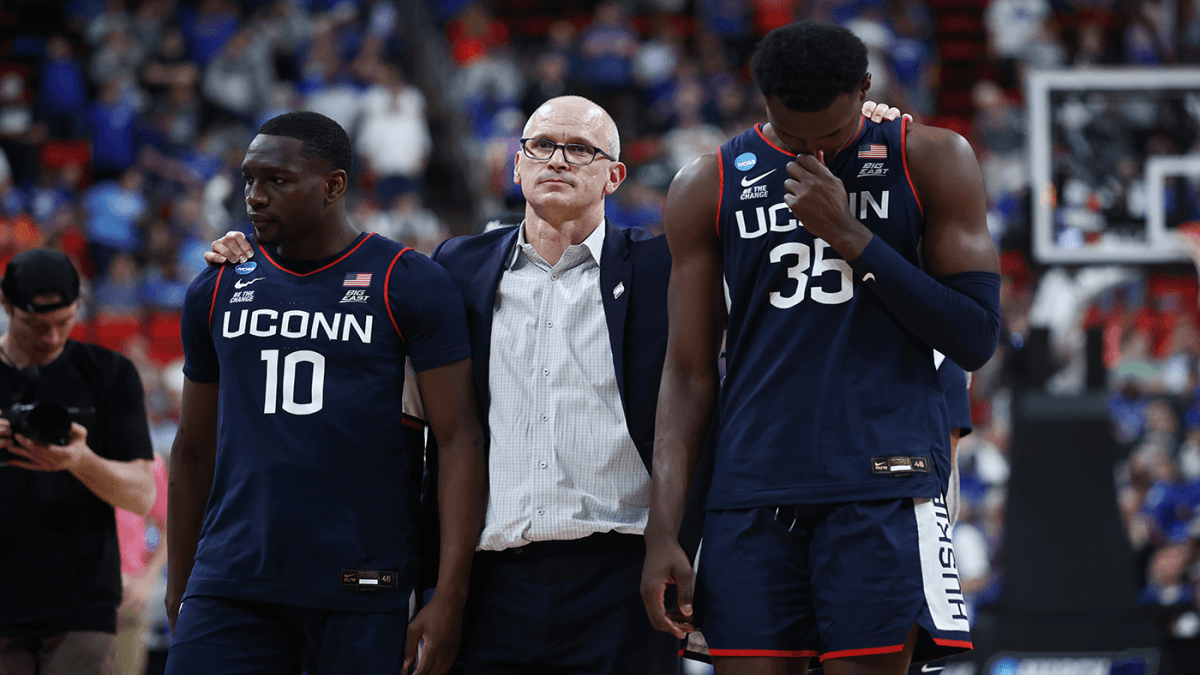
But Dan Hurley's UConn team is not a lesser program. The Huskies clawed back possession by possession. Tarris Reed Jr. scored twenty-six points against Duke's trees. Solo Ball and Silas Demary Jr. hit the kind of shots that veteran guards hit when the season is on the line. When the final horn sounded, UConn had outlasted Duke 73-72. Mullins' thirty-five-foot bomb with 0.3 seconds left will live on highlight reels, yet the shot was possible only because the Huskies had refused to let the game get out of hand.
Context matters. UConn had already beaten Furman, UCLA, and Michigan State to reach the Elite Eight. The Huskies entered the tournament at 30-5 after losing the Big East title game to St. John's, a defeat that led some observers to question whether this year's team had the same spine as Hurley's earlier squads. Those doubts ignored the record. In the past five NCAA tournaments, Hurley has posted a 13-3 record with two national championships. Since rejoining the Big East in 2020, UConn has made six consecutive NCAA tournament appearances, a program record. Sunday was not a fluke. It was the product of institutional memory.
Institutions Are Built, Not Invented
What makes UConn's run instructive is that nothing about it was spontaneous. The program has a clear identity: tough defense, disciplined ball movement, player development over flash, and a coaching staff that recruits to fit a system rather than chasing rankings. That identity was not created by a committee or focus group. It was forged through years of recruiting, teaching, and an unwillingness to abandon core principles when a season turned difficult.
That is precisely how durable institutions function beyond sports. The Constitution, the local church, the neighborhood school board, the small business, and the volunteer fire department: these bodies survive because they carry forward habits, loyalties, and standards that no single generation invented. They teach people to show up when they do not feel like it, to subordinate ego to mission, and to trust that today's sacrifice produces tomorrow's reward. Those habits are not exciting. They do not trend on social media. They are, however, the reason societies recover from bad stretches instead of collapsing into them.
The modern left does not see it that way. To the activist class, every institution that predates the current moment is suspect, tainted by the sins of the past and therefore illegitimate. They demand not reform but demolition, as though razing a flawed structure and replacing it with a slogan will produce justice. It never does. The result is usually a vacuum, and vacuums are filled by power, not by principle. UConn did not fix its season by firing Hurley, renaming the program, or apologizing for past losses. The Huskies recovered because the institution had enough depth and character to absorb a bad half and play the next one better.
A Lesson for the Culture Wars
America is living through its own bad half. Public trust in government, media, education, and even organized religion has cratered. Some of that distrust is earned; bureaucracies have grown arrogant, schools have abandoned their mission, and too many leaders have treated institutions as personal fiefdoms. But the conservative response is not to join the mob in tearing everything down. The response is to reclaim, repair, and pass on the institutions that still work.
UConn's comeback against Duke is a small but vivid illustration of why that matters. The Huskies were down nineteen points against the best team in the country, and they won because they had a foundation stronger than one rough night. Nations work the same way. A country with institutions worth preserving can survive corrupt politicians, misguided policies, and cultural chaos because it has roots that run deeper than any single season.
So when commentators ask what UConn's comeback teaches us, the answer is simple. It teaches us that the institutions built on discipline, tradition, and earned excellence are the ones worth fighting for. They will not look perfect. They will fall behind. They may even need dramatic reform. But if the foundation is sound, the comeback is always possible. That is worth preserving.