The Critics Are Angry at Reality, Not Trump
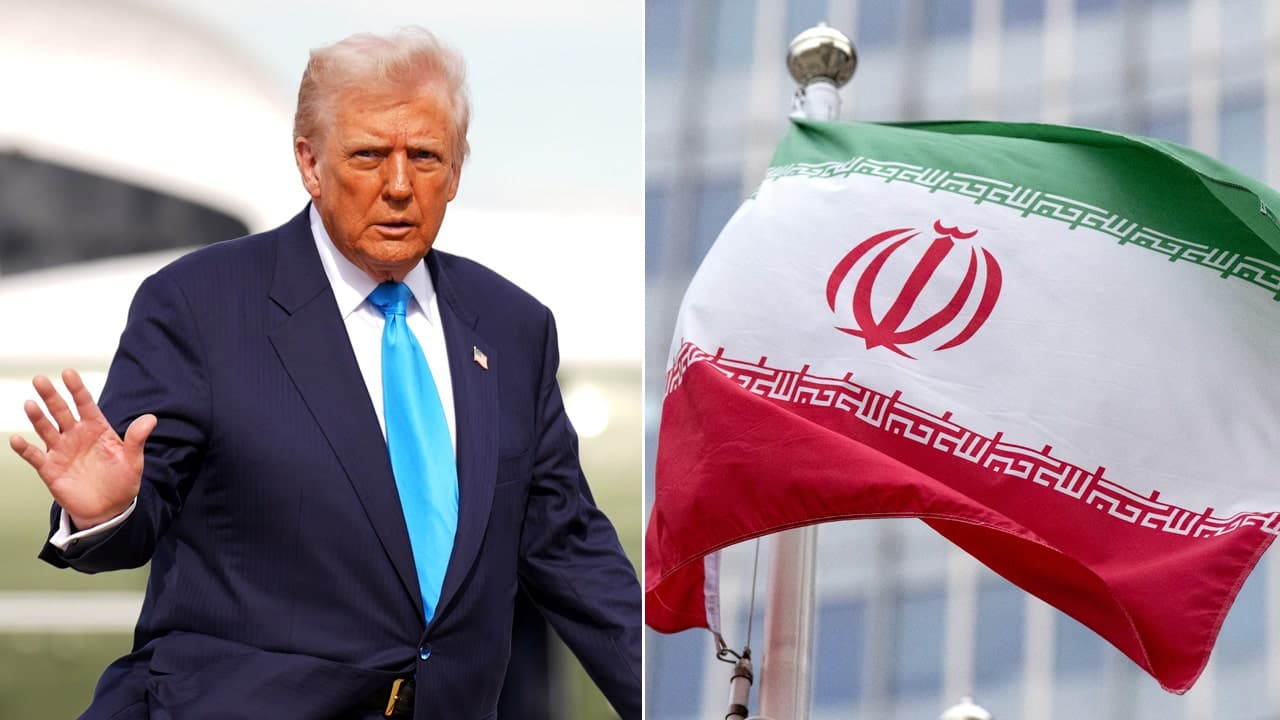
President Trump’s recent posture toward Iran has drawn the usual chorus of hysterics from the foreign-policy establishment. Headlines call his terms "maximalist." Pundits warn of escalation. Diplomats whisper that the administration is closing the door to negotiations. But when you strip away the breathless adjectives, the supposed list of American demands is not a wish list concocted by a warmonger. It is the bare minimum any serious country would require before shaking hands with a terror-sponsoring, missile-proliferating theocracy. Iran must not get a nuclear weapon. Iran must stop funding terrorist armies. Iran must halt its ballistic-missile program. These are not extreme conditions. They are obvious conditions, and the outrage directed at them says far more about the delusions of Western diplomats than it does about Trump.
The panic is especially strange because the president has not called for an invasion. He has not threatened to erase Tehran from the map. He has simply refused to repeat the mistakes of the last two administrations, both of which spent years pretending that a regime chanting "Death to America" could be trusted with pallets of cash and centrifuge cascades. That refusal is being treated as radical because Washington has spent so long defining moderation as weakness that ordinary firmness now looks like belligerence. It is not.
The Nuclear Clock Has Not Stopped
The most urgent fact surrounding this debate is also the least disputed. Iran is closer to a nuclear weapon today than at any point in its history. According to the International Atomic Energy Agency, Tehran has amassed a stockpile of uranium enriched to 60 percent purity totaling roughly 182 kilograms. That is many times the amount allowed under the abandoned 2015 nuclear deal, and it puts Iran within a short technical step of weapons-grade fuel. In addition, IAEA inspectors have detected uranium particles enriched to 83.7 percent, just shy of the 90 percent threshold generally associated with a bomb. These are not abstract numbers on a spreadsheet. They represent months, perhaps weeks, of additional work.
Trump’s critics respond that diplomacy can still reverse this trend. They are right in theory, but their theory requires a partner. Iran has spent the better part of two decades stringing along inspectors, disabling cameras, and stonewalling questions about undeclared sites. The regime did not build underground enrichment halls at Fordow because it planned to comply forever. It built them because it wanted an insurance policy against the day the world finally said no. That day has arrived, and pretending otherwise does not make the centrifuges spin any slower.
The reality is that any agreement that leaves Iran with an industrial-scale enrichment capability is not a nonproliferation agreement. It is a delay mechanism. Under the original Joint Comprehensive Plan of Action, Iran’s breakout time was estimated at roughly one year. Today, experts put that timeline at under two weeks. A deal that simply buys another decade of the same deception while preserving the infrastructure is not peace. It is a payment plan for a future crisis.
The Missiles and the Militias Matter Too
A nuclear program is only one thread of the Iranian threat. The regime has also built the largest ballistic-missile force in the Middle East, with systems capable of striking targets up to 2,000 kilometers away. Those missiles do not exist for defensive deterrence against a neighbor. They are designed to project power across the region, hold Israel and American allies at risk, and serve as export models for proxies. The same week diplomats cluck about Trump’s tone, Iranian-backed Houthi rebels were firing on commercial shipping in the Red Sea, Hezbollah was rebuilding its rocket arsenal in Lebanon, and Tehran was supplying drones to Russia for use against Ukrainian civilians. The pattern is unmistakable: Iran destabilizes, then demands relief for temporarily pausing.
The 2015 deal made this possible. It unfroze more than $100 billion in Iranian assets, delivered $1.7 billion in cash, and opened the door to renewed oil revenue. The regime did not use that windfall to build hospitals or modernize its economy. It used it to bankroll the Islamic Revolutionary Guard Corps, expand its proxy network, and accelerate its missile work. The argument that sanctions relief moderates Iranian behavior has been tested repeatedly, and the results are in. It does not.
Trump’s conditions acknowledge this record. A serious agreement cannot address centrifuges while ignoring the missiles those centrifuges would eventually serve. It cannot ignore the terror networks that allow Iran to threaten the world without leaving Iranian fingerprints. The demand that Iran cease support for groups like Hamas, Hezbollah, and the Houthis is not a poison pill inserted to sabotage diplomacy. It is the whole point of diplomacy. A deal that enriches the regime while leaving its arsenal intact would be worse than no deal at all.
Obvious Is Not the Same as Easy
None of this means the path ahead is simple. The Iranian regime is cruel, patient, and skilled at exploiting divisions in the West. It will likely test American resolve with threats, slowdowns, and selective leaks designed to make Trump look unreasonable. Some European allies, eager for any agreement they can label a success, will press Washington to soften its terms. The temptation to declare victory on a bad deal will be enormous, especially in an election cycle that rewards headlines over substance.
But the measure of a diplomatic achievement is not how relieved the negotiators feel when they sign it. The measure is whether it actually makes Americans and our allies safer. A deal that allows Iran to keep enriching uranium, keep building missiles, and keep arming terrorists fails that test before the ink dries. That is why Trump’s conditions, however uncomfortable for the foreign-policy class, are the correct starting point. They treat Iran not as a misunderstood regional power, but as what it is: a hostile regime that uses negotiations to buy time and uses relief to fund aggression.
The critics calling these demands extreme have it backward. Extremism is pretending that a theocratic police state can be talked into goodwill. Extremism is sending cash to a regime that uses it to kill Israelis and threaten American sailors. Extremism is watching Iran stockpile near-bomb-grade uranium and insisting that another round of talks will fix everything. Trump’s conditions are not the radical option. They are the obvious one, and the only one worthy of a serious American foreign policy.