What Gets Covered and What Gets Ignored
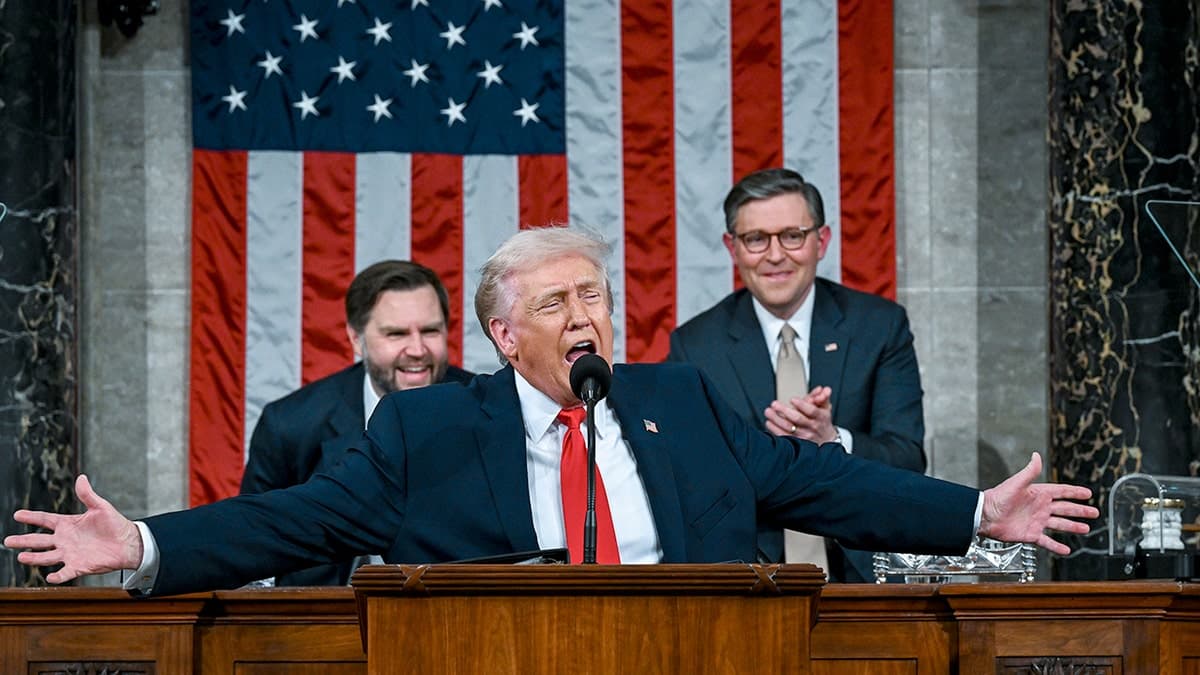
The Hill's live State of the Union coverage was anchored by Blake Burman and featured the standard cable-news apparatus: the countdown clock, the reaction split-screen, the panel of commentators who'd clearly written their hot takes before the speech started. What it mostly didn't feature was sustained engagement with the actual policy substance of what Trump was proposing.
This is the normal disorder of political media, and I'm not pretending it's new. But it's worth documenting clearly: when a sitting president gives a nationally televised address laying out his governing agenda on Iran, data center investment, and economic policy, and the dominant press frame is about tone and stagecraft, something important is being lost. Deliberately or not.
I was a competitive debate coach for three years before I got into policy writing. You learn quickly that the person who controls the framing controls the argument. If Trump's opponents can keep the conversation on his manner of speaking rather than his actual positions, they win without ever having to engage the substance. The media apparatus, whether it intends to or not, serves that goal.
What the Speech Actually Contained
Trump's address reportedly hit Iran hard, and the Iran posture deserves serious scrutiny, not because it's wrong, but because the stakes are high enough that "serious scrutiny" means engaging with the actual policy, not just assessing the president's affect. The administration's approach to Iranian nuclear negotiations, to sanctions enforcement, to the status of the Abraham Accords framework, these are consequential questions with real downstream effects on American security and on the Middle East's stability.
The data center push is equally substantive. The United States is in a genuine infrastructure competition with China over AI compute capacity. The decisions made in the next three years about where data centers get built, how they get powered, and what regulatory frameworks govern them will shape American technological competitiveness for a generation. That's not hyperbole. It's the assessment of every serious technologist who isn't on a political payroll.
And the economy: 4.1% unemployment as of January 2026, manufacturing investment up, but inflation still biting in groceries and housing in ways that aggregate numbers obscure. A State of the Union that addresses these conditions with actual policy proposals is worth examining on its merits. The Hill's live coverage format, by design, doesn't do that well.
The Bureaucratic Media-Political Complex
Here's the structural problem. Live coverage of a presidential address is expensive to produce and easy to monetize through emotion. Outrage drives engagement. Surprise drives engagement. Substantive policy analysis does neither, at least not in real time. So the incentive structure of political media, and The Hill is not uniquely guilty here, it's industry-wide, pushes toward reaction over analysis.
The result is a civic deficit. Millions of people watch or read coverage of the State of the Union and come away knowing how the president looked, how the Democrats reacted, whether there were any memorable moments. Very few come away understanding what the administration is actually proposing to do about Iran, or how the data center investment plan would work, or what the economic projections suggest about the next twelve months.
That deficit isn't neutral. It advantages the people who can afford detailed policy analysis, the think tanks, the lobbying firms, the large institutional investors who subscribe to expensive research services. Everyone else gets the cable-news version, which is mostly theater criticism.
Trump gave a speech about governing. The coverage was about performance. We keep choosing this. At some point, the audience has to demand better from the media it consumes, or accept that the coverage it gets is the coverage it deserves.