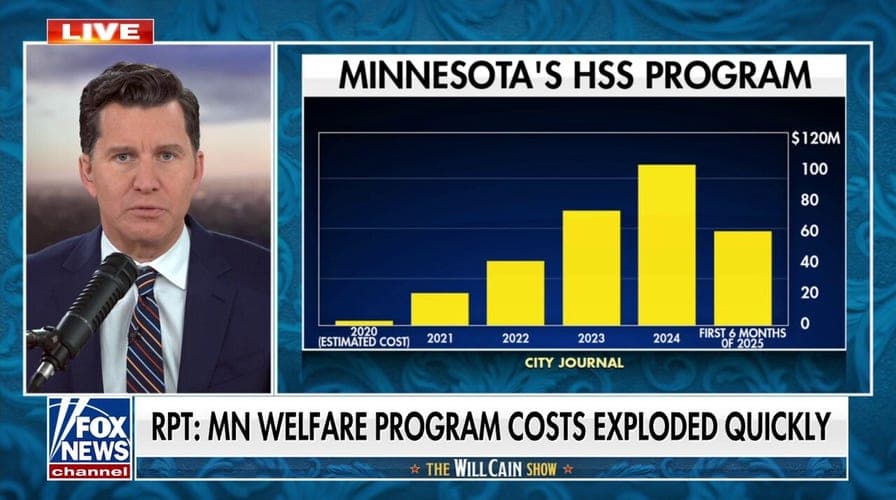
The Loophole Washington Built
For decades, Congress has expanded welfare programs faster than it has policed them. The result is a system that asks more of the taxpayer than it does of the beneficiary. Applicants can self-attest their incomes, states face weak incentives to verify identities, and federal bonuses reward speed over accuracy. Washington did not create welfare fraud by accident. It created the conditions that make fraud inevitable.
The scale of the problem is staggering. In fiscal year 2024, the Department of Agriculture reported that the Supplemental Nutrition Assistance Program sent out more than $11 billion in overpayments, with error and trafficking rates climbing even as enrollment fell from pandemic highs. The Department of Health and Human Services estimates that Medicaid improper payments reached roughly $50 billion in the same period. During the pandemic unemployment boom, the Government Accountability Office found that states paid out approximately $191 billion in improper or fraudulent claims. The USDA Inspector General also identified more than $1.5 billion in questionable Pandemic EBT payments, a program sold as emergency relief that quickly became a magnet for abuse. These are not rounding errors. They are a quiet tax on every working family in America.
How did this happen? The system is designed to enroll first and ask questions later. Identity checks are optional in many states, asset tests have been watered down, and work requirements are treated as cruel relics rather than guardrails. The 1996 welfare reform bargain was supposed to require work in exchange for assistance, but successive administrations have carved out so many exceptions that the promise is barely recognizable. When the governing philosophy treats every applicant as a victim and every taxpayer as an ATM, fraud becomes a feature, not a bug.
What the States Are Doing Instead
While Washington dithers, states are moving. Republican governors and legislatures are using the tools they still have to clean up programs that the federal government refuses to fix. Their reforms follow a simple formula: verify identity, expect work, and check assets before mailing checks.
Florida has led the way on identity verification. Governor Ron DeSantis signed legislation requiring new SNAP and Medicaid applicants to confirm citizenship and residency through secure systems before benefits are approved. The state reported that the new checks uncovered thousands of duplicate or ineligible accounts in the first year, saving taxpayers an estimated $153 million and restoring resources for Floridians who actually need help. That is not cruelty. That is competence.
Texas reinstated work requirements for able-bodied adults without dependents on SNAP, ending the pandemic-era suspension that kept childless adults on food stamps indefinitely. After the change, the state estimated it would save more than $150 million annually while freeing spots for Texans facing genuine hardship. Iowa and Nebraska brought back asset tests, ensuring households with significant savings or multiple vehicles are not drawing cash assistance meant for the truly needy. Arkansas and Mississippi have advanced similar measures, sending a clear message that public aid is a temporary bridge, not a permanent lifestyle.
These reforms work because they restore basic accountability. A safety net that cannot distinguish between a struggling mother and a fraudster is not a safety net at all. It is a subsidy for dishonesty. States that verify, that impose work expectations, and that ask applicants to spend down their own assets before turning to the public purse are protecting both the vulnerable and the working class. The results speak for themselves: fewer improper payments, faster processing for the eligible, and budgets that stretch further.
Why Washington Keeps Looking Away
The resistance to these reforms comes almost entirely from Washington, and the reason is political. Welfare expansion creates dependency, dependency creates constituencies, and constituencies create votes. Federal agencies have sued states for adding work requirements, threatened funding for citizenship checks, and slow-walked waivers that would let governors experiment with tougher eligibility rules. The same politicians who claim to care about the poor spend far more energy defending the bureaucracy than fixing it.
The Congressional Budget Office projected that restoring work requirements for childless adults on SNAP would save roughly $11 billion over ten years. That is a modest estimate and it covers only one program. Multiply the savings across Medicaid, housing vouchers, and cash assistance, and the number reaches into the tens of billions annually. Yet the White House and congressional Democrats keep blocking the simplest reforms, preferring to protect a broken status quo rather than admit that generosity without verification invites theft.
The hypocrisy is hard to miss. The same administration that promises to crack down on billionaires and corporations turns a blind eye when welfare programs lose billions to phantom beneficiaries. They insist that asking for an ID at a benefits office is somehow oppressive, even as they demand ID for air travel, banking, and cold medicine. The contradiction reveals the real priority: not helping the poor, but growing the state.
Conservatives should welcome the state-level response. Federalism is not an abstract principle; it is a practical escape hatch from a capital that has lost its way. When Washington will not touch a loophole, states have every right, and every obligation, to close it themselves.
The next president and the next Congress should take notes. Voters are not asking for a welfare state that is larger. They are asking for one that is honest. The states are proving that honesty is possible. The only question is whether Washington will catch up, or keep looking the other way while the taxpayers get the bill.