The Bench Is Shockingly Thin
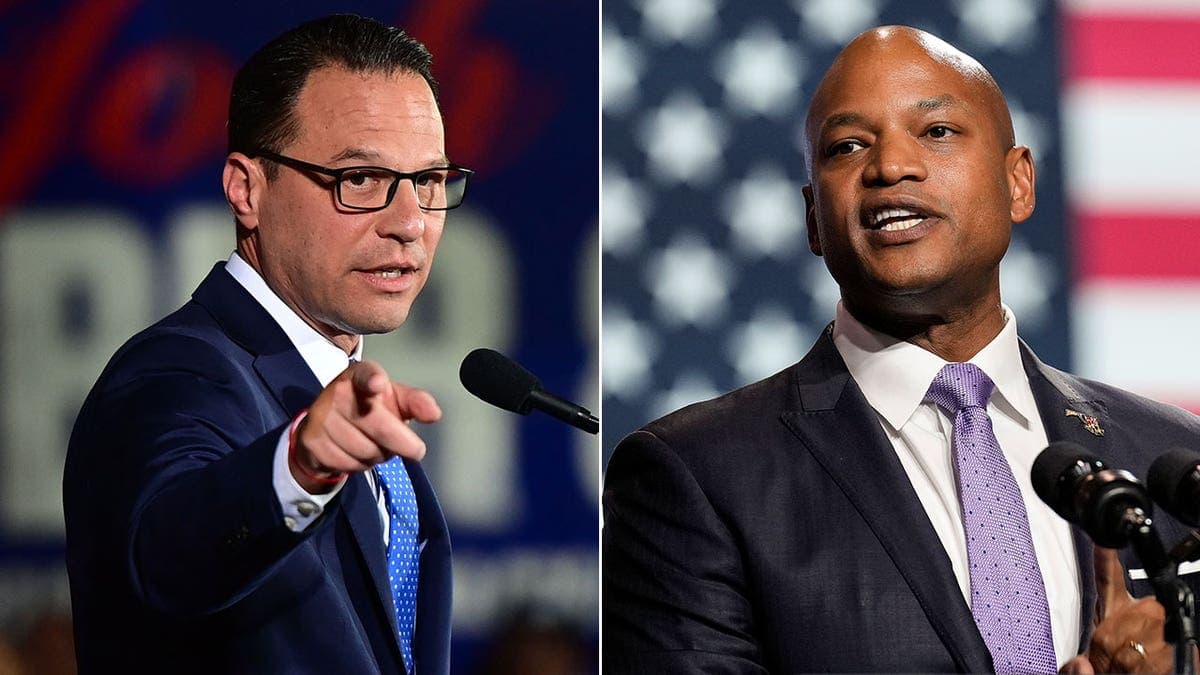
If you want to understand the panic inside the Democratic Party, just look at the names being floated for 2028. Not senators with decades of legislative achievement. Not a former secretary of state with a global profile. Not even a governor who has turned a purple state deep red or blue through sheer competence. No, the party's great hopes are Josh Shapiro of Pennsylvania and Wes Moore of Maryland. They are young, polished, and regularly praised by the same commentators who assured us that 2024 was in the bag. And that is exactly why Republicans should feel encouraged.
Shapiro captured the Pennsylvania governor's mansion in 2022 by 14.8 points, and Moore won Maryland that same year by 32 points. On paper, those margins look like the work of generational talent. In reality, Shapiro ran against a Republican campaign that collapsed under its own weight in a favorable midterm environment, while Moore cruised to victory in one of the most Democratic states in the country. Impressive wins? Perhaps. Evidence that either man can rebuild a national coalition? Not even close.
The problem is not that Shapiro and Moore lack talent. The problem is that the Democratic bench has shrunk so dramatically that competent mediocrity now looks like statesmanship. The party's senior figures have either aged out, discredited themselves, or spent so long in coastal enclaves that they forgot how to speak to working-class Americans. Into that vacuum stride two governors whose main qualification is that they have not yet been blamed for the party's collapse.
Consider what the party is bypassing. Gavin Newsom has presided over California's slow-motion decline but remains too coastal to sell in Ohio. Gretchen Whitmer tied herself to the Biden agenda and bears its failures. Pete Buttigieg spent years explaining away supply-chain meltdowns. By comparison, Shapiro and Moore look fresh only because the rest of the field looks exhausted.
Style Without Substance
Both men understand the modern Democratic playbook: deliver a smooth speech, avoid hard edges, sprinkle in words like dignity and opportunity, and let the press fill in the rest. Shapiro speaks with the measured confidence of a former prosecutor, which he is. Moore tells uplifting stories about his military service and his rise from poverty. Neither lacks charisma. What both lack is a record that can survive contact with a presidential campaign.
Shapiro has spent his tenure managing the expectations of Pennsylvania's competing factions without fully satisfying any of them. His energy policies please Philadelphia progressives but leave western Pennsylvania workers wondering whether the party still believes in the industries that built their towns. His much-touted education reforms have produced more press releases than measurable results. Meanwhile, Moore governs a state where Baltimore remains one of the most violent cities in America, the cost of living keeps climbing, and the budget grows faster than the economy. These are not the credentials of a national savior. They are the credentials of a politician who has been protected by friendly geography and sympathetic media.
Neither governor has broken with the left's sacred cows in any meaningful way. Both have embraced the usual progressive liturgy on climate, education bureaucracies, and identity politics. They offer new packaging for the same product Americans rejected in 2024. Their rise reveals a deeper problem. Democrats have become addicted to personality over policy. They believe that if they find the right messenger, preferably one who can quote poetry and look earnest on camera, the public will forget the border chaos, the inflation hangover, and the cultural extremism that defined the last administration. It did not work for the last nominee, and it will not work for the next one.
What It Means for 2028
Republicans should resist the temptation to dismiss Shapiro and Moore outright. In a party as intellectually hollow as the modern Democratic Party, a telegenic candidate with a thin record can still cause real damage. Barack Obama proved that a well-packaged unknown can defeat far more experienced opponents. The difference is that Obama had a disciplined message and a media environment that was eager to believe. Shapiro and Moore will enter a much more skeptical country, with a conservative media ecosystem that has learned its lessons and an electorate that has spent years watching Democratic governance up close.
For conservatives, the lesson is to define these candidates early. Letting them float above the fray as moderate pragmatists would repeat the mistakes of 2008. Voters need to hear what Shapiro's energy rules cost Pennsylvania households and what Moore's budget growth means for Maryland taxpayers. A presidential race is not a biography contest, and Republicans should not treat it like one.
The 2028 Democratic primary will be a test of whether the party wants to confront its failures or simply change the subject. If Democratic voters rally behind Shapiro or Moore, it will signal that they have learned nothing from 2024. It will mean they still believe that a new face and focus-grouped language can substitute for sound judgment, secure borders, affordable groceries, and public safety. It will mean they are running a casting call, not a presidential campaign.
The latest CNN poll offers a reality check. In hypothetical matchups, former President Trump leads Shapiro by 11 points and Moore by 13 points. Those numbers are not the product of a single bad survey. They reflect a country that has seen what Democratic governance looks like and is not eager for a younger, smoother version of the same thing. The Democratic Party's best hope is that Americans will mistake polish for principle. That tells you everything you need to know about the state of the opposition.