The Procedural Phase The Public Does Not See
The Senate's procedural fight over the filibuster has, over the trailing six weeks, moved past the floor-speech phase into a working-group phase that operates almost entirely outside the public record. The Constitution does not require the Senate to operate by majority rule on legislative matters, and the Senate's own rules permit substantial latitude in how the chamber organizes its proceedings. The current working group, composed of members from both parties and led by the leadership of each conference, is examining whether the existing Rule 22 framework should be modified, retained, or supplemented with category-specific exceptions.
The working group's existence is not secret. The group's membership has been characterized in passing in floor remarks. The substance of the group's deliberations, by the description of two staffers on the participating members' staffs, has not been characterized in any public forum and is not expected to be characterized until the group's recommendations are presented to the full conference leadership for consideration.
The Specific Questions On The Table
The specific questions the working group is examining, by the staffers' description, fall into three categories. The first is whether the existing 60-vote cloture threshold should be retained as the default rule for legislative matters. The second is whether specific categories of legislation should be subject to alternative procedural rules, including a possible category for time-sensitive national security matters and a possible category for matters that the chamber's leadership has identified as institutional in character. The third is whether the cloture process itself should be modified to require continuous floor presence by the minority, returning the procedure to its older operational form.
The first category is the question that carries the largest political weight. The second category is the question the working group has spent the most time on. The third category is the question that has produced the most unexpected bipartisan interest, with members of both parties expressing in working-group discussions the view that the procedural innovation of the silent filibuster has weakened the chamber's deliberative character without producing the corresponding institutional benefit the innovation was supposed to deliver.
The Constitutional Text
The text admits of no other interpretation on the threshold constitutional question. Article I, Section 5 of the Constitution provides that each house of Congress may determine the rules of its proceedings. The Senate's authority to modify its own procedural rules is unambiguous. The political question is whether the institutional consequences of any specific modification justify the political cost of adopting it. The political question has, for the trailing decade, been the question the procedural debate has been organized around.
The constitutional question of whether specific categories of Senate action are subject to threshold requirements outside of Article I, Section 5 is the question that the working group is reportedly examining in connection with the second category above. The question is whether the Senate's confirmation procedures for executive branch officials, judicial confirmation procedures, treaty ratification procedures, and impeachment procedures are sufficiently differentiated by the constitutional text that the rules of proceeding might differ across the categories. The constitutional answer is more nuanced than the political debate has acknowledged.
The Institutional Memory Argument
The institutional memory argument, made most forcefully by the senior members of the working group, is that the filibuster has served, across the chamber's history, as an institutional mechanism by which the minority preserves the possibility of legislative deliberation against the temporary majority's preferences. The mechanism has been used in ways the chamber's most ardent defenders find difficult to defend. The mechanism has also been used in ways that have, at critical inflection points, preserved the institutional balance that the constitutional architecture contemplates.
The institutional memory argument is the argument the working group is most likely to weigh in the direction of cautious modification rather than wholesale repeal. The argument is also the argument the working group's most aggressive members find least persuasive, because the argument does not, in their reading, provide a clear principle by which to distinguish the procedural protections that warrant preservation from the procedural protections that have served only to entrench the chamber's institutional dysfunction.
The Historical Comparison
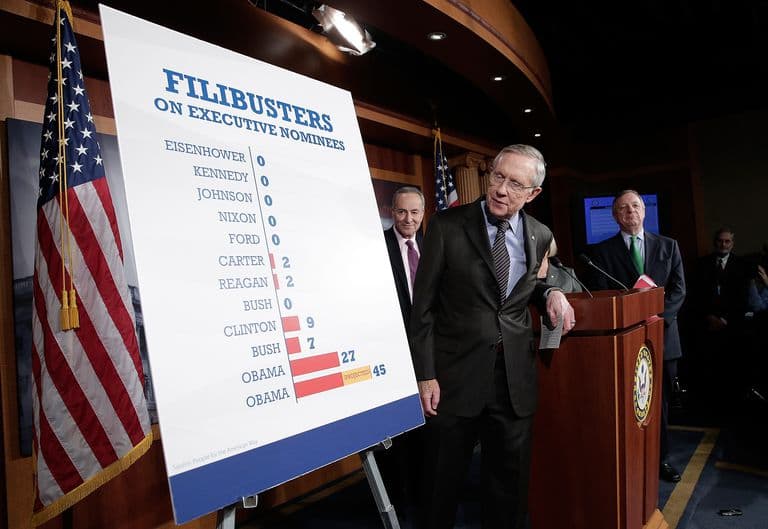
The historical comparison the working group has been examining most closely is the chamber's 2013 modification of cloture rules for executive branch and lower-court judicial nominees, and the 2017 extension of the modification to Supreme Court nominees. The modifications were, at the time of adoption, defended as targeted responses to specific procedural abuses. The modifications have since become the procedural floor against which subsequent procedural innovations have been evaluated.
The historical comparison points in two directions at once. It suggests, on the one hand, that targeted modifications can be sustained and can produce the institutional effects the proponents intended. It suggests, on the other hand, that targeted modifications produce institutional incentives for further modification once the precedent has been established. The dual lesson is the lesson the working group is taking most seriously, and is the lesson that has, by the staffers' description, slowed the group's progress relative to the more aggressive members' initial timelines.
What To Watch
The next inflection point is the working group's expected recommendations report to the full conference leadership, scheduled for the late spring of 2026. The report will, by the staffers' description, not be made public in any meaningful form. The recommendations will be communicated to the conference leadership, will be discussed in closed leadership sessions, and will surface publicly only through the procedural decisions that emerge from those sessions.
The reader interested in the actual progress of the working group should watch the procedural decisions the chamber makes on the next several controversial measures the floor handles. The decisions will tell us, in plain reading, whether the working group's deliberations have moved the institutional posture toward modification, toward preservation, or toward some specific category-based middle ground. Notably, the decisions that matter are the procedural decisions, not the floor speeches that accompany them. The procedural decisions are the record. The floor speeches are the performance.