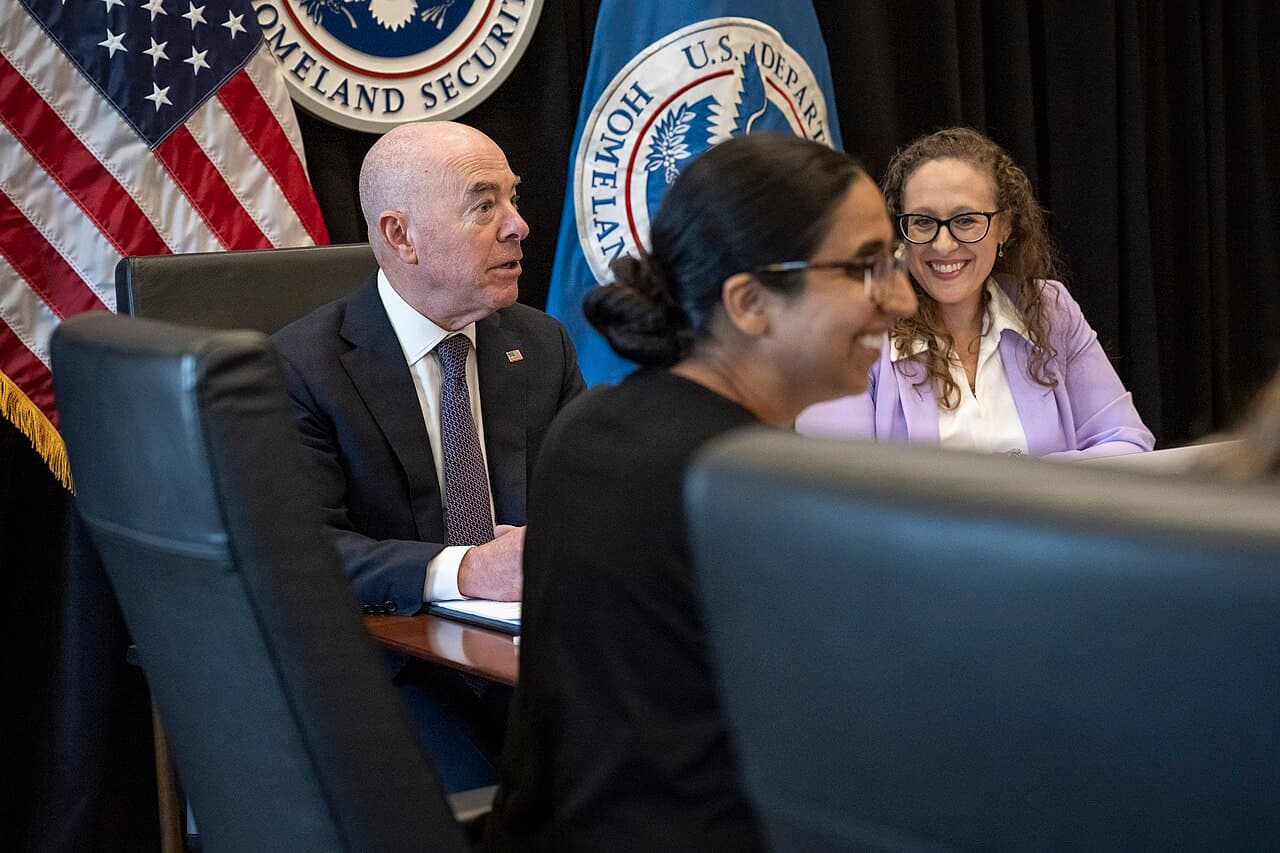
The Political Physics of a Weakened Leader
Chuck Schumer has represented New York in the United States Senate since 1999. He became Minority Leader in 2017 and Majority Leader in 2021. He's survived multiple election cycles and multiple shifts in the political landscape. He is, by any measure, a skilled and durable political operator.
And Democrats thinking about running for Senate in 2026 are keeping him at arm's length like he's radioactive.
That's not a small thing. Political parties are fundamentally coalitions of self-interest, and when candidates calculate that the party leader is a liability rather than an asset, that calculation reflects real information about where the electorate stands. These aren't idealists making a principled stand. They're people who want to win, and they're telling you something important about whether Schumer helps them do that.
The irony is almost too perfect. Schumer spent years positioning himself as the master of Senate electoral strategy — the architect of Democratic Senate victories, the fundraiser-in-chief, the man who understood the map. Now that map has shifted, and the candidates who need to navigate it are signaling that his guidance is a hindrance.
What This Really Means for Democratic Party Structure
I want to make an argument that most of the coverage is missing: the Schumer discontent isn't primarily about Schumer. It's about a fundamental tension inside the Democratic Party between its national brand and its local electoral needs.
The national Democratic Party has moved left on immigration in ways that create real problems for candidates in competitive states. It has associated itself with urban progressive politics in ways that alienate rural and suburban voters. It has embraced activist causes that play well in New York and California and nowhere else. Schumer, as the face of Senate Democrats, carries that baggage whether he personally endorsed every position or not.
Candidates in states like Montana, Ohio, Pennsylvania, and Michigan can't run as Chuck Schumer Democrats. The math doesn't work. So they're creating distance, and Schumer's office is apparently not taking it graciously, which is creating additional friction inside a caucus that can't afford internal warfare.
This is what happens when a party lets its national identity drift away from the median American voter. The pressure shows up in the most direct way possible: candidates who need actual votes from actual people refuse to be associated with it.
The Leadership Succession Problem
Here's the governance problem embedded inside the political problem: if Schumer goes, who comes next? The Democratic Senate caucus doesn't have an obvious successor who unifies the Sanders-Warren progressive wing with the more moderate members from competitive states. That gap is real and it doesn't get filled by removing Schumer.
The Senate Democratic caucus has approximately fifteen members who represent states Donald Trump carried. Those members have fundamentally different political incentives than members from New York, California, Massachusetts, or Illinois. Managing a caucus that divided requires either strong ideological leadership — which alienates the moderates — or a broker who holds the coalition together through dealmaking — which is Schumer's actual skill set, whatever his current liabilities.
The candidates who want distance from Schumer are, in many cases, the same people who would need him to manage their priorities once they arrived in Washington. The political calculation and the governing calculation are pulling in different directions. Nobody in the coverage I've seen is asking what happens after Schumer. That's the interesting question.
Libertarians watching this situation from the outside see something familiar: the structural incentives of two-party politics forcing people into coalitions that don't actually represent their interests, then generating internal conflict when the coalition's costs become too high. The Democratic Party's Schumer problem is the two-party system's problem wearing different clothes. When you don't have a real exit option — and in American politics, you largely don't — you're stuck managing internal tensions that the system itself creates.
The 2026 Electoral Map
Twenty-two Democratic Senate seats are up in 2026. Democrats are defending seats in states where the political environment has shifted against them. The math requires holding almost everything and flipping several Republican-held seats in an environment where their national brand is a liability.
Against that backdrop, the candidates doing the political math are doing it correctly. Schumer's fundraising network matters. His institutional relationships matter. But the fundamental liability — that running as a national Democrat in a competitive state is increasingly difficult — doesn't get solved by changing who holds the gavel.
The party has a brand problem, not a leader problem. Changing leaders while preserving the brand is the political equivalent of rearranging deck chairs. The candidates trying to create distance from Schumer understand this at some level. They're treating the symptom because treating the disease would require confronting things the party isn't ready to confront.