The Announcement
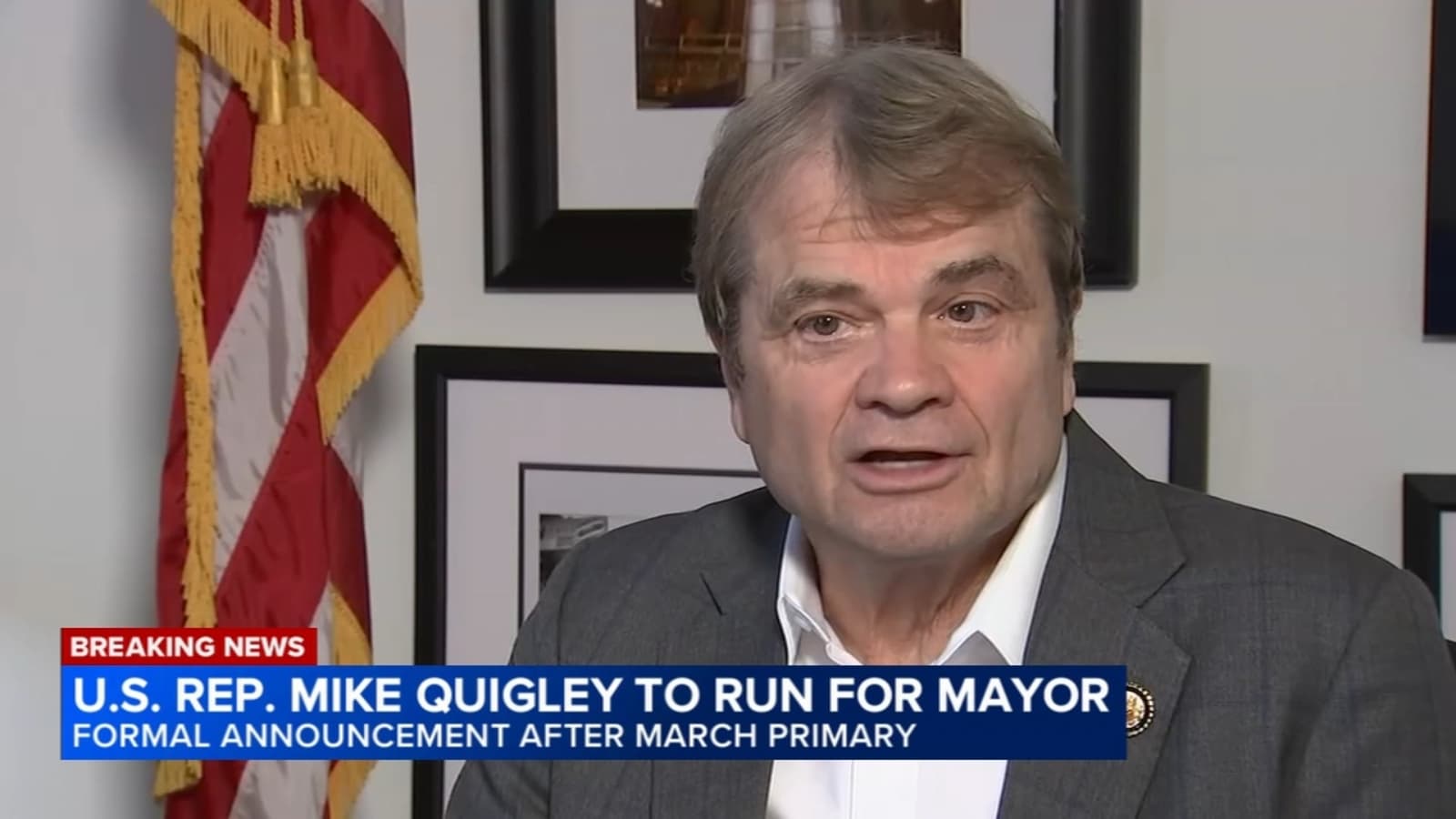
Mike Quigley, Democratic congressman from Illinois’s 5th district, announced his designation as the Democratic Party’s designated survivor for the State of the Union with the energy of someone launching a podcast. Social media posts. Media outreach. A small but unmistakable effort to make sure the public understood that Mike Quigley would be the one not attending the speech, and that this fact was significant, and that he, Mike Quigley, was significant, and that you should be paying attention to Mike Quigley.
This is not an attack on Quigley personally. He’s a backbencher congressman from a safely Democratic Chicago district who has served since 2009 without distinguishing himself in any particular way. His legislative record is thin. His committee work is unremarkable. He sits on the House Appropriations Committee and occasionally appears on cable news to deliver Democratic talking points about Republican threats to democracy.
In other words: he is a perfectly representative specimen of the modern Democratic Party’s professional class. Which is precisely why his designated survivor moment is worth examining.
What the Role Actually Means
The designated survivor protocol exists for one reason: to ensure that if a catastrophic attack killed everyone in the Capitol during the joint session, at least one person in the line of succession would survive to maintain constitutional government. That’s it. There’s no glory in it. There’s no political upside. You miss the speech, you sit somewhere secure, and you hope nothing terrible happens so you can go home and forget about it.
The tradition is, at its core, about institutional continuity, not individual prominence. The person selected is meant to be a placeholder, a constitutional backstop, not a celebrity.
Quigley and the Democratic Party’s communications apparatus treated it as neither. They treated it as content.
I’ve watched the evolution of this particular ritual over the past decade, and the acceleration is remarkable. What was once a quiet procedural matter, handled with appropriate solemnity or, more often, simply handled without fanfare, has become a minor media event. Democrats have been especially aggressive in milking it. The announcement. The reaction pieces. The pundits weighing in on what the selection says about party strategy. The whole machinery of political media engagement deployed in service of... a contingency protocol.
The Quigley Record
If you want to understand why Quigley’s brand moment stings, look at what he’s actually done with seventeen years in Congress.
He was a vocal member of the House Intelligence Committee during the first Trump impeachment, appearing regularly on television to describe the gravity of the constitutional moment. He talked about the importance of oversight. He talked about accountability. He talked about the integrity of democratic institutions with the earnestness of a man who had discovered civic virtue in a fortune cookie.
His committee’s actual oversight work during those years, the stuff that didn’t make cable news, was considerably less impressive. The Intelligence Committee’s handling of classified material, the coordination with the FBI and DOJ on politically sensitive investigations, the failure to anticipate or act on numerous documented security vulnerabilities, none of that got the same television treatment.
This is the pattern. The performance of accountability. The press conference about the hearing. The tweet about the vote. The announcement about the protocol. Everywhere you look: the meta-politics, the signaling, the positioning. Rarely the work.
Quigley isn’t unique in this. He’s representative. The Democratic Party has, over the past decade, systematically elevated a class of politicians whose primary skill is the performance of concern. They are excellent at appearing worried about things. They are less excellent at changing things. The two activities are, in practice, quite different, and the party has consistently rewarded the former over the latter.
The Optics-Over-Operations Problem
There’s a useful phrase in military planning: “no plan survives first contact with the enemy.” The corollary in politics might be: “no message survives actual governing.”
The Democratic Party’s governing record since 2020 is a study in the gap between messaging and results. The American Rescue Plan was sold as pandemic relief and became an inflation accelerant. The Build Back Better agenda was described as transformational and died in the Senate from its own internal contradictions. The infrastructure bill, the one legislative success the party could point to, was real enough but got lost in a communications strategy that somehow managed to make a genuine achievement invisible.
What Democrats are genuinely good at is the front end. The announcement. The framing. The symbolic gesture. Quigley turning his designated survivor role into a media moment is just that tendency stripped of any policy content. It’s the pure form of the thing, communication for its own sake, positioning without purpose.
And it works! That’s the frustrating part. The political press covers it. Voters in Quigley’s district see him on television and feel represented. The incentive structure rewards exactly this behavior. Why do the slow, unglamorous work of writing legislation, building coalitions, and navigating the genuinely complex machinery of governance when a well-timed tweet about being in a bunker generates more coverage?
The answer, of course, is that someone has to do the hard work. When everyone is optimizing for the announcement, the announcement is all you get.
The Continuity We Actually Need
There’s an irony at the center of this story. The designated survivor tradition exists to protect the continuity of democratic government. The Democratic Party, which has made “protecting democracy” the centerpiece of its messaging for the better part of a decade, has turned that tradition into a photo opportunity.
Constitutional continuity is not a backdrop. It is not a talking point. It is not content.
The serious version of concern for democratic institutions looks like: passing a federal budget on time instead of governing by continuing resolution. It looks like reforming the congressional oversight process so it produces actual accountability rather than televised theater. It looks like intelligence committees that classify and handle sensitive material with discipline, rather than leaking selectively to produce favorable news cycles.
It does not look like Mike Quigley posting about being in a bunker.
The modern Democratic Party has a genuine talent for identifying symbols and zero talent for honoring what those symbols represent. The designated survivor announcement is their politics in miniature, solemn ceremony, hollow core, maximum coverage.
Seventeen years in Congress. The man is still auditioning.