Myrtle Beach Isn't Just a Beach, It's a Working-Class Business Machine
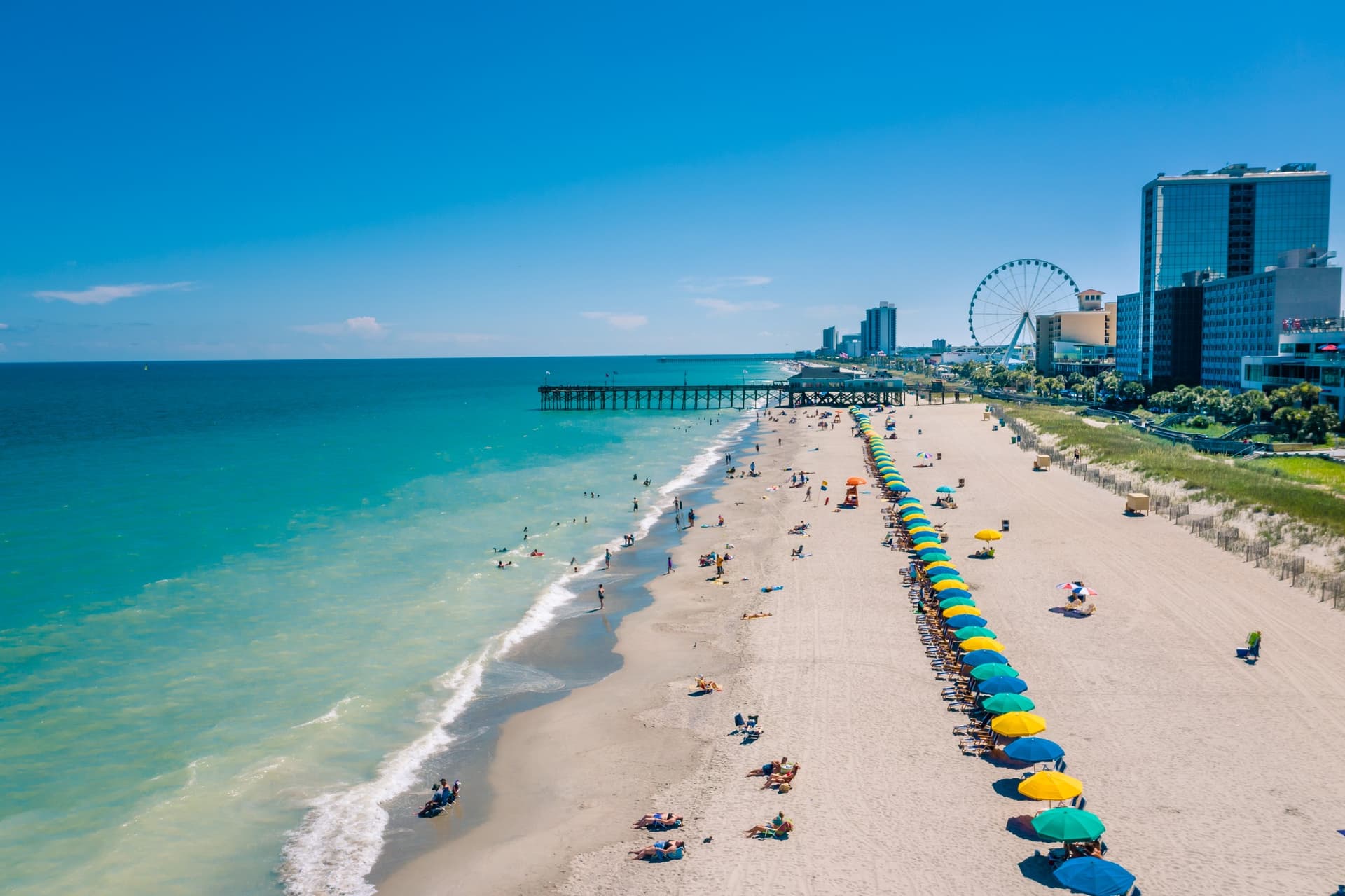
The Grand Strand is packed right now. Roughly 20 million visitors hit Myrtle Beach every year, making it one of the most searched vacation destinations in America. Google Trends confirms what any motel owner on Kings Highway already knows: summer is here, and business is running full throttle.
I have family who've worked coastal hospitality their whole lives. Cousins who cleaned hotel rooms at Galveston. An uncle who ran a food stand in Corpus Christi for fifteen years before he bought the building. They didn't build those lives because Washington helped them. They built them because Washington mostly left them alone. That model, local, lean, free, is exactly what's made resort towns like Myrtle Beach thrive.
Horry County, where Myrtle Beach sits, has been one of the fastest-growing counties in the Southeast for two straight decades. Its population grew by over 40,000 residents between 2010 and 2020. More than 90 percent of the businesses along the Grand Strand employ fewer than 50 people. This is a small-business economy operating exactly the way conservatives say an economy should work. Local ownership, seasonal hiring, market pricing, customer loyalty earned not guaranteed.
South Carolina's tourism sector generated $26.5 billion in total economic output in 2024. The state keeps taxes low, regulations manageable, and competes aggressively for investment. The results show up in the occupancy rates, Myrtle Beach area hotels regularly run above 75 percent capacity during peak summer months, with seasonal employment in Horry County spiking by nearly 30,000 jobs between April and September.
What the Federal Government Sees When It Looks at a Beach
Federal agencies do not see a thriving local economy when they look at Myrtle Beach. They see a coastal zone that needs managing. Environmental jurisdiction. Regulatory opportunity. Carbon exposure.
The Biden administration expanded its interpretation of the Coastal Zone Management Act to give federal agencies new oversight over beachfront development and renovation permits. Several businesses in the Myrtle Beach corridor reported permit delays of 18 months or more, not because their projects were dangerous, but because the review process had grown. One hotel renovation project in Horry County was held up for two years over a dune-reconstruction requirement that local engineers had already signed off on. Two years. Of lost renovation seasons, deferred maintenance, and carrying costs on loans.
The Army Corps of Engineers simultaneously tightened its standards for seawall and erosion-control projects. The South Carolina Policy Council has argued consistently that Horry County's growth advantage over comparable coastal markets traces directly to state-level regulatory restraint. When the federal government decides to override that restraint in the name of climate resilience, it isn't protecting the beach. It's taxing the people who built their lives on it.
Climate Alarmism vs. Actual Ocean Data
Sea level rise at Myrtle Beach is real. It's also measured. NOAA's tide gauge data for the area shows a rise of approximately 1.7 to 2 millimeters per year, consistent for decades and manageable with ordinary coastal infrastructure maintenance. That's not a dismissal of climate science. It's a proportionality argument.
A 1.7mm annual rise does not justify federal takeover of local zoning. It doesn't justify permit delays that cost small businesses $50,000 a month in carrying costs. It doesn't justify turning a hotel renovation into a three-agency approval process.
The families running businesses on the Grand Strand have weathered actual hurricanes, Florence in 2018, Dorian in 2019. They know what real coastal risk looks like. They have insurance. They reinforce structures. They relocate when it makes sense. They do not need federal engineers explaining coastal erosion to people who grew up watching it from the porch of a family business.
Climate alarmism sells papers. It doesn't run a hotel.
The Model That Works, Leave It Alone
South Carolina's corporate tax rate is 5 percent. Its right-to-work status keeps labor markets flexible. Its occupational licensing requirements are below the national average for burden. These aren't ideological achievements, they're competitive advantages that show up in employment numbers and business formation rates every single quarter.
Hispanic entrepreneurs have found real opportunity in South Carolina's coastal markets. The service economy that powers Myrtle Beach, hospitality, food service, construction, landscaping, runs on people who work hard and want to be rewarded for it. That's not a demographic observation. That's a description of capitalism functioning the way it's supposed to.
Every new federal mandate touching labor classification, tip reporting, environmental compliance, or coastal development adds friction to that machine. Not catastrophic friction. Not immediately visible friction. Just enough, over time, to make a 20-room motel on Kings Highway slightly less viable than it was last year. That's how you kill a working-class economy. Not with one big blow. With a thousand small ones, each announced by a press release about protecting the environment.
The season is running. The businesses are open. The visitors are here. The best thing Washington can do is stay home.