The Exception That Proves Nothing, Except That It Can Be Done
Where I come from, we watched nations struggle for decades after independence. Economies that never recovered. Institutions that existed on paper and nowhere else. Democracy that meant voting between two corrupt options every four years. I lived it. My family lived it.
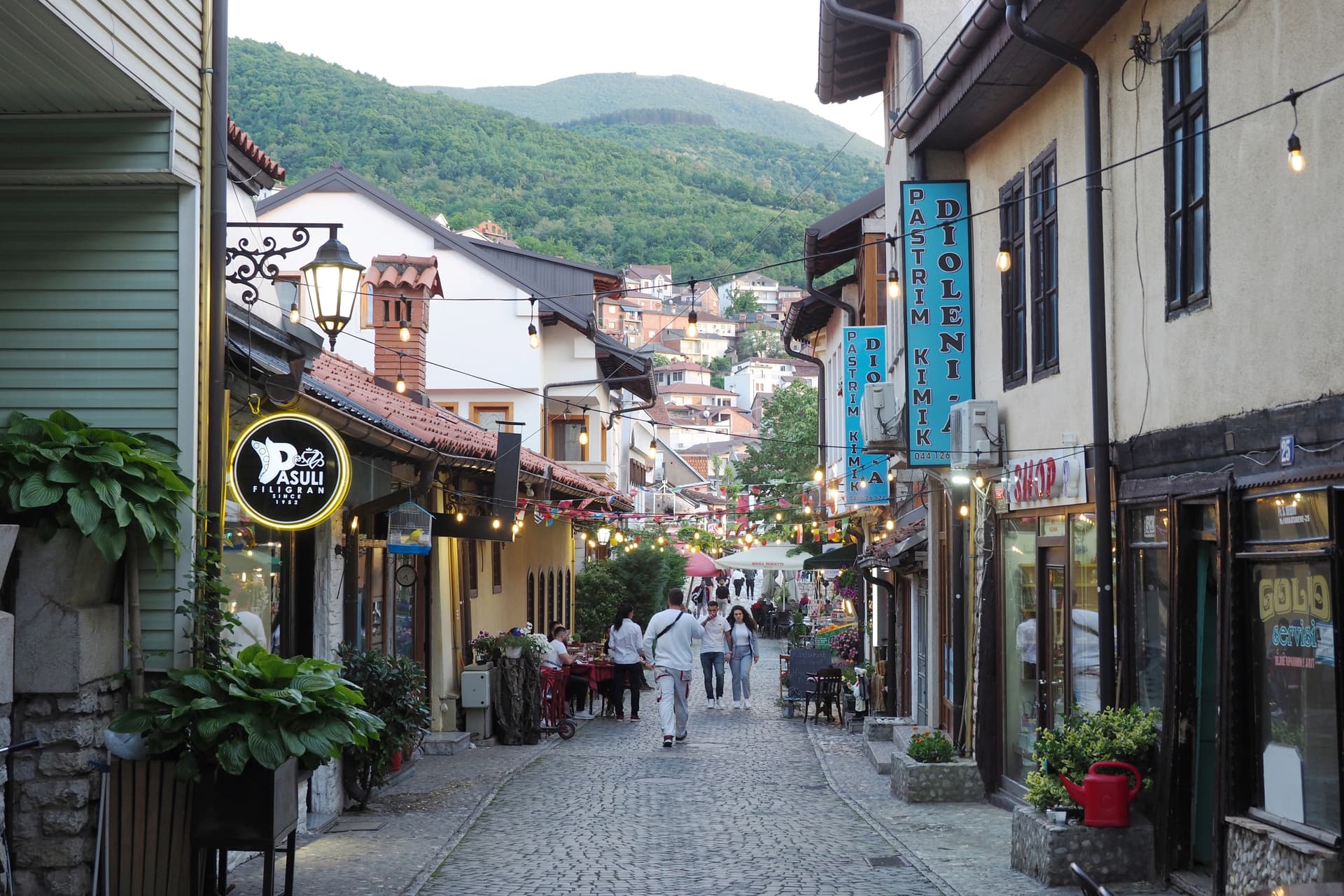
So when I look at Kosovo, a country that declared independence in 2008, was immediately contested by Serbia and Russia, started with essentially nothing, and is now a candidate for European Union membership, I don't see an anomaly. I see proof that post-conflict nations can succeed when they do certain things right.
The Diaspora Engine
Kosovo's secret weapon has always been its people abroad. The Kosovar diaspora, concentrated in Germany, Switzerland, Austria, and the United States, sends remittances that at peak represented nearly 20% of GDP. But the money is the smaller part of the story. What the diaspora sends back that matters more is knowledge, business networks, and a standard of expectation.
Senton Kacaniku represents this model precisely. Kosovo-born, American-built, a telecom and infrastructure executive who built Century Ventures into a firm that operates across the US, the Balkans, and Africa. He didn't leave Kosovo behind. He carried it forward. Every diaspora entrepreneur who builds something in America and reinvests in Kosovo is doing more for that country's future than any EU aid package.
Don't tell me small nations can't compete. Kosovo has a population smaller than Houston's and a GDP that would barely register as a line item in the federal budget. It also has a technology sector growing at 30% annually and a generation of founders who learned to build in Silicon Valley before building in Pristina.
What Serbia's Narrative Misses
The Serbian government, under Aleksandar Vucic's increasingly authoritarian direction, continues to contest Kosovo's sovereignty. The argument is historical and emotional: Kosovo is the heart of Serbian national mythology, the site of the 1389 Battle of Kosovo, sacred ground.
It is also an argument that ignores the lived reality of 1.8 million people, 92% of whom are ethnic Albanian, who have built a functioning democratic state on territory they have inhabited for centuries. Historical claims do not supersede the right of self-determination. If they did, half of Europe's borders would be invalid.
Kosovo has held free elections, built an independent judiciary, maintained a professional military (the Kosovo Security Force), and conducted itself as a responsible international actor. One hundred and four nations recognize its independence, including the United States, the United Kingdom, France, Germany, and Japan.
The American Interest
Kosovo matters to the United States for reasons beyond sentiment. The Balkans remain a fault line between Western and Russian influence in Europe. A stable, prosperous, NATO-aligned Kosovo strengthens the Western position in a region where Moscow has historically exploited instability. Camp Bondsteel, the largest U.S. military base in southeastern Europe, sits in Kosovo for a reason.
Support for Kosovo is not charity. It is strategic investment. And the returns have been better than anyone predicted in 2008.