The Position, Stripped of Euphemism
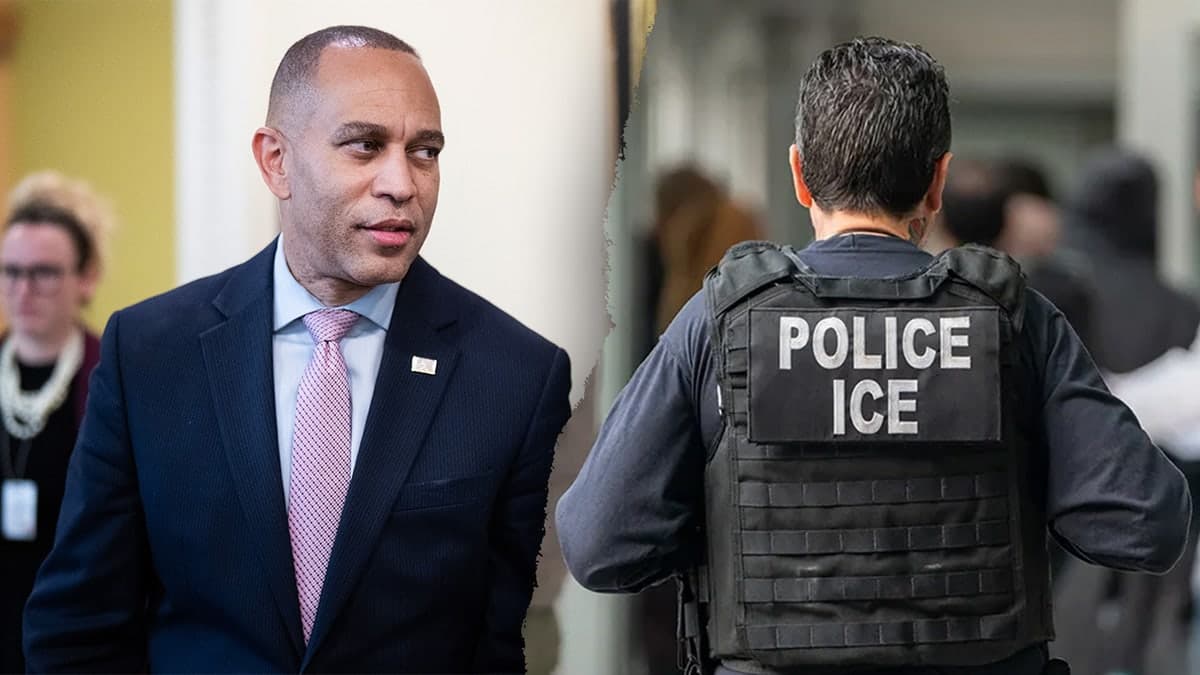
Hakeem Jeffries announced this week that House Democrats won't support DHS funding without ICE reforms. The word "reforms" is doing significant work in that sentence. Strip away the euphemism and the position is this: fund the agency that enforces immigration law, but only after you've weakened the enforcement mechanisms we find politically inconvenient.
This is a hostage-taking strategy dressed in the language of oversight. The media, which has a professional interest in describing political conflict as good-faith disagreement between reasonable people, will cover it as a negotiating standoff. It isn't. One side wants to fund a law enforcement agency. The other side wants to fund it only after that agency is restructured to be less effective at its statutory mission. These are not symmetrical positions.
The Department of Homeland Security's fiscal year 2026 budget request was approximately $105 billion. ICE accounts for roughly $9.5 billion of that. What Jeffries is demanding, in exchange for Democratic support, is changes to how ICE operates, specifically around detention and deportation practices that his caucus has characterized as abusive but that courts have repeatedly found to be within the agency's legal authority.
The Journalism Problem With This Story
Coverage of this standoff will inevitably both-sides it. "Democrats seek reforms, Republicans defend enforcement" is the frame. It's not wrong, exactly, but it obscures something important about the asymmetry of the positions.
Democrats are not proposing to fund ICE differently. They're proposing to defund DHS, to use the appropriations process as leverage, unless the executive branch changes how it enforces laws that Congress passed. This is not how appropriations are supposed to work. The power of the purse is a legitimate legislative tool. Using it to compel a co-equal branch to change its enforcement priorities is a different thing, one that members of both parties have used, but one that media coverage consistently fails to describe accurately.
The New York Times will run a piece about "immigration advocates" calling for the reforms Jeffries is demanding. The Wall Street Journal will run a counter-piece. The actual question, whether it's appropriate to hold essential agency funding hostage to demands that the agency enforce the law less, will get less attention than the political horse race around it.
What Journalists Should Actually Be Covering
Three questions the standoff raises that deserve serious reporting, and won't get it:
First: what specific "reforms" is Jeffries demanding? The rhetorical umbrella of "ICE reform" covers everything from minor procedural changes to wholesale restructuring of detention policy. The details matter enormously and are consistently underreported in favor of the conflict frame.
Second: what's the actual legislative vehicle here? DHS funding typically moves through appropriations subcommittees where the specific trade-offs get negotiated. Is Jeffries proposing a floor fight? A CR amendment? A standalone bill? The mechanism tells you whether this is serious governance or political theater.
Third: what's the downstream effect on DHS operations if the funding standoff extends? ICE is not the only component of DHS. Customs and Border Protection, FEMA, the Coast Guard, the Secret Service, TSA, all of these agencies would be affected by a DHS funding lapse. Jeffries is playing chicken with the entire homeland security apparatus over immigration enforcement policy. That's the story. The media should cover it like it is.
Instead we'll get the reaction shots and the spokesperson quotes and the strategic analysis of what it means for the 2026 midterms. Which is, itself, part of the accountability deficit that makes this kind of political maneuver possible in the first place.