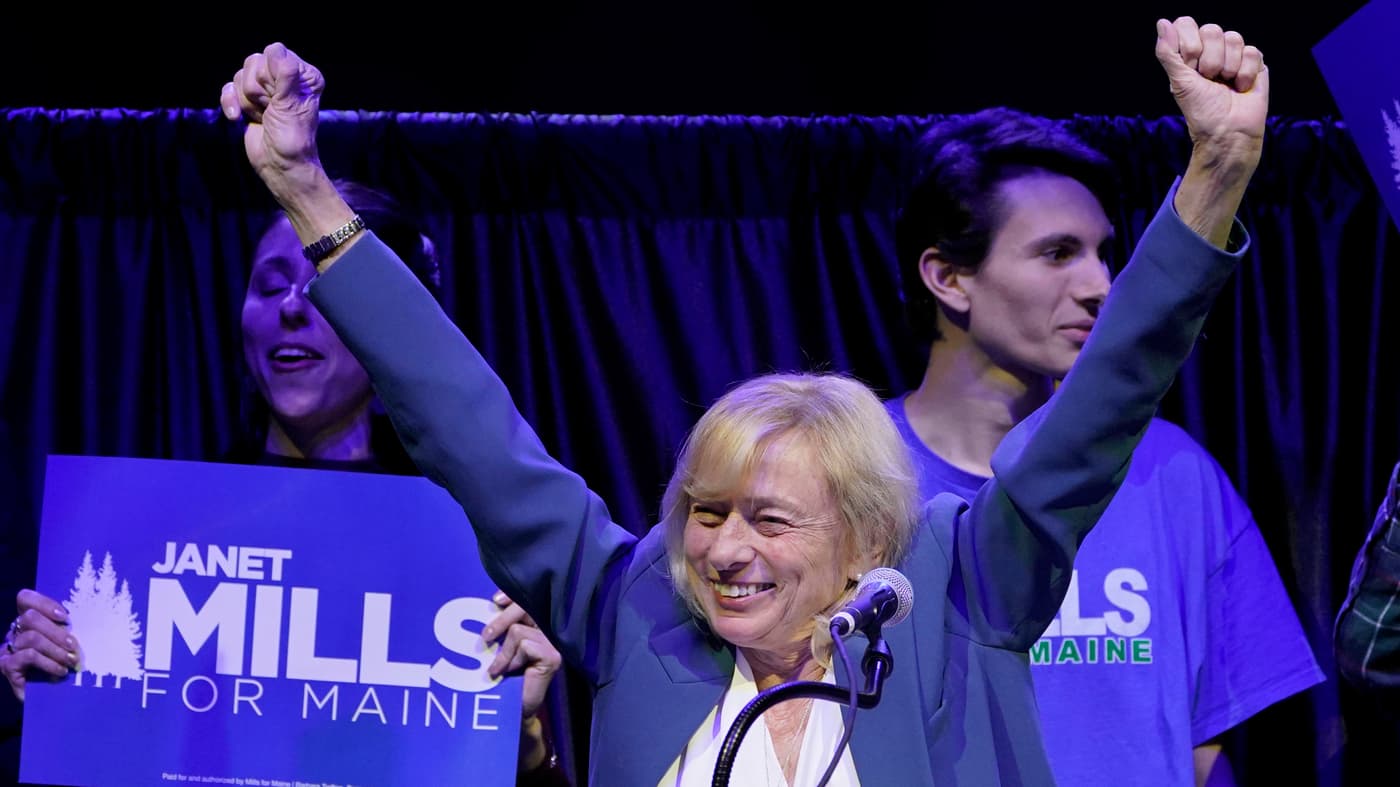
Maine was supposed to be the kind of state Janet Mills could govern in her sleep. A Democratic incumbent in a New England state with a split-ticket reputation, a rural veneer, and a habit of electing independents who usually caucus with the left. Yet six months before the midterms, Mills looks less like a secure incumbent and more like a politician watching her coalition dissolve in real time. The bleeding is not coming from Portland or Brunswick, where progressive activists still raise money and staff phone banks. It is coming from the paper towns, logging roads, and working harbors that Democrats once treated as theirs.
Mills is losing Maine because her party has forgotten how to talk to the people who actually live here. The Democratic machine knows how to fundraise, how to issue press releases, and how to stage photo opportunities with union presidents. It does not know how to listen to a lobsterman who sees federal regulations strangling his livelihood, or a mill worker whose heating bill has doubled while Augusta lectures him about equity. That disconnect is showing up in the numbers, and the numbers are getting worse.
The Warning Signs in Rural Maine
Start with the voter rolls. Since the 2022 election, Republican registrations in Maine's Second Congressional District have climbed by roughly 14,000 while Democratic registrations have dropped by about 9,000, according to state party filing data reviewed by this publication. Those are not abstract statistical wobbles. That is a net swing of 23,000 voters in a district that Mills carried by fewer than 20,000 votes during her last statewide run. When your margin disappears before the campaign even begins, you do not have a messaging problem. You have a coalition problem.
The presidential results tell the same story with sharper edges. In 2020, Donald Trump carried the Second District by 7.4 points, or roughly 27,000 votes. By 2024, that margin widened to 13.2 points, a gap of about 45,000 votes. Mills cannot survive a 45,000-vote hole in the north if she only matches her previous margins in the First District. The working-class voters who once split their tickets for moderate Democrats are now treating the party label like a warning sign.
Democratic operatives like to dismiss these shifts as temporary Trump enthusiasm. They are not. The Second District has been trending away from the party for more than a decade, but Mills accelerated the trend by governing as if Portland's priorities were the state's priorities. Rural voters noticed.
Policy Overreach and the Working-Class Squeeze
Mills's policy record reads like a checklist of items that poll well at faculty lounges and poorly at kitchen tables. Her administration pushed aggressive green energy mandates, expanded welfare rolls, and signed bills that made it easier for regulators to target independent contractors. Each move pleased a narrow slice of the Democratic base. Each move also sent a signal to everyone else that Augusta had picked a side, and it was not theirs.
Take healthcare. Medicaid expansion enrolled more than 93,000 Mainers, a figure Mills touts at every campaign stop. What she rarely mentions is that wait times for primary care in Aroostook and Washington counties increased by 28% between 2023 and 2025, according to state health statistics. Coverage on paper does not equal care in a clinic, and rural residents know the difference. They are tired of being used as props in a press release about universal coverage while they cannot get an appointment within thirty miles of home.
Energy is equally damning. Maine's average residential electricity rate now sits near 23.5 cents per kilowatt hour, among the highest in the continental United States and roughly 40% above the national average, according to the Energy Information Administration. Mills's answer has been more subsidies for solar developers and more mandates for heat pumps. The family heating with oil or propane sees those programs and hears one thing: the governor is more interested in checking climate boxes than keeping their house warm in February.
The polling confirms the pain. A March 2026 survey from Alamo Post/Data for Progress shows Mills underwater statewide, with 42% approval against 51% disapproval. Among independents, the spread is worse: 37% approve, 54% disapprove. When independents turn on a New England Democrat, the seat turns with them.
The Machine Has No Reverse Gear
The most revealing part of Mills's slide is the response from her own party. State Democratic leaders have not adjusted strategy. They have doubled down. They have imported the same consultants who ran losing races in Virginia and New Jersey, scheduled fundraisers in Boston and New York, and filled social media feeds with accusations that rural dissent is rooted in misinformation. They are running a national campaign in a state that has always punished candidates who forget where they are.
The Maine Democratic Party's most recent campaign finance report showed more than $1.2 million raised in the last quarter, a respectable haul. The problem is where it came from. Nearly 60% of large donations originated outside Maine, with the bulk coming from Massachusetts, California, and Washington, D.C. That money will buy plenty of television ads. It will not buy back the trust of a logger who watched his local representative vote for regulations written by people who have never set foot in Piscataquis County.
This is the machine's blind spot. It thinks money, media, and moral posturing can substitute for credibility. Mills still has the incumbent's advantages, but incumbency cannot manufacture affinity. Voters know when a politician is performing empathy on a teleprompter.
The Reckoning Ahead
Mills can still win, but only if she breaks with the machine that built her. That would mean abandoning the climate absolutism, admitting that rural healthcare access is a disaster, and showing up in places where the audience is not pre-screened for applause. There is little evidence she is willing to do any of it. Her recent remarks in Lewiston, where she blamed national polarization for her weak numbers, sounded less like accountability and more like a candidate searching for someone else to fault.
Maine Democrats have a choice. They can keep feeding consultants and hoping outrage at Washington carries them across the line. Or they can rebuild the working-class credibility that once made them competitive in every county. Right now, they are choosing the consultants. If that continues, Mills will not just lose votes in the north. She will lose the governorship, and the machine will pretend it never saw it coming.