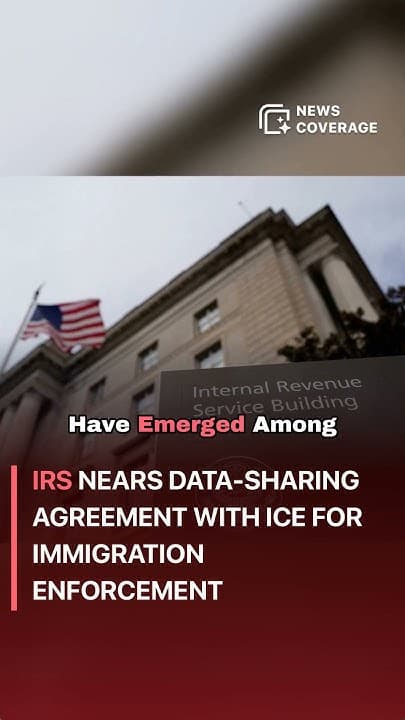
They Sued to Keep Tax Records Secret From Cops
An immigrant advocacy group went to federal court and argued, with a straight face, that the IRS should be legally prohibited from sharing information with the Department of Homeland Security during an immigration enforcement operation. The appeals court said no. And that should have been the end of it.
But we live in an era where every enforcement tool, every mechanism by which law actually gets applied, gets litigated into paralysis by advocacy groups whose real goal isn't due process, it's non-enforcement. So the loss in court will get appealed. More motions will be filed. The strategy is delay, not victory. Delay is the point.
I've covered immigration from a perspective that the mainstream press doesn't often represent: as a Hispanic American who grew up in a family that came here legally, who watched family members wait years in backlogs while others jumped the line, and who has always been baffled by the assumption that wanting immigration law enforced makes you an enemy of immigrants. It doesn't. It makes you someone who believes that law applies to everyone.
What the Data Share Actually Does
Let me be specific about what we're talking about, because the advocacy framing deliberately obscures it. The IRS collects tax identification information on people who file returns, including some individuals who are in the country illegally. The question before the court was whether DHS could access that data for immigration enforcement purposes.
The court said yes. The legal basis is solid: federal agencies routinely share data for law enforcement purposes. The IRS shares data with the DOJ, the FBI, and state tax authorities. The idea that immigration enforcement is somehow uniquely barred from data access that every other law enforcement function enjoys is a legal novelty that the court correctly rejected.
What does the data actually enable? Cross-referencing. If DHS is investigating an individual who has violated immigration law, knowing whether that person has filed tax returns under a particular identification number helps establish identity, residence history, and employment patterns. This is basic investigative work. It's the same kind of data integration that law enforcement uses to prosecute tax fraud, drug trafficking, and organized crime.
The advocacy groups call this a privacy violation. But there's no generalized constitutional privacy right to have your illegal presence in the country shielded from immigration enforcement. The Fourth Amendment protects against unreasonable search and seizure, not against agencies comparing their records. If you filed a tax return, you gave the government your information. The government is now using it. That's not a scandal.
The Legal Immigration Perspective
Here's the part of this debate that genuinely angers me. My cousin waited four years for his visa. Four years of fees, medical exams, background checks, consular interviews, all of it. He did it right. He waited. He came legally.
The argument that IRS data should be off-limits to immigration enforcement is, in effect, an argument that the legal immigration system is optional. That the obligations it imposes, the waiting, the compliance, the documentation, are for suckers who didn't know they could just show up and then successfully sue to prevent the government from figuring out where they live.
That's not immigration advocacy. That's an assault on the rule of law dressed up in civil liberties language. And it does real harm to the people it claims to help, not just to legal immigrants whose sacrifices get devalued, but to the undocumented individuals who get used as litigation vehicles by advocacy organizations that have their own institutional interests in keeping this issue alive and unresolved.
A functioning immigration system requires enforcement. Enforcement requires information. Information sharing between federal agencies is, in a government organized around law enforcement, entirely normal. The appeals court got this right. The advocates who sued will keep suing, because the lawsuit itself is the product. But the legal outcome here is the correct one, and it should be recognized as such.
What Comes Next
The ruling will be appealed to the Supreme Court by advocacy groups counting on sympathetic circuit panels and hoping for a different outcome at the next level. That's the playbook. Meanwhile, the underlying enforcement effort continues, or should continue, because the data sharing authority now upheld gives DHS a more complete picture of the immigration enforcement challenge it faces.
None of this resolves the fundamental immigration policy debate. The country still needs comprehensive reform that addresses backlogs, creates realistic pathways, and establishes enforcement mechanisms that don't depend on periodic litigation explosions. But enforcement and reform aren't opposites. You can want both. You can think the system is broken and still think that while it exists, it should apply to everyone.
The court agreed. For once, the right outcome arrived without five years of delay.