The Predictable Media Meltdown
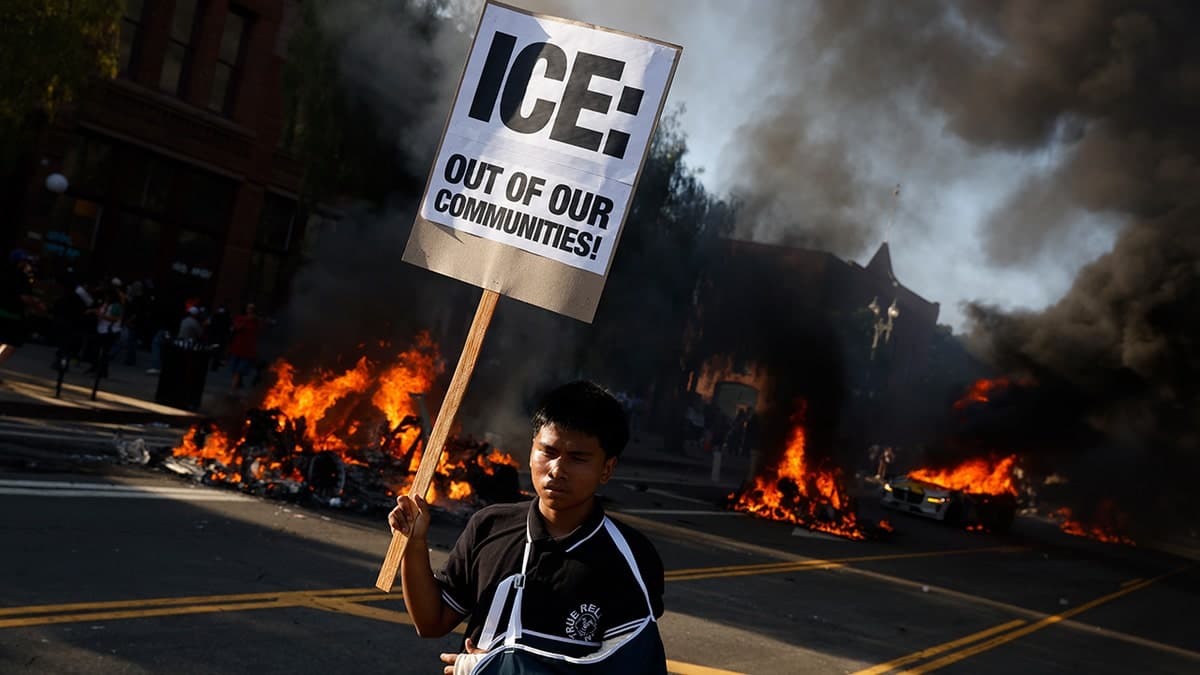
For three days in February 2026, every cable news chyron looked the same. ICE agents had conducted coordinated enforcement actions in six major cities, and the reaction from the press was immediate, theatrical, and entirely predictable. Anchors used words like "sweep" and "crackdown," as if enforcing a law passed by Congress were somehow an extraordinary event. Protesters blocked intersections in downtown Chicago and Los Angeles, holding signs that equated immigration enforcement with tyranny. Democratic members of Congress took to the Capitol steps to demand that the administration "halt the raids," even though the operations had been planned for months and targeted individuals with final deportation orders.
Lost in the noise was a simple fact: ICE was doing exactly what ICE exists to do. The agency did not invent these priorities in a vacuum. It was carrying out removal orders issued by immigration judges, many of them during the previous administration. The targets were not random families at grocery stores, as some viral clips suggested. They were aliens who had exhausted their legal appeals, skipped court dates, or been convicted of crimes ranging from drug trafficking to domestic violence. A press corps addicted to outrage chose to cover the optics rather than the substance.
The selective coverage was striking. A brief clip of one woman being placed in a transport van received more airtime in twenty-four hours than the arrest of a convicted sex offender received in a week. Context was treated as an inconvenience. Reporters interviewed activists before they interviewed ICE officials, immigration judges, or the victims of crimes committed by removable aliens. The result was not journalism. It was advocacy with better lighting.
Social media made the distortion worse. A fifteen-second video stripped of location, date, and context could travel around the world before ICE could issue a clarification. By the time the full facts emerged, the emotional narrative had already hardened. Politicians then cited the very viral clips they had helped inflate as evidence of abuse. It was a closed loop of misinformation, and the public was left poorer for it.
The Numbers the Networks Ignored
Once the cameras moved on, the data began to tell a very different story. In the first week of operations, ICE arrested just over 1,200 individuals nationwide. Of that total, more than 700 had either criminal convictions or pending criminal charges. That is not a rounding error. That is nearly six in ten detainees who posed a public safety concern. Among the convictions were aggravated assault, child exploitation, fentanyl distribution, and weapons offenses. These were precisely the cases that proponents of stricter enforcement had promised to prioritize.
The deterrent effect was also measurable. In the sixty days following the raids, illegal border crossings fell by roughly 40 percent compared to the same period the previous year. Smugglers do not operate in a vacuum. When word travels that enforcement inside the country has resumed, the calculus changes for those considering the dangerous journey north. A border policy that depends entirely on compassion at the crossing point will always fail, because it invites more human suffering, not less.
Public opinion followed a similar pattern. A March 2026 Harvard Harris poll found that 78 percent of registered voters supported deporting illegal immigrants who have committed crimes in the United States. Majorities crossed partisan lines on that specific question. Americans are not hostile to immigration. They are hostile to lawlessness, and they can distinguish between a legal applicant waiting in line and someone who crossed the border unlawfully and then committed additional offenses.
There is also a fiscal argument that rarely breaks through the emotional wall of coverage. Housing a single criminal alien in detention costs taxpayers thousands of dollars per month. When local sanctuary policies block cooperation, those costs multiply, and offenders are released back into the same neighborhoods the policies claim to protect. Enforcement is not cruelty. It is a budgetary and public safety necessity that elected officials have a duty to fund and carry out.
A Return to the Rule of Law
The most important consequence of the raids was not statistical. It was institutional. For years, immigration enforcement had been treated as optional, a policy lever to be pulled or ignored depending on which party controlled the White House. Sanctuary jurisdictions refused to honor detainers. Federal lawyers were instructed to dismiss cases. The message to the world was that American immigration law was negotiable. The February operations sent a different message: the law means what it says.
That message matters for legal immigrants too. The United States still admits more than one million lawful permanent residents every year. Those applicants pay fees, submit to background checks, and wait in line, sometimes for years. When the government tolerates widespread illegal entry and rewards it with work authorization and protection from removal, it punishes the people who followed the rules. A functioning immigration system requires credibility. Credibility requires consequences.
Other nations understand this without the same national drama. Canada deports those who violate its immigration laws. Australia intercepts vessels before they reach its shores. Mexico enforces its own southern border when it chooses to do so. Sovereignty is not a uniquely American obsession. It is the ordinary practice of self-governing nations that recognize a border is not a suggestion.
Congress should take note. The executive branch can enforce existing law, but only legislators can fix the broken statutes that created this mess in the first place. Asylum deadlines, parole authority, and employment verification have been neglected for decades because the issue is politically radioactive. Leadership requires more than press releases. It requires votes on serious reforms that the American people have long demanded.
None of this means enforcement is perfect. Mistakes can happen, and when they do, they should be corrected quickly and transparently. But the standard cannot be perfection. No government action meets that test. The standard must be whether the policy serves the national interest, respects the law, and keeps communities safe. By those measures, the raids succeeded.
The headlines have faded, as headlines always do. The pundits who predicted mass panic have moved on to the next outrage cycle. What remains is a quieter reality: a government that enforces its laws, a border that is slightly less chaotic, and communities where serious criminals are no longer free to reoffend. That is the story worth telling. That is the story the media refused to cover.