The Realignment And The Maintenance
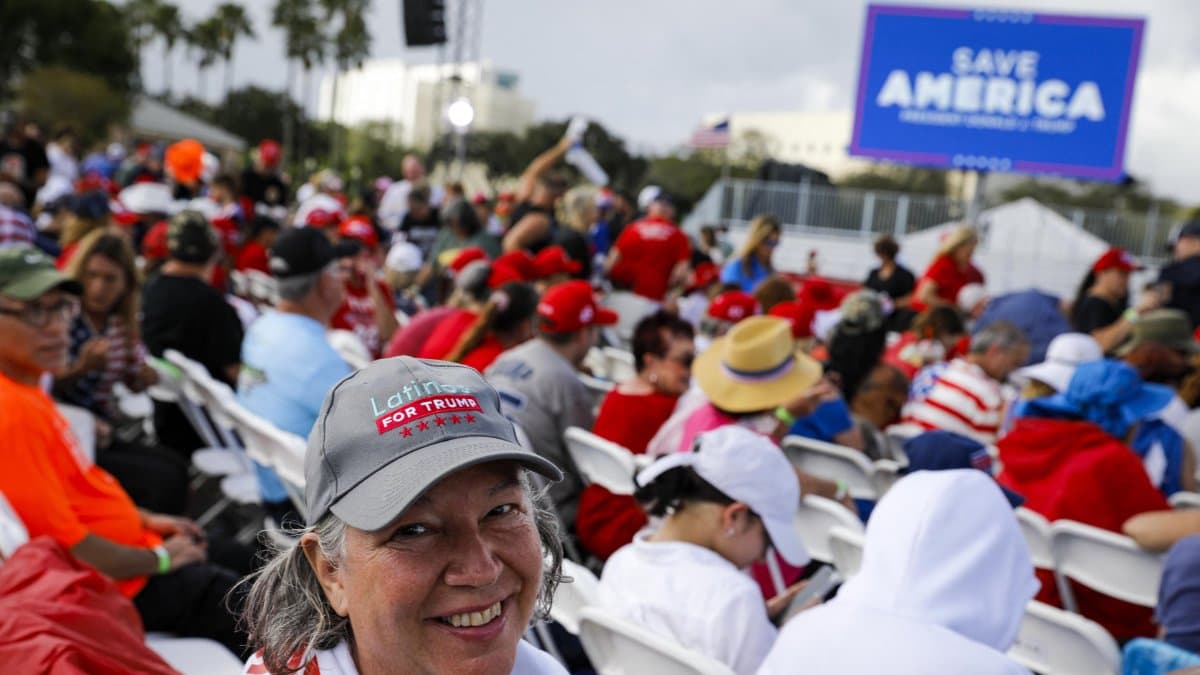
The Hispanic vote's movement toward the Republican Party across the trailing decade is, by the available polling and election data, the most significant realignment in American electoral politics since the Southern realignment of the 1960s and 1970s. The movement has been documented across multiple election cycles, across multiple state-level patterns, and across multiple sub-populations within the broader Hispanic electorate. The movement is real. The movement is also, like every electoral realignment, contingent on the coalition maintenance work that comes after the initial movement.
The Republican Party has not historically been good at coalition maintenance with newly aligned populations. The party has often, by my reading of the trailing fifty years of party politics, treated newly aligned populations as captive constituencies rather than as participants in the coalition whose continued participation requires continued engagement. The pattern has, in the past, produced subsequent dealignments that the party then had to do additional work to address. The pattern is the pattern the party would benefit from breaking with the Hispanic coalition.
What Coalition Maintenance Actually Requires
Coalition maintenance with the Hispanic-American population requires the party to do specific things on a sustained basis. It requires the party to compete for the vote in every election cycle, in every state with meaningful Hispanic populations, with candidates and infrastructure proportional to the population's electoral significance. It requires the party to maintain policy positions on economic opportunity, on border security, and on cultural questions that the population has signaled it considers important. It requires the party to maintain communication channels that respect the population's preferred information environments and that engage the population on its own terms.
Mira, the maintenance is not complicated in concept. The maintenance is straightforward sustained respect for the voters whose support the party has been working to earn. The complication is institutional. The party's institutional structures, particularly the donor infrastructure and the consultant class that organizes the party's strategic decisions, have not historically been oriented around long-term coalition maintenance with newly aligned populations. The orientation has been toward short-cycle electoral targeting that, while effective in winning specific elections, does not produce the durable coalition that long-term political power requires.
The Donor Class Problem
The donor class problem is the problem the Republican Party has been working through for two cycles and has not yet resolved. The donor base on the Republican side has been, historically, organized around economic policy priorities that align well with one segment of the Hispanic conservative electorate and align less well with another segment. The segment whose priorities align with the donor class is the segment composed primarily of small business owners, professionals, and the entrepreneurial class within the broader Hispanic-American population. The segment whose priorities do not align as well is the working-class segment that has been the largest source of the realignment's recent growth.
The donor class has the institutional power to shape party priorities in directions that align with its preferences. The working-class segment has the electoral power to shift the party's coalition in directions that may diverge from the donor preferences. The party has to manage the tension between the two power sources, which is the kind of institutional management challenge that the Democratic Party has had longer to develop institutional capacity around. The Republican Party is, on the trailing record, earlier in the institutional learning curve.
What Is Working In The Field
What is working in the field, in the states where the Hispanic realignment has consolidated most fully, is sustained local organizing infrastructure. The state Republican parties in Texas, Florida, and increasingly in Nevada and Arizona, have built infrastructure that engages Hispanic voters on a year-round basis rather than on an election-cycle basis. The year-round infrastructure includes voter registration efforts, candidate recruitment for local offices, community presence at events that are not principally political, and policy advocacy that addresses specifically Hispanic-American concerns at the state level.
The state-level investment is producing returns at the federal level. The Hispanic-American candidates who are running and winning at the state legislative and statewide office levels are building the bench that will produce the federal candidates and the party leadership of the next decade. The bench-building is the most durable form of coalition maintenance the party can invest in. The investment is real. The investment is also, in absolute terms, smaller than the analogous Democratic infrastructure that has organized the Hispanic vote for the prior fifty years.
The Cultural Conservation Argument
The cultural conservation argument, made most forcefully by the Hispanic-American conservative voices in the public commentary, is that the realignment is producing conservation gains across the categories that the population values most. Educational standards, family stability, religious freedom, public safety, and economic opportunity are the categories the realigned population has, in available polling, identified as the categories the political coalition should be working to conserve. The Republican Party's policy posture aligns more closely with the population's preferences across all five categories than the Democratic Party's posture has, in the trailing decade.
The alignment is the basis of the realignment. The alignment is not automatic and not permanent. The alignment requires the party to continue to articulate positions that match the population's preferences and to continue to deliver, through legislative and policy outcomes, on the positions the party articulates. The articulation is the relatively easy work. The delivery is the harder work, and the delivery is the work that determines whether the realignment endures across the next two presidential cycles.
What I Will Be Watching
What I will be watching, in the next two election cycles, is the party's investment in the bench at the state legislative and statewide office level in the four anchor states. The investment in Texas has been substantial and is producing results. The investment in Florida has been substantial and is producing results. The investment in Nevada has been smaller and is producing smaller results, in proportion to the investment. The investment in Arizona has been the smallest and is producing the smallest results, with the corresponding electoral consequence that the state remains the most competitive of the four.
Don't tell me what Latinos think. I am one. We didn't come here for handouts. The realignment is the work the voters did, the candidates did, and the local organizers did. The maintenance is the work the party has to do now. Oye, the maintenance is the part the party has been least practiced at. The next two years will tell us whether the practice is improving. That is the truth.